The nonprofit ARC Prize Foundation on May 1, 2026, released the results of a new benchmark: a test of an AI system’s ability to solve a game. The results were striking – humans scored 100%, while the most advanced AI systems scored under 1%.
At first glance, this may be surprising to users of AI who are impressed by its polished essays, codebases and multistep projects generated in seconds. How can these brilliant AI systems struggle with these simple Tetris-shape puzzles?
That confusion points to a risk: AI is becoming integrated into everyday life faster than people can make sense of it.
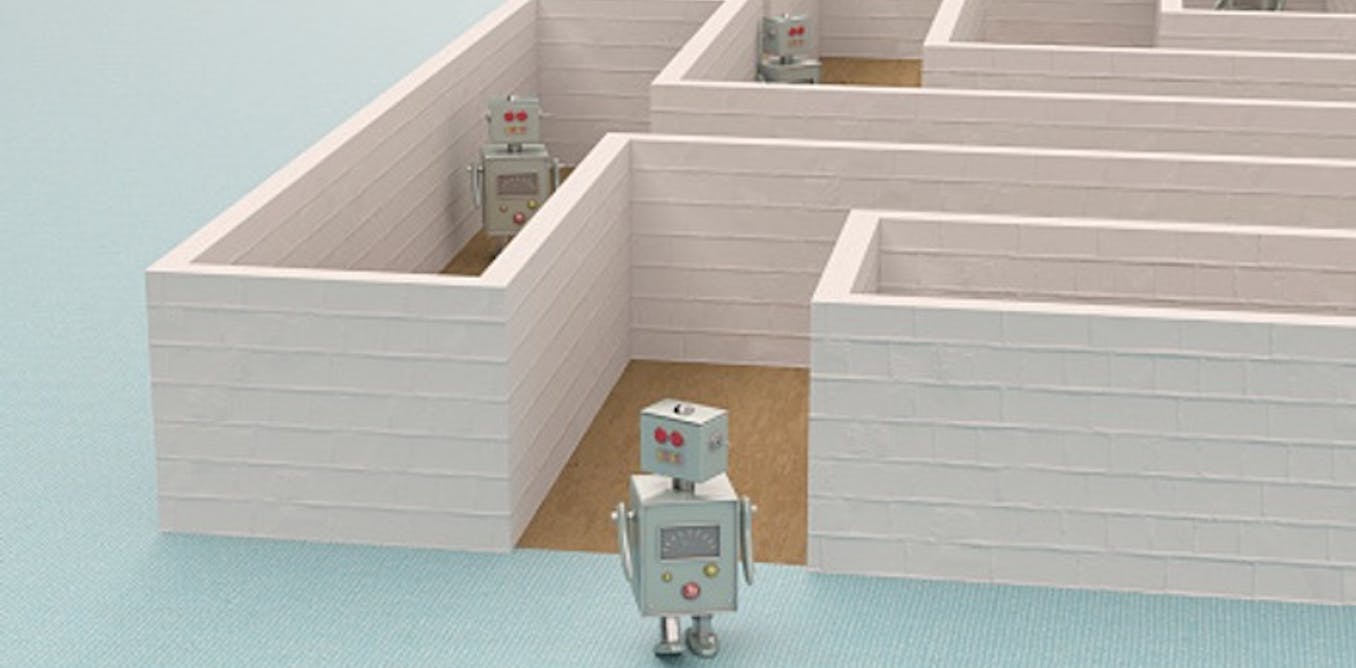
We are cognitive psychologists who study how to teach difficult concepts. To recognize the limits and risks of today’s AI agent systems, it’s important for people to grasp that the systems can both accomplish superhuman feats and make mistakes few humans would. To that end, we propose a new way to think about AIs: as button-pushing explorers.
Mental models for AI