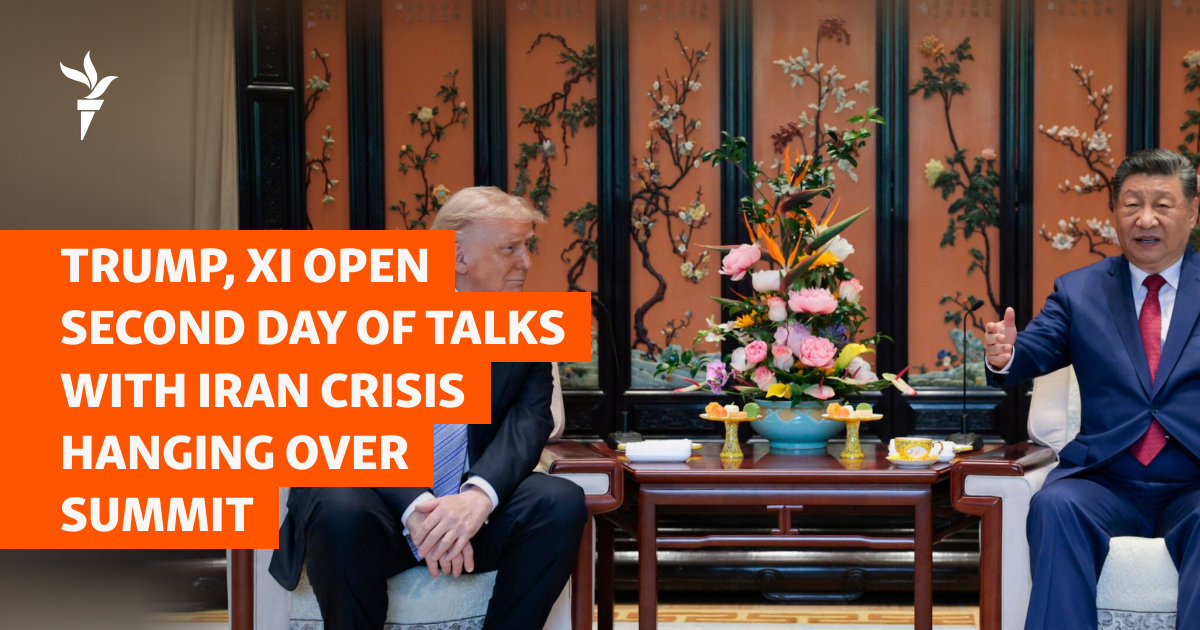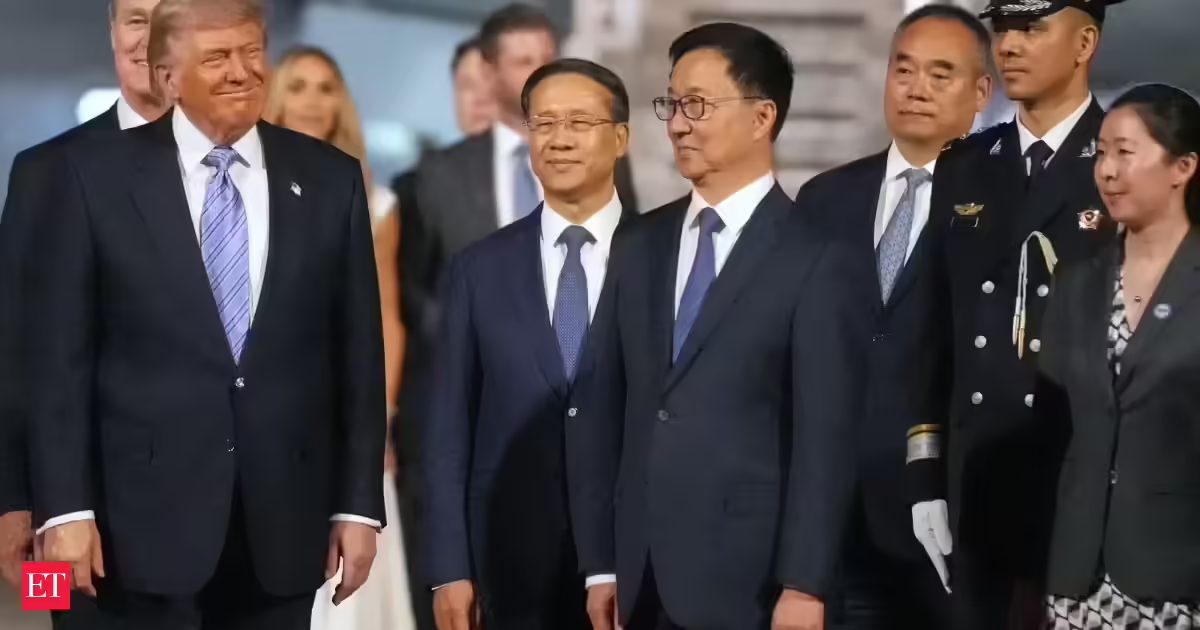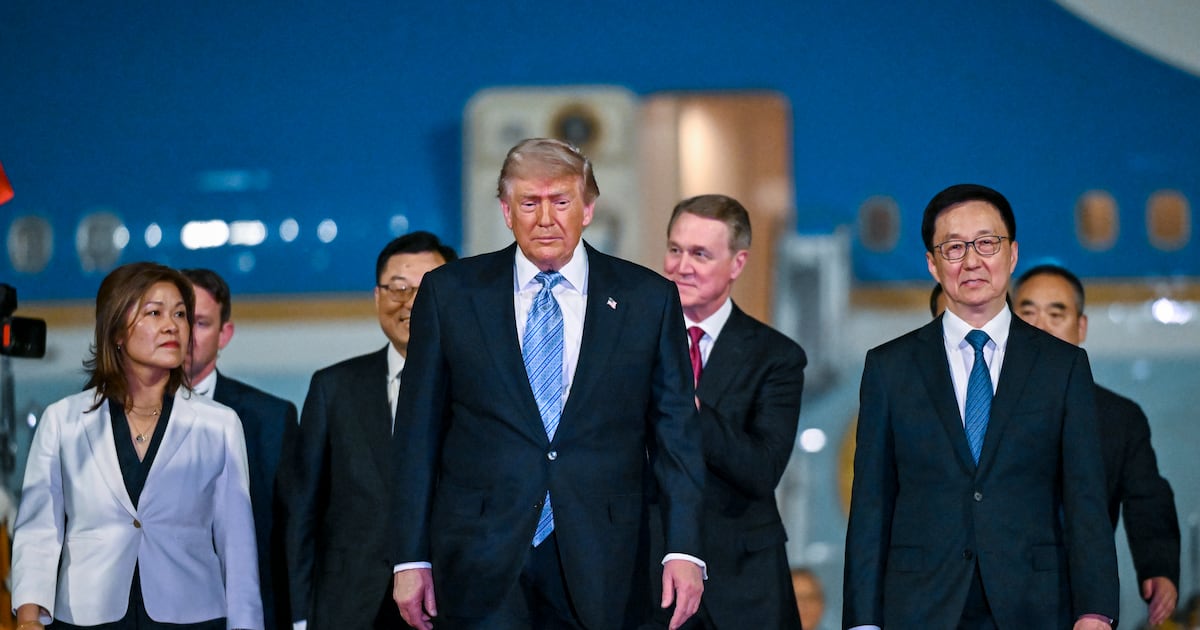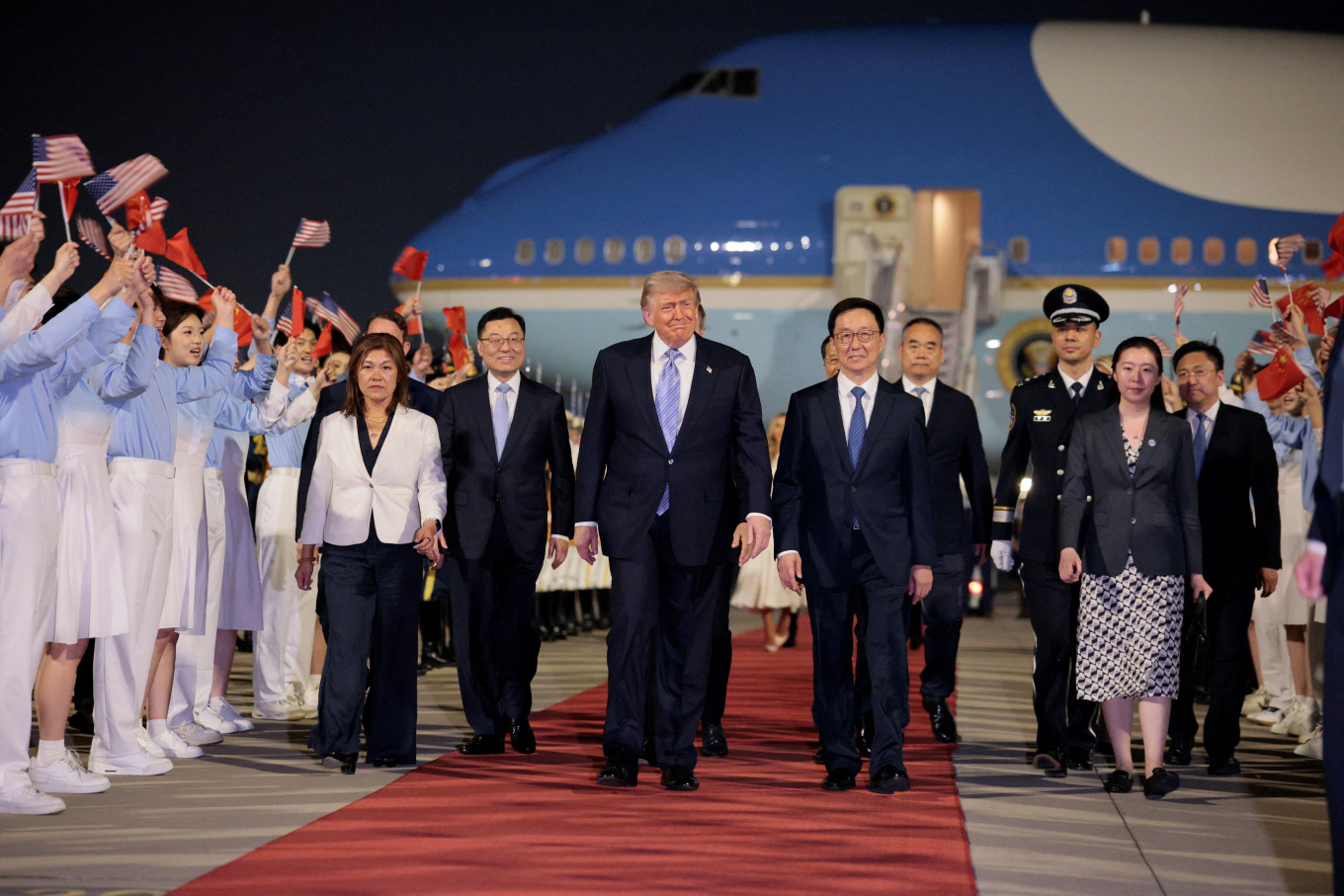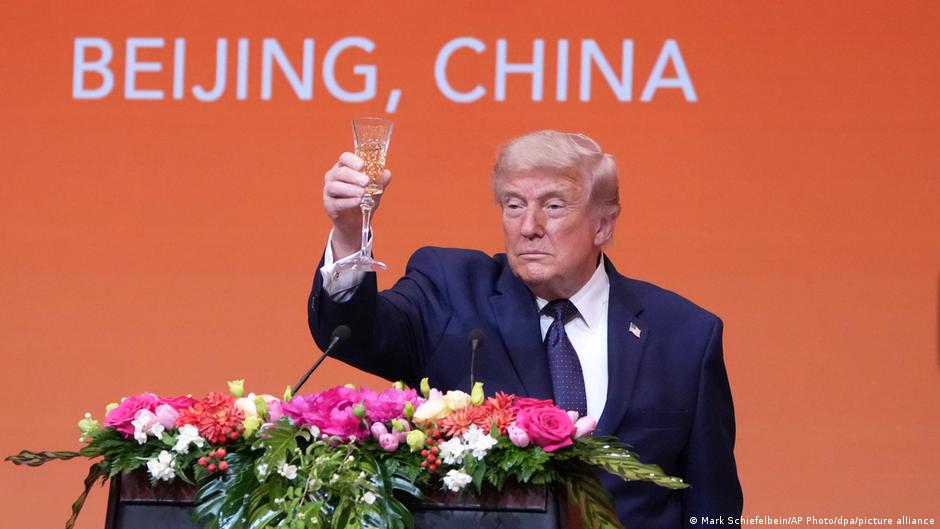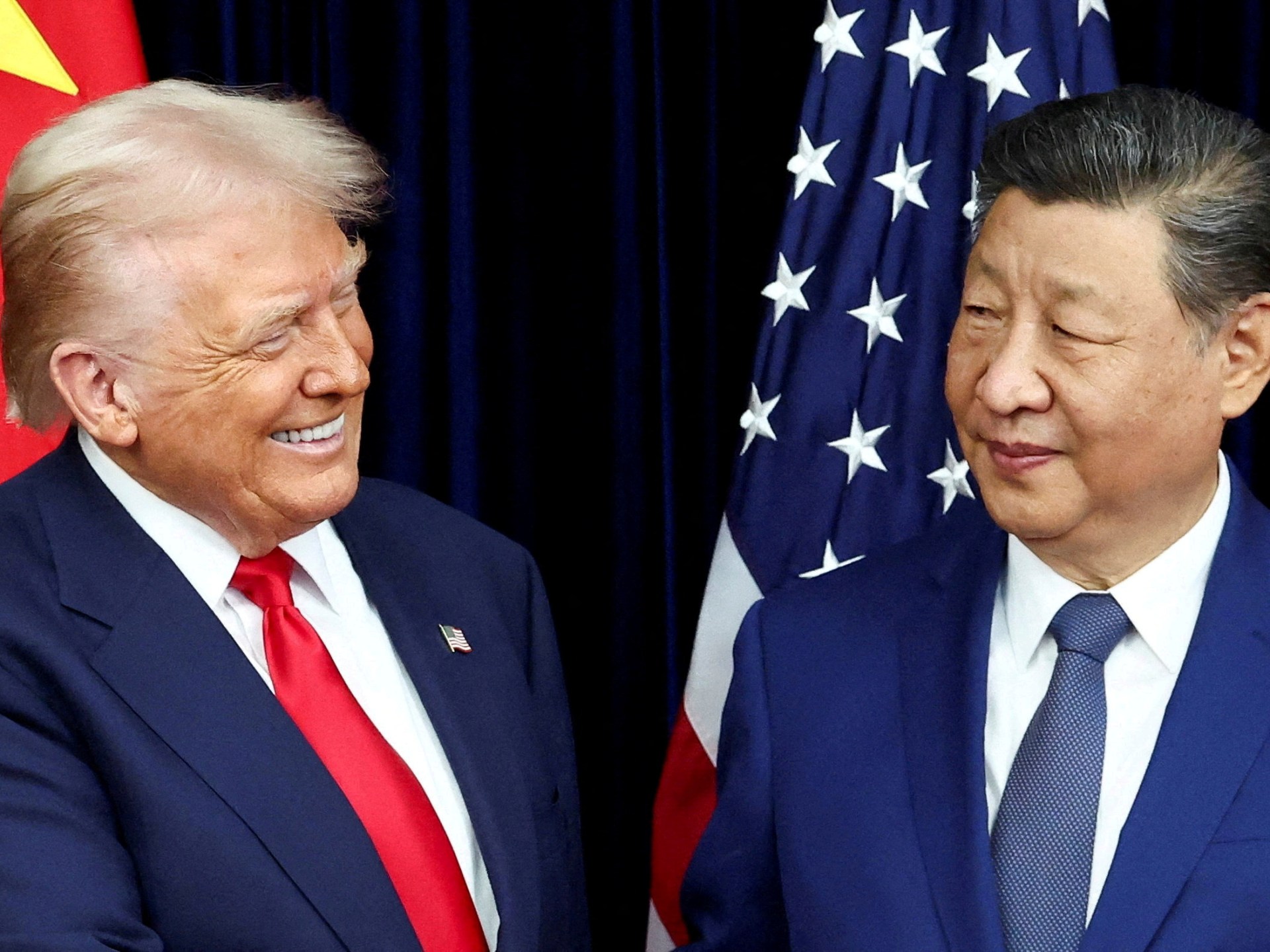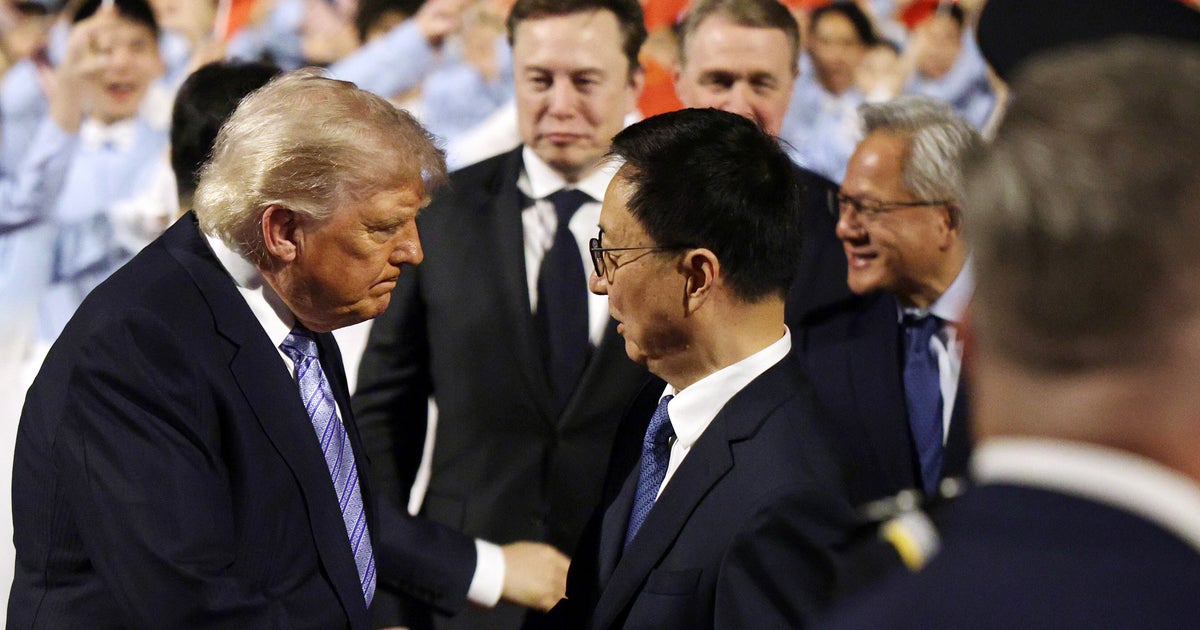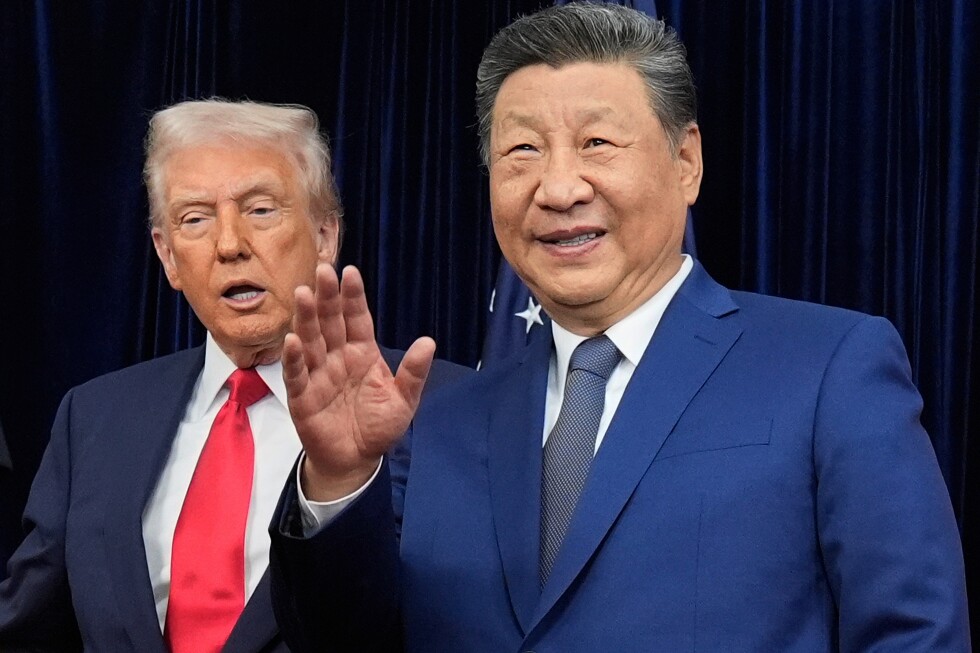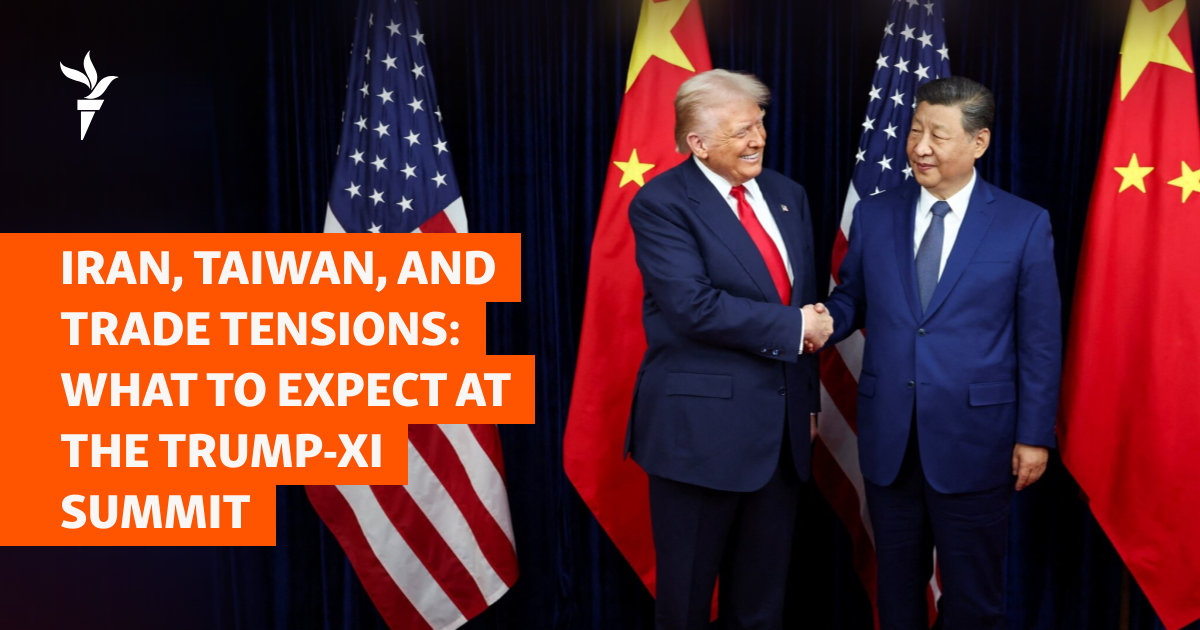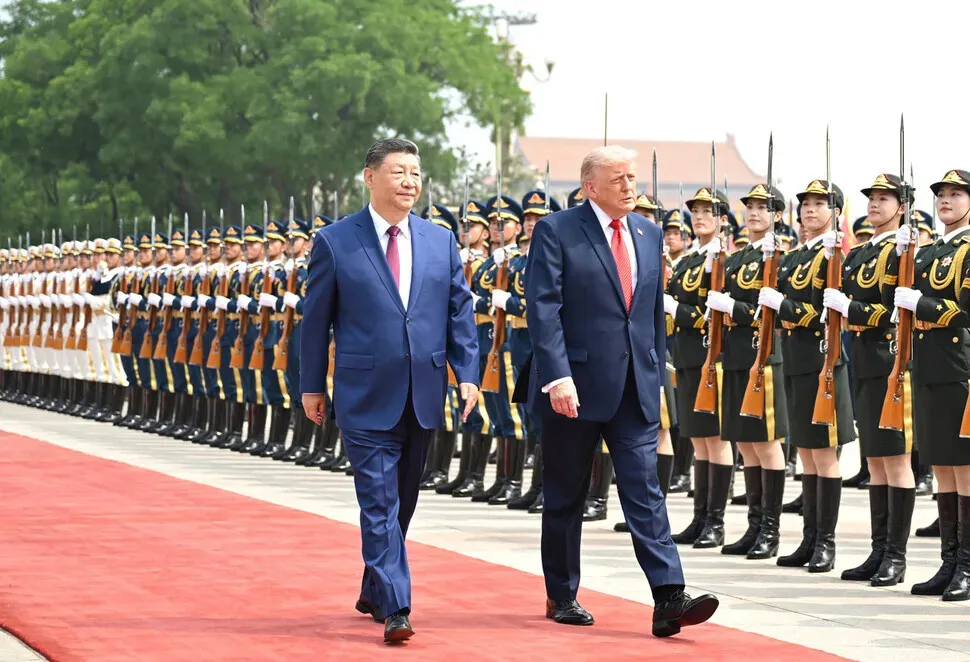
President Xi Jinping of China and President Donald Trump of the US walk to the Great Hall of the People in Beijing on May 14, 2026. (Xinhua/Yonhap)
In their summit in Beijing on Thursday, US President Donald Trump and Chinese President Xi Jinping communicated their respective wishes on the Iran war and the Taiwan issue. Analysts say the two leaders reached a “strategic bargain” meticulously calculated for their political survival and advantage.Xi mentioned Taiwan at the beginning of the two leaders’ summit on Thursday morning. “If handled poorly, the two countries will collide or even clash,” he said.The Chinese leader’s remarks were remarkable both for their substance and sharpness. In effect, Xi was preemptively and publicly drawing a red line for Trump: While China remains open to discussing such issues as trade, investment, and the Iran war, Taiwan is not on the table.The day before the summit, China laid out “four red lines” that are nonstarters in the negotiations: the Taiwan question, democracy and human rights, development paths and political systems, and China’s right to development.Xi also commented that the US and China must sidestep the Thucydides Trap, the geopolitical concept positing that hegemonic states and their challengers are inevitably drawn into conflict. His comments implied that China is no longer a challenger state but is on par with the US and that the two countries should seek cooperation.After the meeting, Trump declined to field questions from reporters about Taiwan. On a visit to the Temple of Heaven in Beijing, Trump only said, “It’s great. A great place. Incredible. China’s beautiful.”While Trump may have been maintaining deliberate ambiguity, another interpretation is that he was choosing not to openly challenge Xi’s hard-line remarks on Taiwan.Amid Trump’s silence on that topic, he seemed focused on securing China’s cooperation on an issue of greater personal urgency: namely, the US’ war against Iran.The White House said that the two leaders had agreed on their opposition to Iran’s possession of nuclear weapons and on reopening the Strait of Hormuz to free shipping. With the Iran war entering its third month, the US wants China to exercise its influence over Iran as its economic sponsor and the biggest importer of Iranian crude oil.US Treasury Secretary Scott Bessent, who accompanied Trump to China, told CNBC in an interview on Thursday that China is “going to do what they can” to reopen the Strait of Hormuz.But Chinese cooperation on these fronts is unlikely to be enthusiastic.Opposing Iran’s possession of nuclear weapons and supporting freedom of navigation in the Strait of Hormuz have declaratory significance but are unlikely to move the needle in terms of Iranian behavior.Since China is on friendly terms with Iran and needs Iran’s help for its Middle East policy, China is unlikely to fully embrace American demands. Thus, there’s little chance of China placing more pressure on Iran going forward.However, China has agreed to buy more American crude oil and farm products while reducing its dependence on oil from the Middle East. Beijing also said it will help the US stop the flow of chemical precursors for fentanyl, a narcotic that has emerged as a serious social problem in the US.In the end, the summit allowed Xi to reinforce his red line on China’s “core interest” of Taiwan and gave Trump a Chinese pledge to buy more American products and cooperate with the US’ war against Iran.“The People’s Daily reported that this is the first time the Chinese authorities have mentioned a ‘clash’ with the US over the Taiwan issue. Xi appears to have used the summit to double down on his red line on Taiwan while adopting a cooperative attitude on Iran,” said Ahn Chi-young, a professor of Chinese politics at Incheon National University.But notwithstanding their understanding on these points, China and the US’ cooperation looks more like limited and temporary steps toward their respective goals than a fundamental restoration of trust. While the two countries got what they wanted on the issues of Taiwan and the Iran war, that only eases political and economic pressure without evidently resolving their structural disagreements.After Xi sent his stern message on Thursday, Taiwan countered that China is the one threatening regional peace.“If maintaining peace and stability in the Taiwan Strait is truly the greatest common ground between China and the United States, then the Chinese Communist Party should restrain its own behavior of military intimidation,” said Liang Wen-chieh, a spokesperson for Taiwan’s Mainland Affairs Council, which handles cross-straits relations.What is the Thucydides Trap?The concept is rooted in classical historian Thucydides’ argument that the established hegemon Sparta’s fear about the rise of Athens led to the Peloponnesian War. That idea gained wider attention in 2012 after Graham Allison, a professor at Harvard’s John F. Kennedy School of Government, applied it to contemporary geopolitics. According to Allison’s research, a dominant power being challenged by a rising one ended in war in 12 of 16 cases over the past five centuries. In his 2017 book “Destined for War: Can America and China Escape Thucydides's Trap?” Allison warned that the ascendant China and the hegemonic US were caught in the Thucydides Trap, which could result in a full-blown war.By Kim Won-chul, Washington correspondent; Hong Seock-jae, Tokyo correspondent; Yoon Yeun-jung, staff reporterPlease direct questions or comments to [english@hani.co.kr]