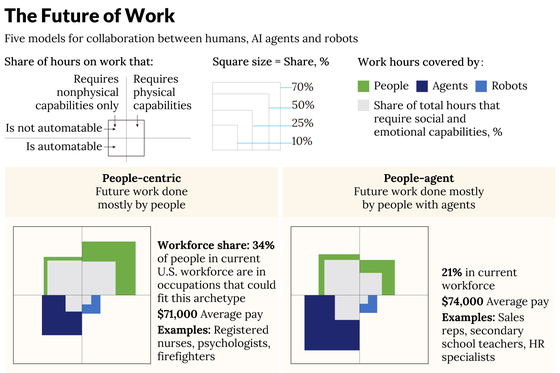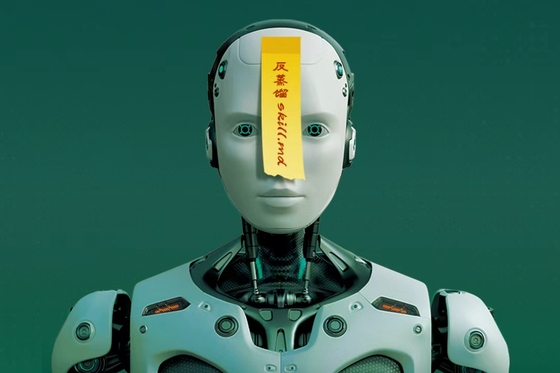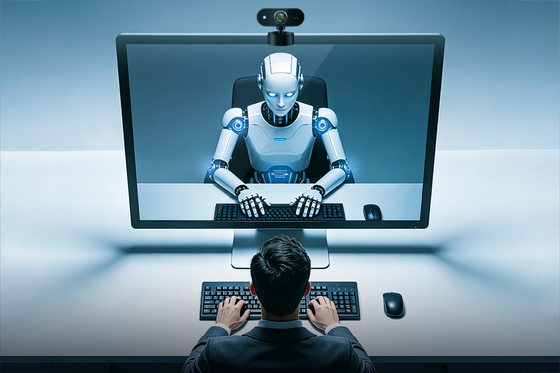
1. Zhou Tianyi, a 24-year-old researcher at Shanghai Artificial Intelligence Research Institute, created an open-source AI agent called colleague.skill in late March to preserve team knowledge by importing data from Feishu and DingTalk, automating reports, workflows, and code reviews; it quickly gained nearly 15,000 GitHub stars [para. 1][para. 2]. However, users repurposed it for "refining colleagues," causing Zhou discomfort as it veered from knowledge preservation to worker replacement [para. 3][para. 4].2. This highlights "skill distillation," where firms capture employees' habits, logic, workflows, and decisions to build independent AI digital employees replicating human roles, amid controversy over lost interpersonal chemistry [para. 5][para. 6][para. 7].3. The divide pits employers compressing costs and AI providers commercializing data against fearful employees excluded from gains [para. 8][para. 9]. Companies collect data like mouse movements to train AI, raising automation fears; Western firms like Meta and Amazon invest heavily amid layoffs, while China faces data ownership issues [para. 10].4. Evolving from RPA's rule-based bots to contextual AI "brains" [para. 12][para. 13], skill distillation follows four steps: data collection (mouse/keyboard trajectories, comms), cleaning, model training, and deployment shifting humans to oversight [para. 14][para. 15].5. A SaaS executive noted AI coding advances spurred employee data programs from 2024 testing to 2026 replacements [para. 16]. Meta's April 22, 2026, "Model Capabilities Initiative" captured clicks, inputs, and screens for Muse Spark training without opt-out, amid layoffs [para. 17][para. 18][para. 19].6. This echoes Grok's aim for scalable digital labor [para. 20]. WEF's January survey of 10,000 executives: 54% see AI replacing jobs, 44.6% boosting profits, only 12.1% raising wages [para. 22][para. 23].7. China's 2026 job market shows AI role surges with premiums; McKinsey notes sevenfold "AI fluency" demand rise [para. 24][para. 25]. WEF warns of unemployment risks without retraining like cross-generational models [para. 26]. McKinsey: AI could automate 57% US hours, hitting standardized tasks [para. 27].8. Yet, AI redesigns workflows for human-AI collaboration, retaining 72% skills and unlocking $2.9T US value by 2030 [para. 28][para. 29]. Firms shift workers to oversight; "T-shaped" skills (expertise + empathy) resist replacement [para. 30][para. 31].9. AI agents disrupt SaaS: Anthropic's February Claude Coworker dropped stocks 40%, shifting to RaaS for outcomes [para. 32][para. 33][para. 34]. Chinese SaaS pivots, but market may shrink two-thirds as AI improves [para. 36][para. 37]. Coding: 90% developers slower than AI; design integrates AI [para. 38][para. 39][para. 40].10. Even AI sector vulnerable to self-improving systems, reducing engineer roles to monitoring [para. 41][para. 42].11. China's laws counter: Hangzhou court ruled illegal a 40% pay cut/AI dismissal, awarding 261,000 yuan ($38,300), barring unilateral changes [para. 43][para. 44][para. 45][para. 46]. Experts stress consent for data use, privacy, post-resignation rights [para. 47][para. 48][para. 49][para. 50][para. 51]. Safeguards like local processing urged [para. 52][para. 53][para. 54]. (498 words)AI generated, for reference only
Cover Story: How AI Is Mining Worker Data to Reshape the Labor Market
From mouse clicks to workflow patterns, companies are increasingly using employee behavior to train AI systems
456 words~2 min read