Press return to see results.
cmd / ctrl + k to open and close.
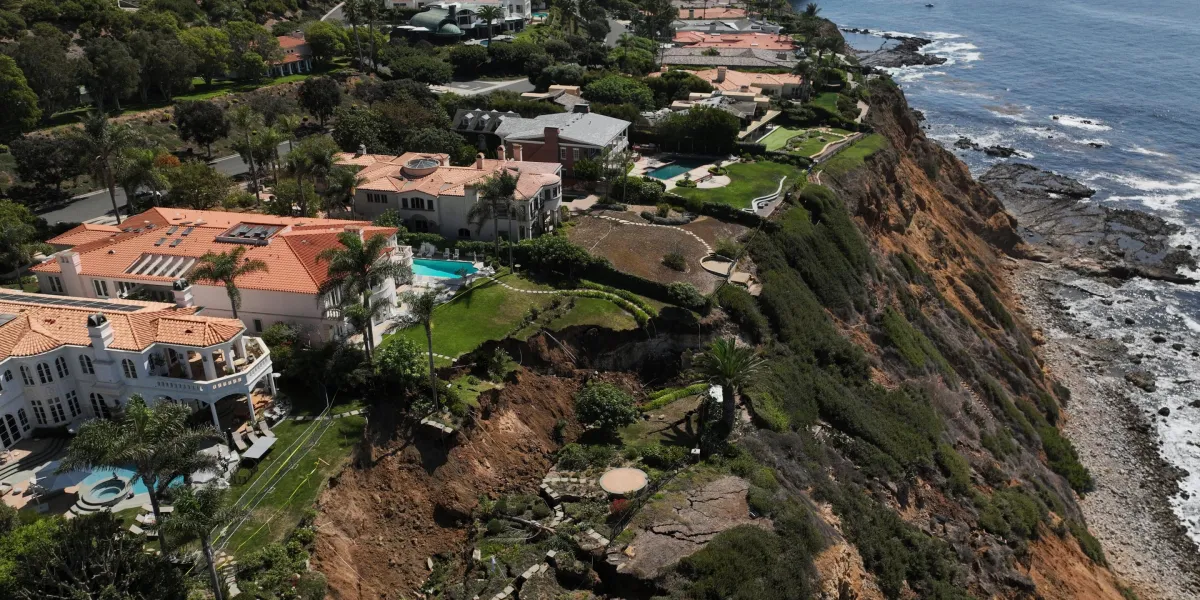
This winter, for the first time in a quarter century, California was drought free—but not everyone was thrilled. On the Palos Verdes Peninsula in Los Angeles County, where some seventy-seven thousand live atop rugged coastal bluffs and steep hills, the near-biblical rains that have inundated the region in recent years pose an existential threat.
Overlooking the Pacific Ocean, the peninsula is some of the most coveted real estate in Southern California. It contains the wealthiest suburb in Los Angeles, with an average household income of $367,000. There are sprawling mansions, winding horse trails, six golf courses, and private clubs boasting initiation fees as high as $300,000. At the luxury Terranea Resort, rooms rent for $700 a night and, were you to stroll the grounds as I did one Saturday afternoon this past January, you might encounter a shareholders meeting for a union-busting law firm with clients like Starbucks and Amazon.
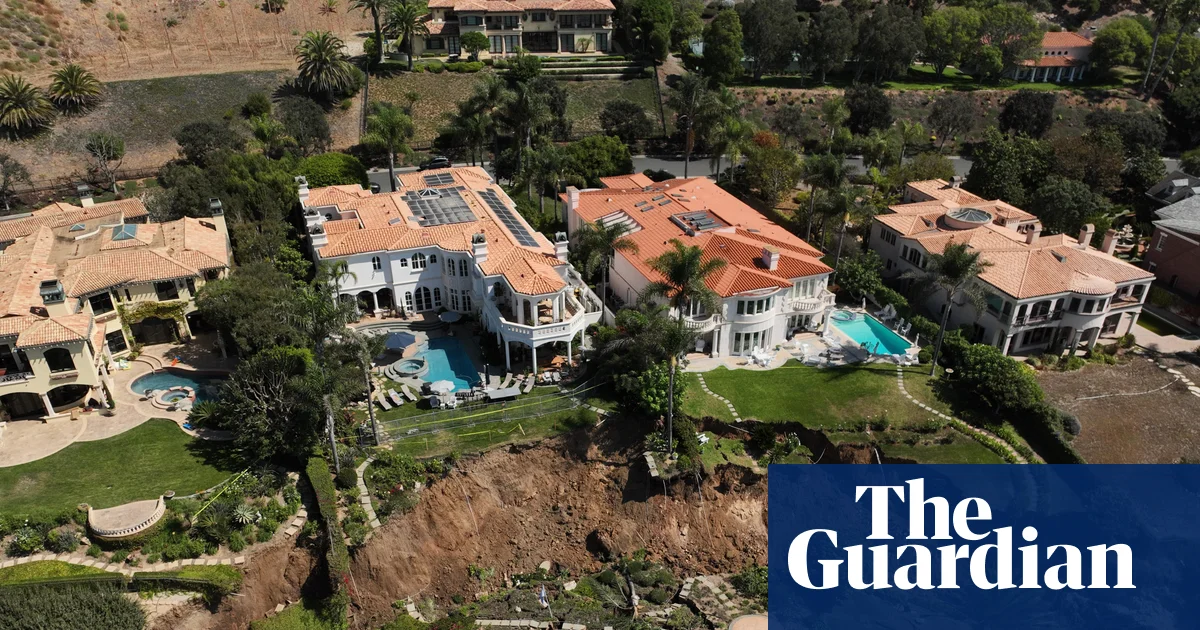
From the smoggy flatlands, the peninsula can seem like paradise, but there’s a big problem underfoot, one poised to worsen as the climate grows more volatile: Its terrain is underlain by layers of bentonite clay that, when wet, enable entire masses of earth to separate and slide from the more stable ground beneath. Combine this with cliffside erosion from ocean waves and the fact that the peninsula sits on several active fault lines, and you get landslides. (Here, landslide refers both to the slow-moving but consistent shifting of the earth and to catastrophic episodes of accelerated movement.) The problem has plagued the peninsula for hundreds of thousands of years, but when combined with more recent development in especially hazardous areas and the increasing power of storms, it has grown demonstrably worse—and more costly.