Press return to see results.
cmd / ctrl + k to open and close.
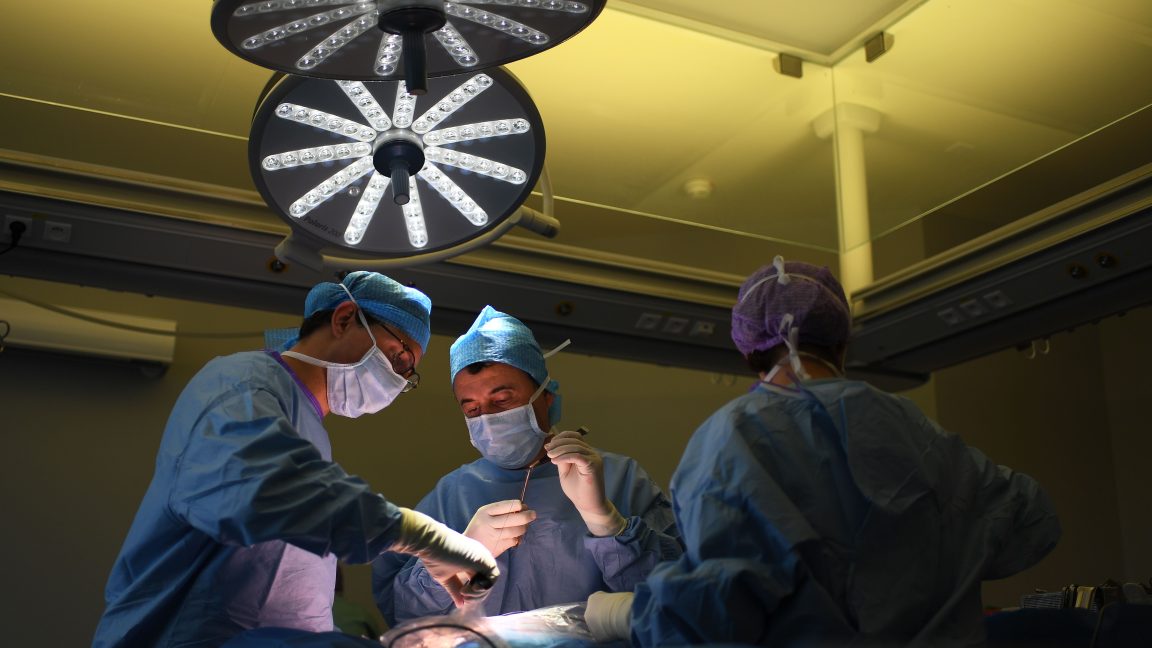
The surgeon runs a scalpel from sternum to pubis in a smooth, single motion. They cut through and through until flesh gives, and chest and abdomen splay, revealing lungs, liver, the diaphragm separating them, and a heart that’s stopped beating. Before this, a woman working for a company called Gift of Life lists off what we are here to do, as is done for the living. For the living, the name belonging to the body is confirmed. Here, it doesn’t matter. The woman requests a moment of silence so brief that, by the time you start to clasp your hands or—for those bound by the sterile field—lower your head, the moment is over. It is time, she says with a solemnness foreign to this place, to begin.
The transplant surgeon operates at a threshold: the extension of life for someone thanks to the death of someone else. Some, given pause by this threshold, write about it, grapple with How Death Becomes Life, as one transplant surgeon (or someone on his publishing team) titled his memoir. Most surgeons step across it without issue. I once asked one, while we were waiting for someone’s heart to stop, if the ethics of this work ever weighed on her. “Not really,” she dismissed the question, crinkling her eyes. “We save lives.”