The cosmetic procedure raises concern about the tissue donation process – and our own anxieties about our appearance
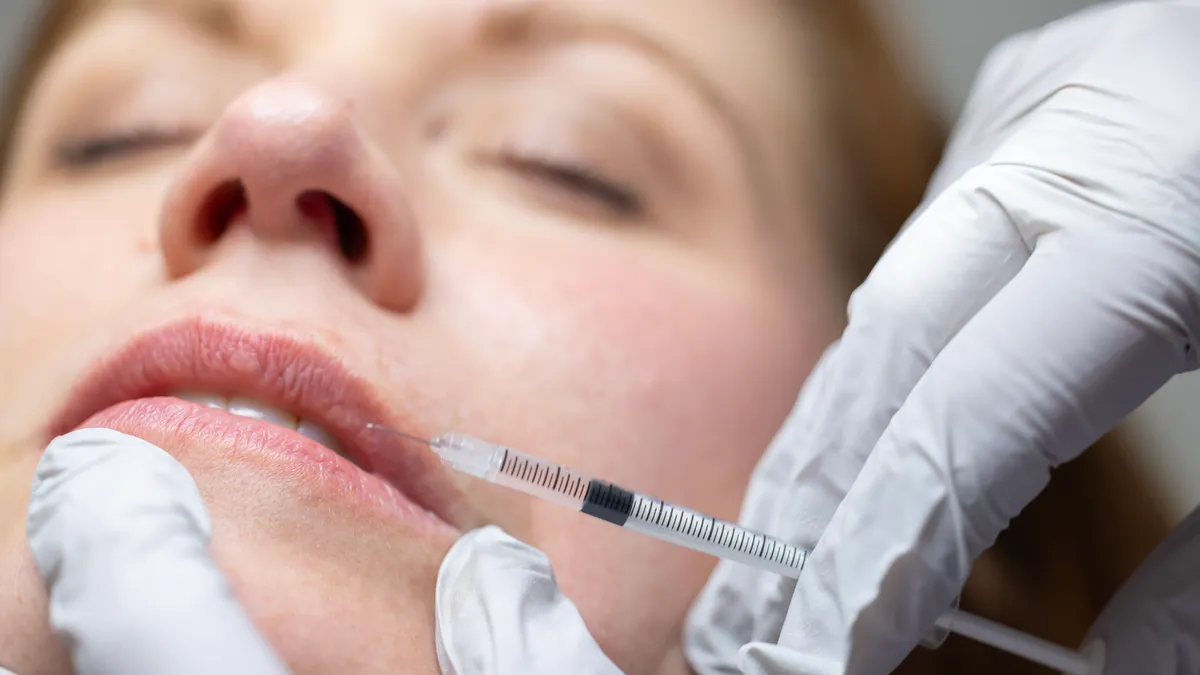
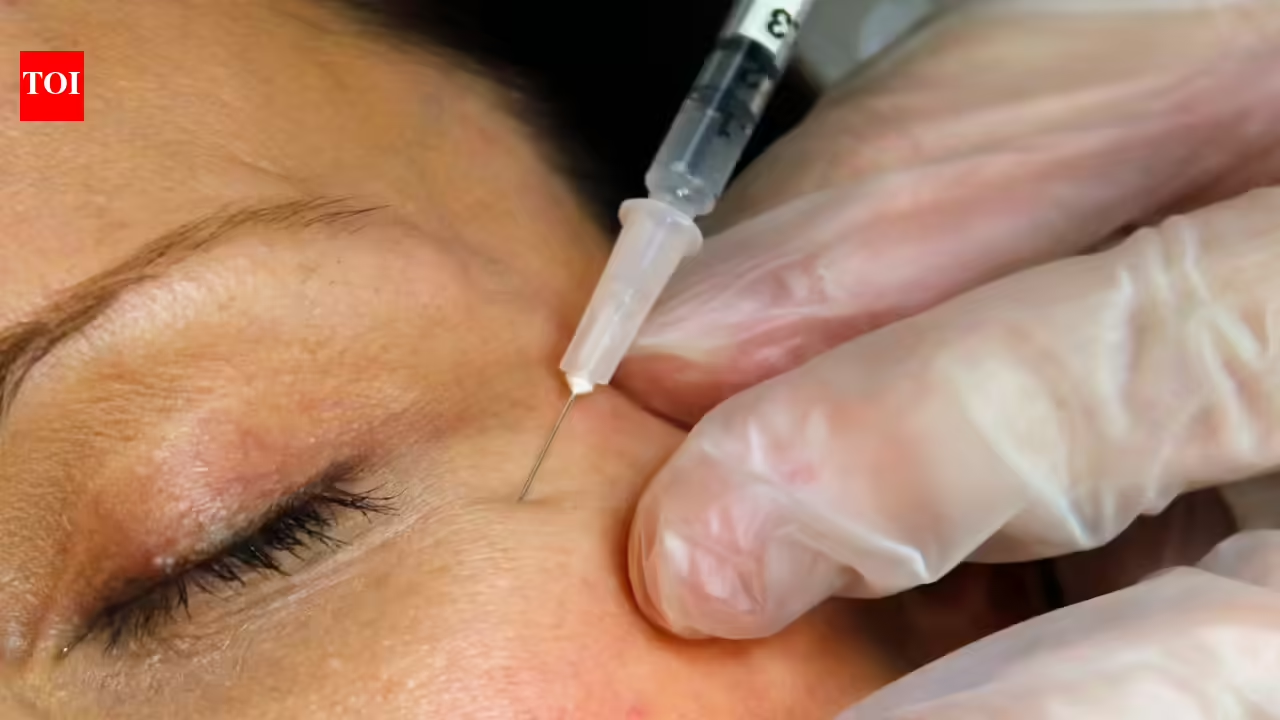
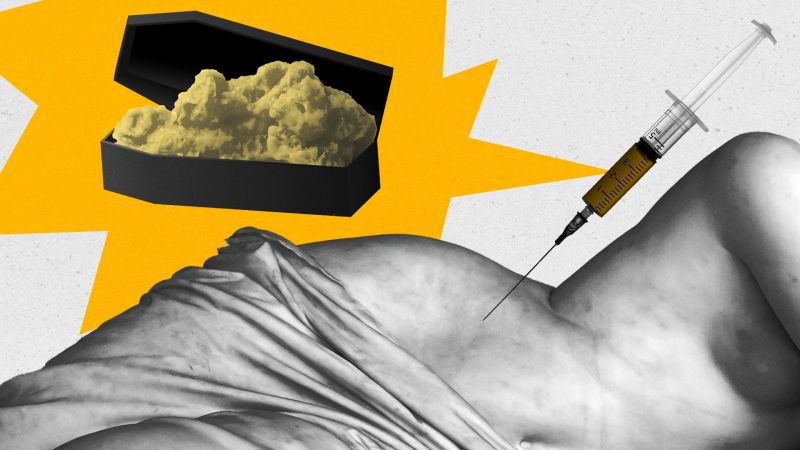
There’s a buzzy new diva in the world of cosmetic injectables and she’s quick, easy to recover from … and came from a dead body.
Indeed, people are injecting themselves with fat from corpses in order to pump up their physiques, and it’s catching on more than you would think. “It’s a gamechanger,” Dr Douglas Steinbrech, surgeon at Alpha Male, a Manhattan plastic surgery clinic that’s become popular for this procedure, told the Guardian. “[Recipients] don’t need surgery. They don’t need general anesthesia. They don’t have recovery, and the pain from all that.”
Kooky cosmetic procedures such as foot filler, vampire facelifts and even pokertox (injectables that help poker players suppress facial expressions to avoid giving away their tells) are more common and accessible than ever. But the entry of cadaver fat into this ecosystem raises ethical questions – and it reveals a lot about our own anxieties about ageing and mortality.
When individuals donate their organs, tissue banks often collect abdominal fat cells, too. Companies then purchase that fat from the tissue banks and process it for cosmetic use. It’s not the first time that donated tissue has been used for cosmetic surgery, but the process has fueled longstanding concerns about whether donors know how their remains will be used. In 2012, for instance, NPR reported that tissue bank solicitors only told potential donors that their tissue might be used for cosmetic surgery 29% of the time. (Tiger Aesthetics, whose injectable alloClae has been available since early last year, says the company ensures all its tissue is “consented to for aesthetic use”. A representative for MTF Biologics, which developed a means of a reusing fat about a decade ago, says the same.)