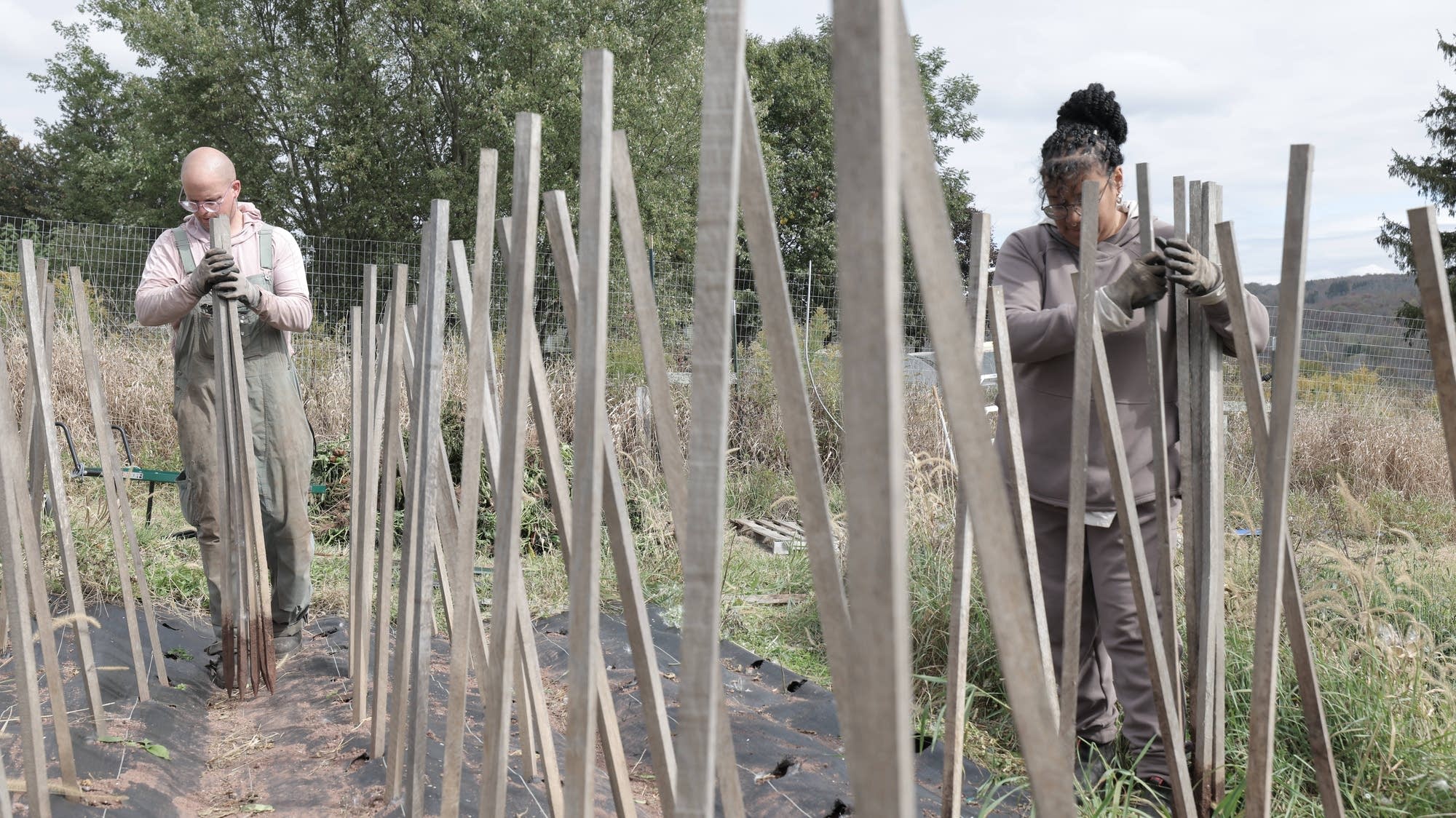
At the end of last year, the Trump administration announced a $12 billion bailout package called the Farmer Bridge Assistance Program to give U.S. farmers a little relief from the president’s trade war.Eleven billion of that total was earmarked for commodity producers — farmers that grow thousands of acres of corn, soy, wheat, and cotton, mainly to ship overseas. The remaining billion was set aside for specialty growers. They produce fruits, vegetables, tree nuts, herbs, dried fruits, horticulture, and nursery crops. While they’re not caught in the cross-hairs of the trade war the way commodity farmers are, they have plenty to worry about domestically.One such producer is Finca Seremos, a small farm in New York’s Catskill Mountains. They grow a wide variety of vegetables including cabbages, tomatoes, tomatillos, lettuce, onions, peppers, okra, collards, callaloo, and the Mexican wild herb, quelites.“If you can grow it in this climate and it's an annual vegetable, chances are we grow it,” said Chris Nickell, who runs Finca Seremos with their spouse Brenda Gonzalez. “We've got a crop list of about 40 different crops and about 200 different varieties”Nickell is hoping to make $140,000 selling vegetables this year, mostly through their sliding-scale Community Supported Agriculture project. The rest used to come from selling wholesale to food pantries and mutual aid groups, but that income is uncertain because the administration slashed the food access programs that support those organization.“We've lost about $12,000 that we were planning on from a partner in the city that was relying on a federal program that got cut to pay for our food for their food pantry,” Nickell said. That along with cuts to the Supplemental Nutrition Assistance Program and nutrition incentive programs means that, “in total about 20% of our budget is in limbo, and that's not insubstantial.”In March, Nickell applied for Assistance for Specialty Crop Farmers under the Farmer Bridge Assistance Program and it was a pain. The program was designed for commodity growers who can say, “I grow 400 acres of corn that I sell to this silo.” It’s much more complicated for Finca Seremos.“ I am telling them that the acreage ranged from 0.02 acres for, I believe it was celery,” said Nickell. “All the way up to 0.1 or 0.15 acres for things that we grow a lot more of like lettuce and cabbage.”Nickell has a crop plan and keeps good records, but a lot of farmers don’t know their precise bed-feet to calculate into fractional acres for each varietal so the application can take a long time. And the kicker is, specialty farmers have no idea how much aid they’ll get. The U.S. Department of Agriculture published reimbursement rates for commodities, but not for specialty crops.“If you're going to put 40 or 60 hours applying for this and you may only get $200, it's not worth it,” said Vanessa García Polanco at the National Young Farmers Coalition.Commodity growers have already recieved $9.6 billion in FBA payouts, but it’s unclear when specialty growers will get paid. García Polanco says that based on previous programs, it could take 18 months to two years.But Nickell is not waiting on that money. They’re busy planting seedlings and cultivating their community.“ I literally know every one of our CSA members' names, about their families, where they live,” said Nickell. “It's beautiful and touching and moving, and helps me survive economically because of that close relationship and that is the case for most of the farmers in this region.”Nickell relies on these relationships, because they’re so much more durable than government programs.
Small farmers aren’t waiting to be bailed out
Specialty growers are weathering this economy despite cuts to food access programs and SNAP.
591 words~3 min read