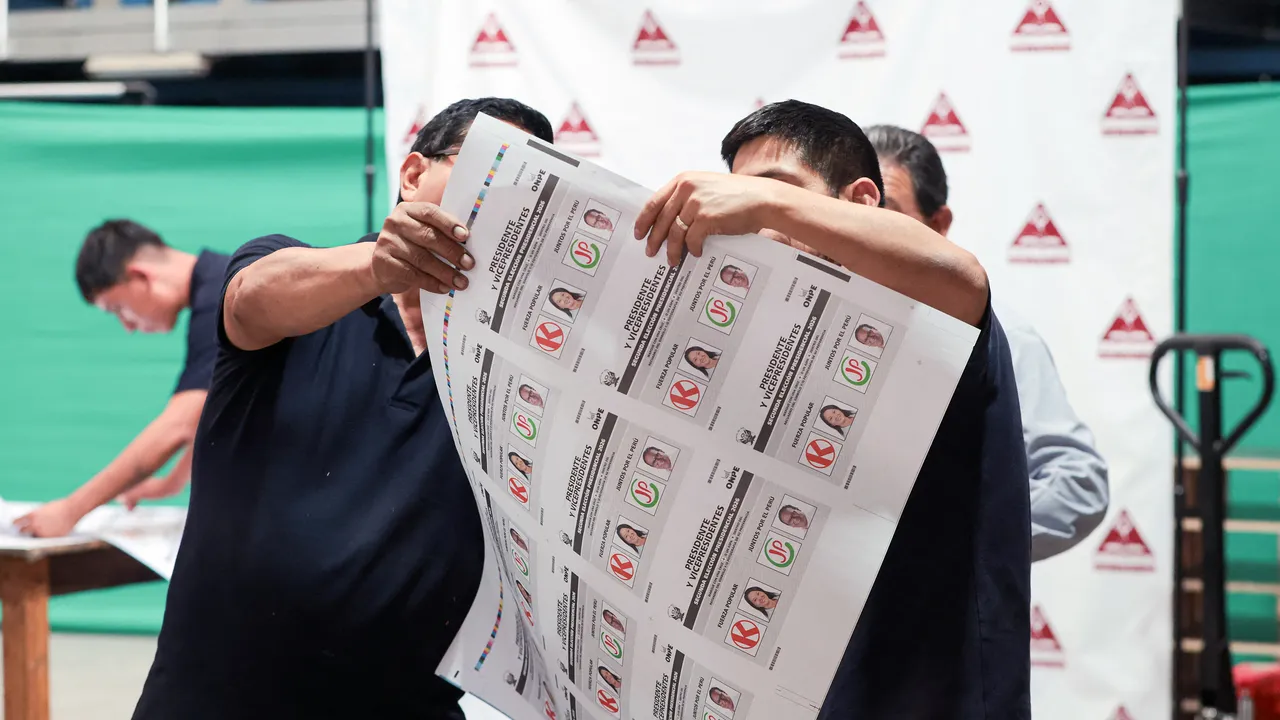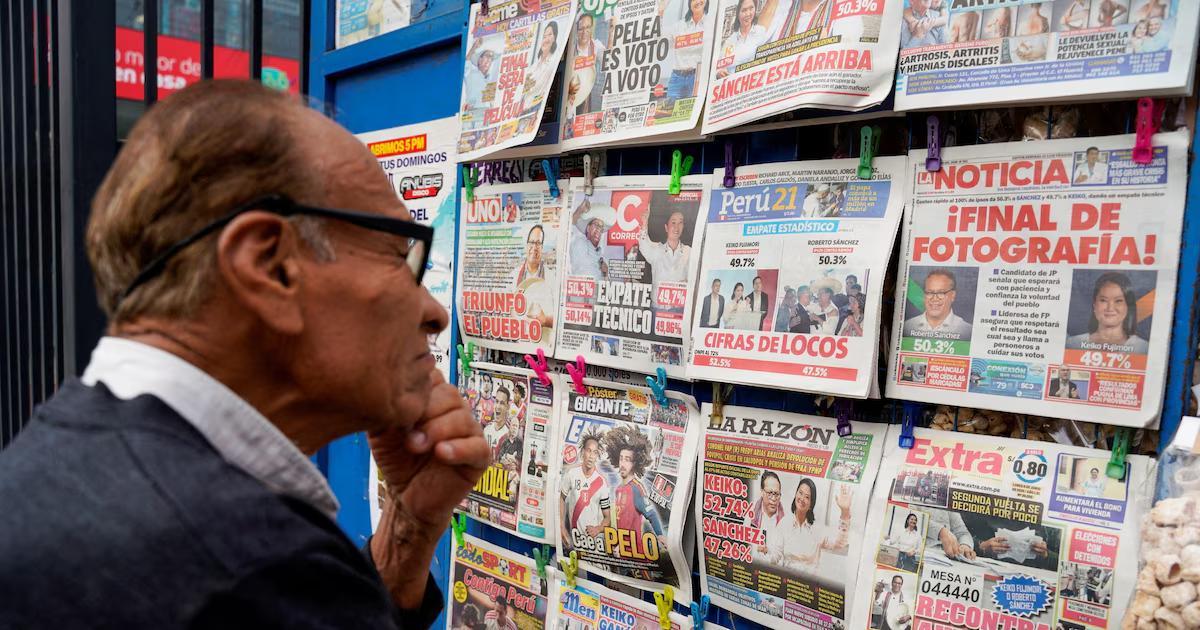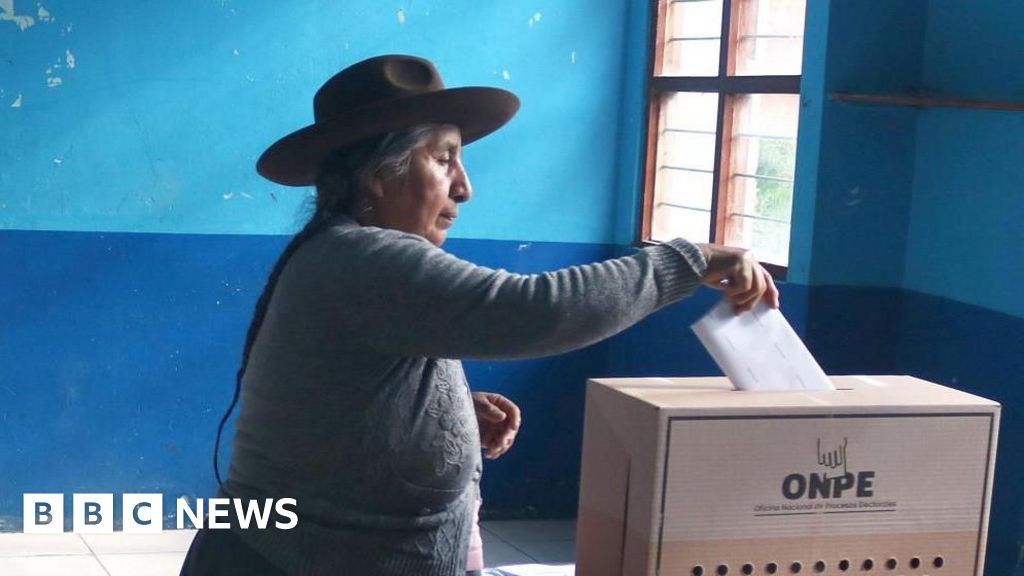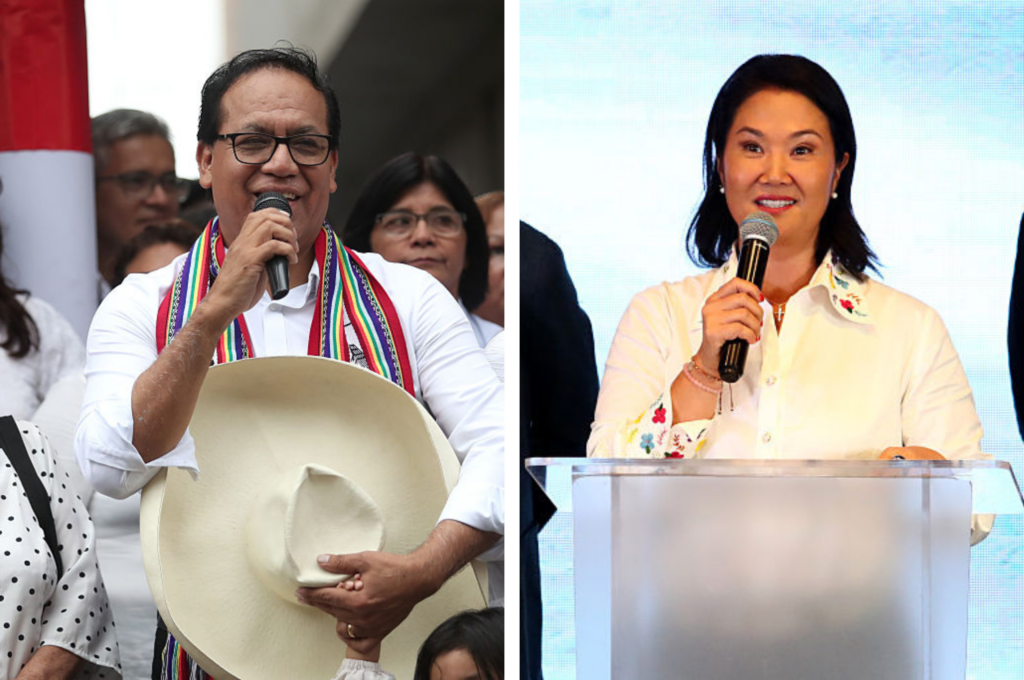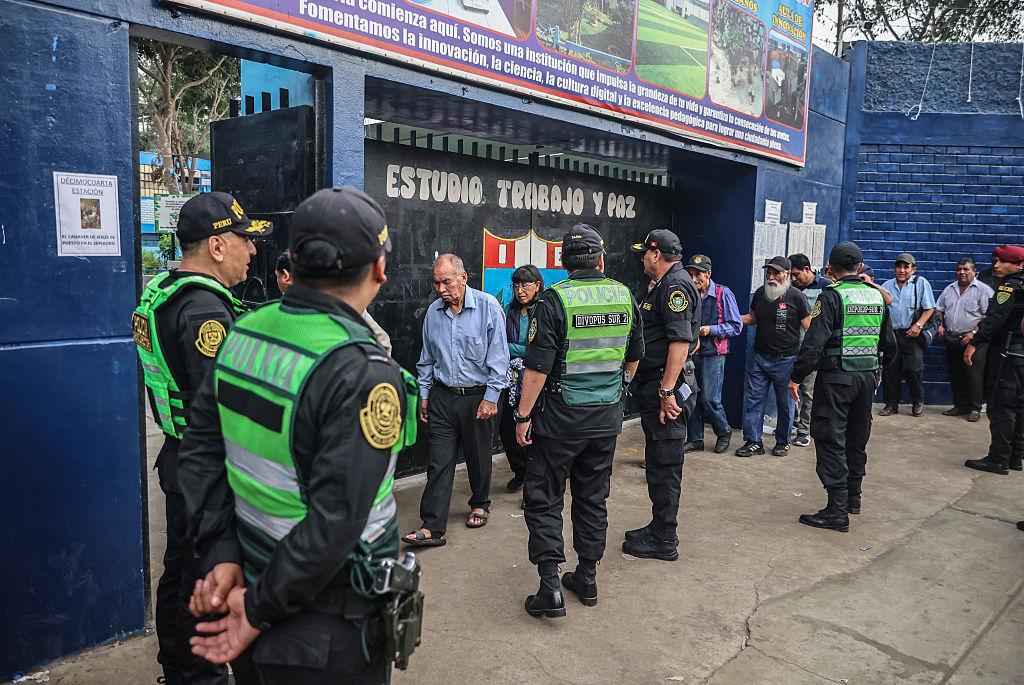
Reading Time: 5 minutesAlmost a month has passed since Peru’s general election on April 12 and, extraordinarily, there is still no official result. That reflects the recent descent into incompetence of the electoral agency, which meant voting had to be extended into a second day in three districts of Lima. But incompetence is not fraud, contrary to the noisy but baseless claim of Rafael López Aliaga, the ultra-conservative candidate. There is little doubt that Peru is heading for a runoff on June 7 between Keiko Fujimori, a conservative running for the fourth time, and Roberto Sánchez of the far left.
On the face of things, this election is a repeat of the last one in 2021, when Fujimori narrowly lost to Pedro Castillo, a rural teacher of the far left whom Sánchez served as a Minister of Foreign Trade and Tourism. Castillo, backed by the regimes in Cuba and Venezuela (both more powerful back then), self-destructed when he declared the closure of Congress and the judiciary, and was swiftly arrested.
But there are differences. This election may help end the chronic political instability that has seen no fewer than eight different presidents since 2016. What is less clear is whether it will improve public policy in a country where this has become the preserve of special interests, some of them illegal.