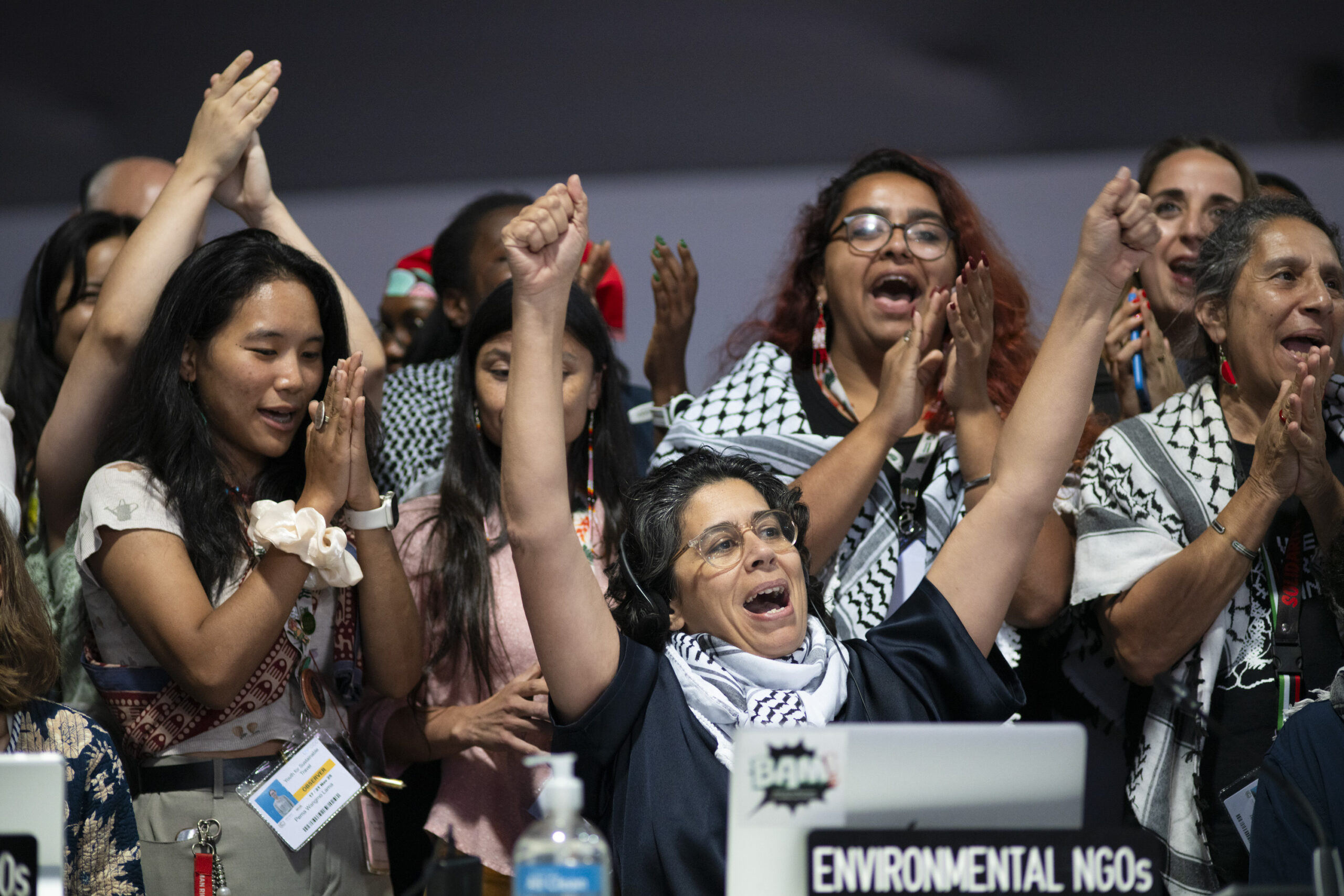
Amid stalled talks on finance, adaptation and fossil fuel transition at the COP30 climate summit in Brazil’s Amazon region, governments agreed to an ambitious Just Transition package combining the strongest rights- and inclusion-based language yet seen in the UN climate process with a new global mechanism to support countries reshaping their economies. The COP30 decision also confirmed that Just Transition must take a whole-of-society and whole-of-economy approach – covering mitigation, adaptation, loss and damage, and finance – a broad scope that observers said marked a significant step forward for the process. Delegates described the outcome in the city of Belém as a rare convergence of political will, technical facilitation and years of groundwork by civil society and governments.For Indian women workers, a just transition means surviving climate impacts with dignityThe decision also places stronger emphasis on the social and economic foundations of transition than many observers had expected. The text links Just Transition explicitly to poverty eradication and decent work, and recognises the need for just energy transitions as part of implementing the Global Stocktake – including the transition away from fossil fuels.Finance provisions were also firmer than in previous drafts, with governments agreeing that support for Just Transition should prioritise grants and non-debt-creating instruments, a framing long pushed by developing countries and civil society.Civil society kept the issue aliveThe Work Programme on Just Transition, launched in 2022, remained low-profile across several COP cycles. Unions, youth networks, feminist groups, social movements and environmental organisations continued refining proposals and pushing negotiators even when political attention was limited – while activists also took to the streets across the world calling for a Just Transition. As momentum built toward COP30, these groups began referring to their proposal as the Belém Action Mechanism – the “BAM” – signalling the level of institutional ambition they believed the process required. Alongside this sustained organising, unions stressed that Just Transition had to move beyond principles and into practice.
How Belém launched the Just Transition mechanism
COP30’s headline win - the creation of the first global Just Transition mechanism - did not materialise overnight. Born out of years of work, it flourished during two weeks of civil society alignment in one of the few negotiating tracks that gained momentum
1,148 words~5 min read