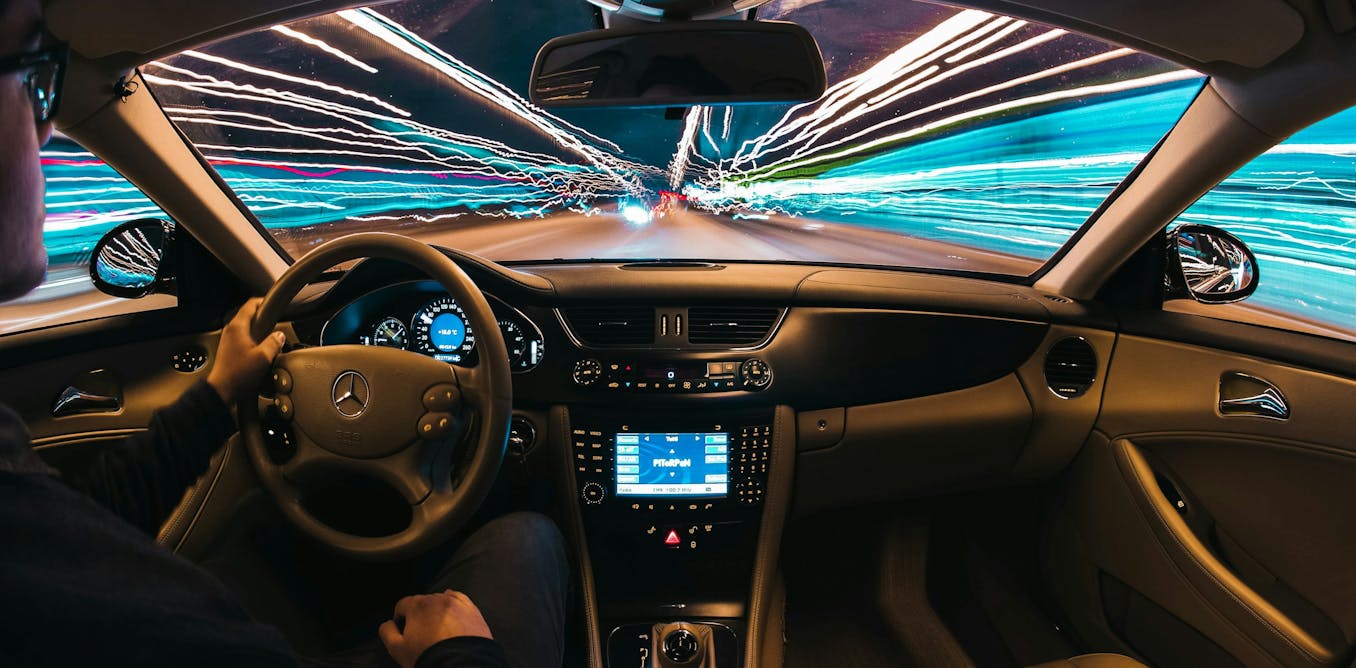
Picture this: you’re driving on a mountain road, when you suddenly hit a thick patch of fog. You respond instinctively. Your vision sharpens, and you narrow your eyes to make out the shape of any oncoming cars.
Human beings handle these quick changes very well, but if it were a self-driving car – at least one with a current artificial intelligence (AI) system behind the wheel – things could easily end in disaster.
Today’s AI vision systems are extremely accurate when visibility is good. On a clear, sunny day a self-driving car can recognise pedestrians, road signs and other vehicles with precision. However, they are extremely vulnerable to environmental changes. If it rains, or gets dark or foggy, standard AI systems become blind, incapable of detecting obstacles that a human driver would spot with ease.
Our research at the University of Valencia proposes a possible solution: instead of exposing AI models to millions of images of every possible road condition, we decided to imitate biology. But biologically speaking, why can humans see so well under such a wide range of conditions?
À lire aussi : Human vision: what we actually see – and don’t see – tells us a lot about consciousness