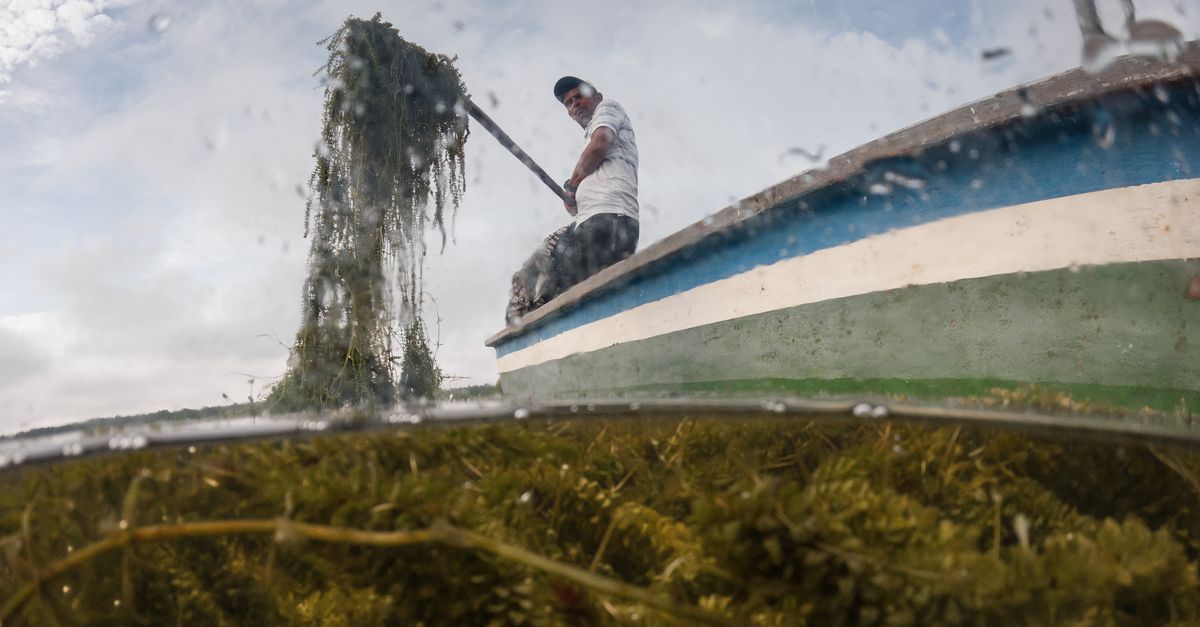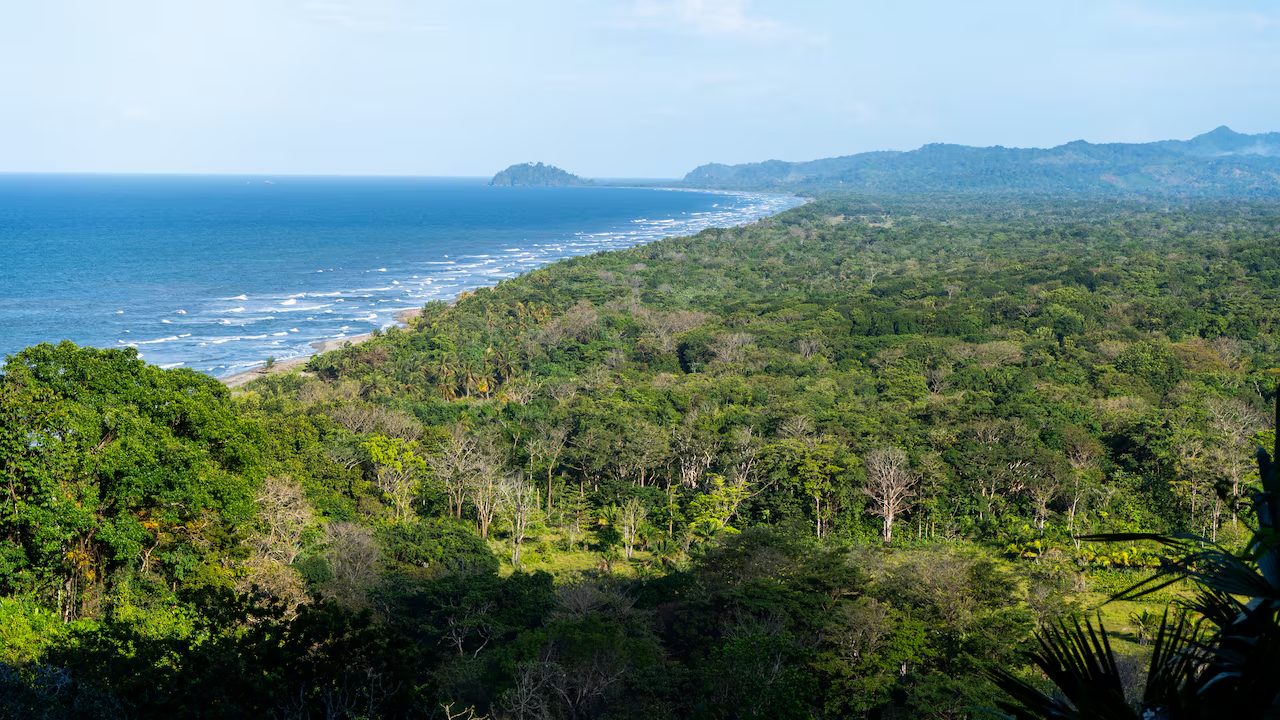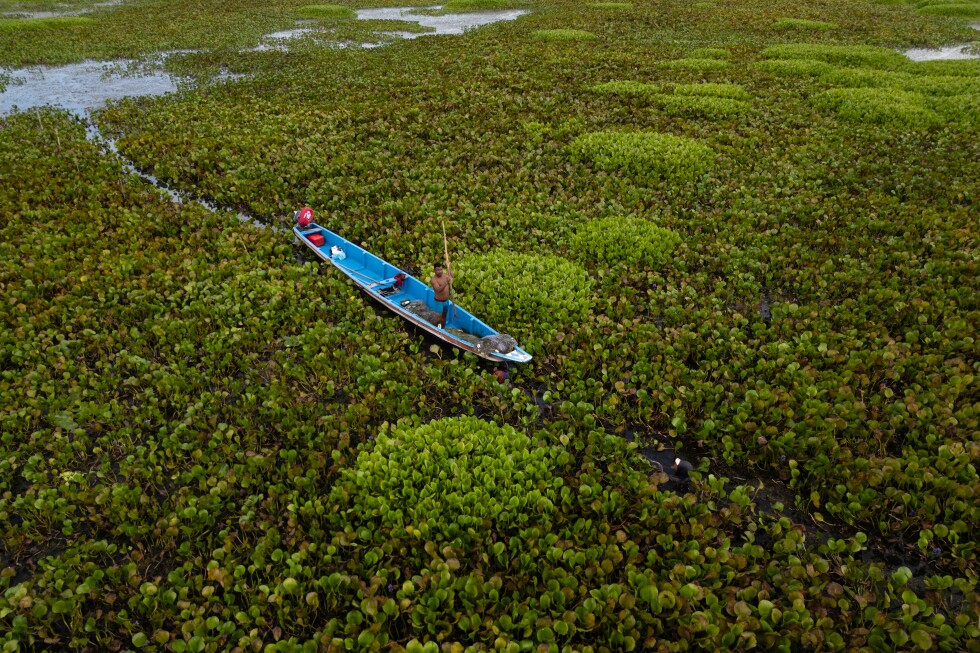
NUEVA VENECIA, Colombia (AP) — Leaning over the side of a small speedboat, Jhon Cantillo scoops up a thick clump of bright green vegetation, holding it up before gesturing toward the horizon, where the plant spreads across the waters as far as the eye can see.From above, the plant forms dense, almost carpet-like mats that stretch across the surface. Up close, its long strands extend deep below the water, with roots reaching toward the lagoon bed, making it difficult to remove completely.The scenes are unfolding in Colombia’s Cienaga Grande de Santa Marta, a vast coastal wetland on the Caribbean coast about 30 kilometers (19 miles) from the city of Santa Marta. What was until recently a lifeline for fishing and transport is now being choked by dense vegetation, turning it into what he describes as an unfolding environmental crisis.
“What we’re seeing here today is a problem. One that affects not only movement or fishing, but the community as a whole,” said 32-year-old Cantillo, a local environmental and social leader from Cienaga Grande de Santa Marta.
Jhon Cantillo, a local environmental and social leader, poses for a photo as he travels through an invasive plant called a Hydrilla verticillata Thursday, April 30, 2026, on the outskirts of Buenavista, Colombia. (AP Photo/Ivan Valencia)