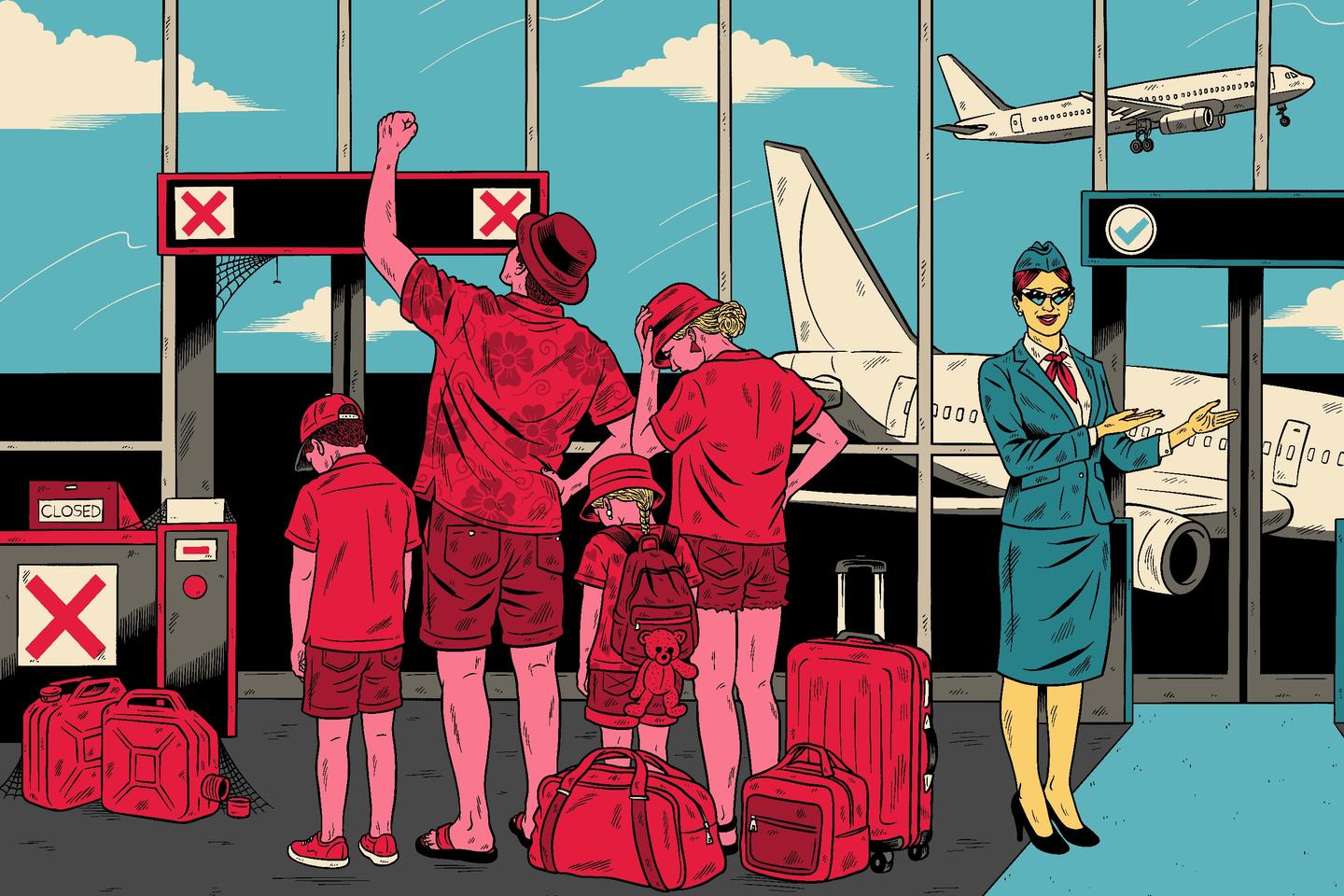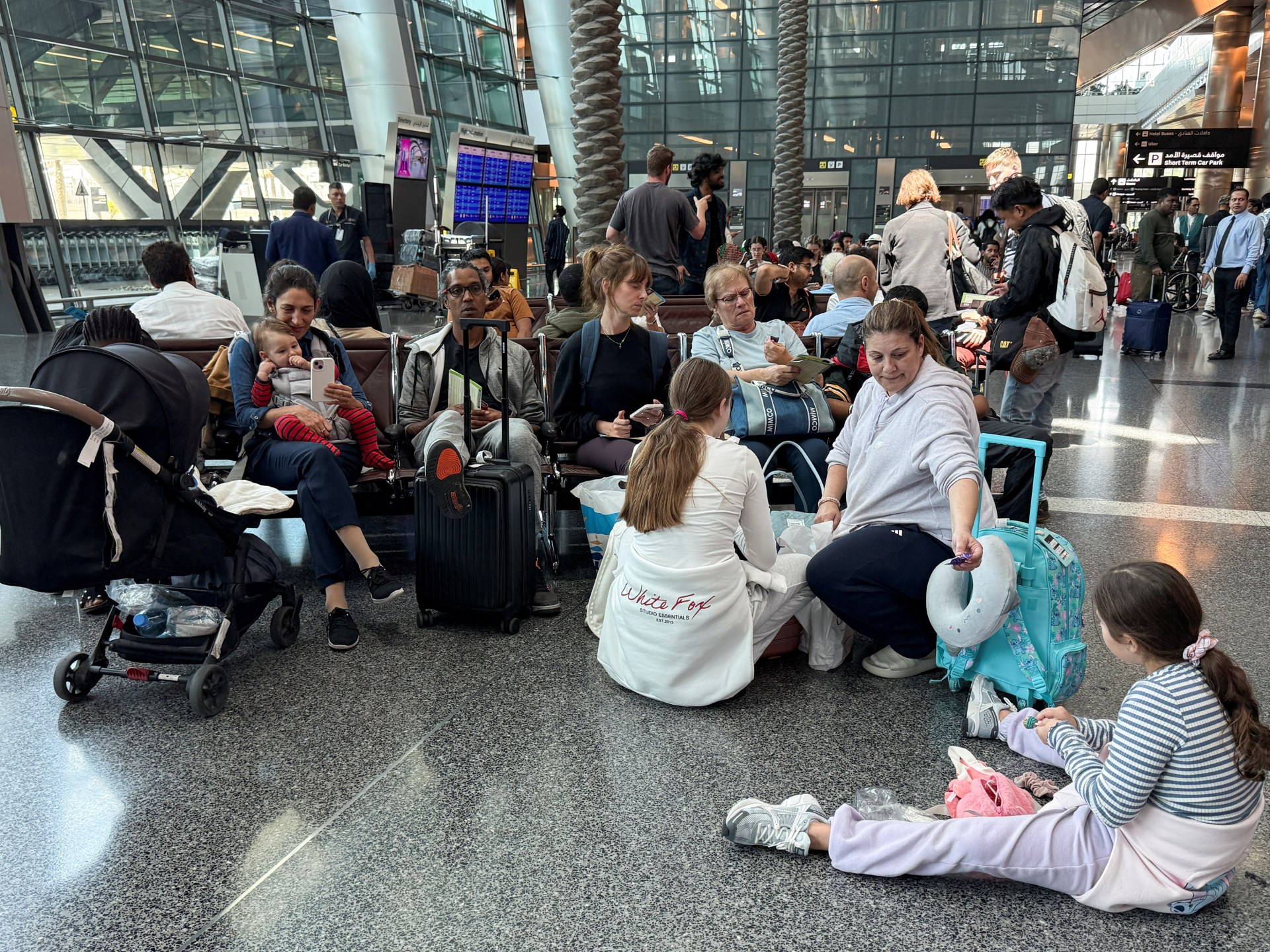
Manarola, Cinque Terre—there has been a big uptick in European train bookings compared to last year.gettyThe situation for the travel industry after over two months of conflict in the Middle East appears complicated. For travelers and operators far removed from the region, many are changing destinations, timings and modes of transport, rather than canceling altogether. For those closer to the conflict, the situation is much bleaker.We are not far off the end of the six weeks of jet fuel that the head of the International Energy Agency warned there was remaining to keep planes flying. Planes have certainly been canceled, redirected, and costs have gone up. The overall situation, however, appears to be contained across Europe and the U.S. for now.The U.K.’s Department for Transport analysis of OAG schedule data shows that around 1,200 departing passenger flights from the UK have been removed from schedules over the 6-week period from 3 May 2026 to 14 June 2026. This accounts for less than 1% of planned flights. In addition, the U.K. government is clear that airlines “are not currently seeing a shortage of jet fuel” and “there is no current need to change upcoming travel plans.”The European Travel Commission, which represents Europe's national tourism organizations, released its quarterly report on European Tourism for 2026, noting that disruptions linked to the Middle East conflict are reshaping global travel flows. However, for the moment, it reports “the impact on Europe remains relatively insulated due to its safety reputation and strong intra-regional demand.” The report adds that “ongoing uncertainty and the risk of jet fuel shortages may pose additional downside risks to this outlook”, leaving the door open for things to get worse should the conflict continue. The situation for the Middle East travel industry is obviously far worse, with EuroNews reporting a daily loss of around €607 million.Travelers Are Rethinking Long-Distance Trips And Adjusting Routes And Modes Of TransportRecent data suggests European and American travelers are readjusting to the situation and rethinking destinations (staying closer to home and choosing cheaper/closer places to visit) as well as adjusting how they travel (cars and trains over long-distance planes):The American Hotel & Lodging Association reported new market data showing that anticipated World Cup demand has not translated into strong hotel bookings, citing visa barriers and geopolitical concerns suppressing international demand. Rising costs are also given as key drivers of softened demand.Omio.com, a multimodal travel platform, has noted double-digit growth in rail and bus bookings across Europe. Veronica Diquattro, president of B2C and supply, says “Consumers are facing increasing financial pressure and economic uncertainty” due to high energy bills, housing costs and rising fuel prices, and ongoing travel disruptions are adding further strain. Diquattro adds, though, that the data suggests “that travelers are not giving up on their holidays. but adjusting their routes, modes and timing to make travel work for them.”This is supported by the Commercial Director of Europe for TrainPal, Alvaro Ungurean, who has seen a sharp increase in U.K. travelers buying European train tickets. They've seen a 98% increase in U.K. residents booking train tickets in France year-on-year since last April, and a 25% year-on-year increase in Eurostar ticket sales. The data suggests a growing shift in traveler behavior, as consumers seek more reliable and flexible travel options closer to home.The New York Times reports that Americans are changing their travel plans amid economic uncertainty, rising airfares and geopolitical instability. An April poll by YouGov and The Points Guy found that 24% of Americans had reconsidered travel plans as a result of recent events. In addition, outbound travel from the U.S. fell 2.1% in March and continued in April. And data from aviation analytics firm Cirium shows a 10.5% year-on-year drop in July bookings from the U.S. to Europe. Travel agents are seeing delays or postponements of travel plans rather than outright cancellations. Bloomberg reports that $6,000 flights to Europe are pushing American travelers to find ‘destination dupes’. With airfares up 15% year-on-year, Americans are not canceling plans but letting points and cheaper airfares dictate where they end up—they are booking much later, too. Think Brussels instead of Paris, Naples instead of Rome, where in both places, accommodation can be up to 30% cheaper.Afar reports that cruise companies have reshuffled their itineraries. Costa Cruises canceled its full winter 2026-2027 Middle East season, moving ships to the Mediterranean instead. MSC World Europe will sail the Caribbean instead of the Persian Gulf between November 2026 and April 2027.In conclusion, European and American travelers and operators are adapting to the new, and hopefully temporary, geopolitical situation, with many choosing different destinations and/or timings, as well as different modes of transport and staying closer to home. Clearly, the longer the conflict continues, the greater its impact will be, not just on the travel industry directly, but also because a global supply chain shortage will drive up the cost of living, relegating travel to a nice-to-have rather than a given this summer.MORE FROM FORBESForbesMore Americans Are Heading For Retirement In Europe. Will You Join Them?By Alex LedsomForbesWar And Rising Costs Threaten Europe’s Summer Tourism SeasonBy Alex LedsomForbesEnergy Crisis Hits Travel As Bookings Shift To Trains And StaycationsBy Alex Ledsom
Conflict Causing Travel Disruption But Travelers Are Changing Plans
The Middle East conflict is causing travel disruption but at present, for EU and American travelers, this is in changes to destinations, timings and how people travel.
860 words~4 min read