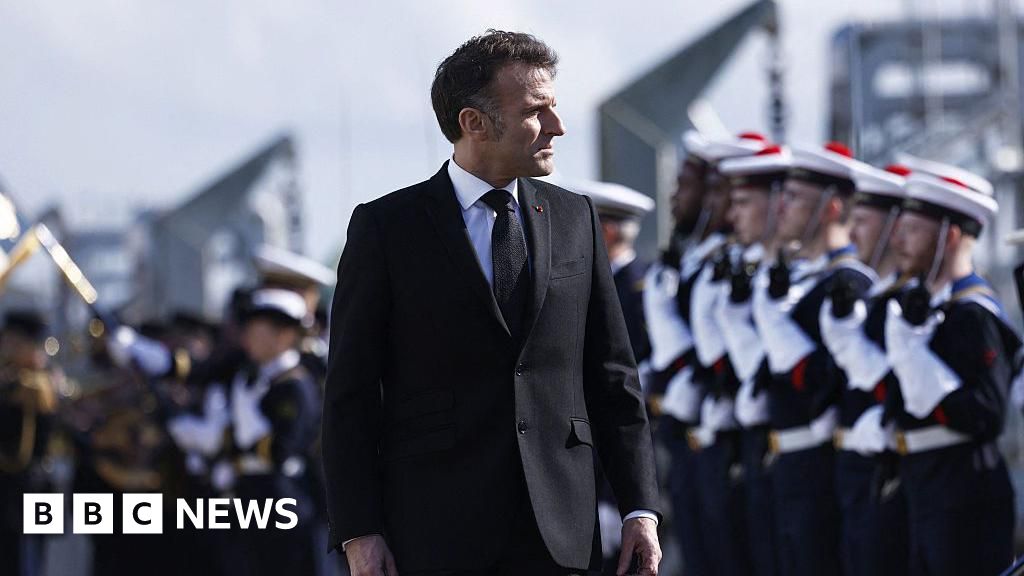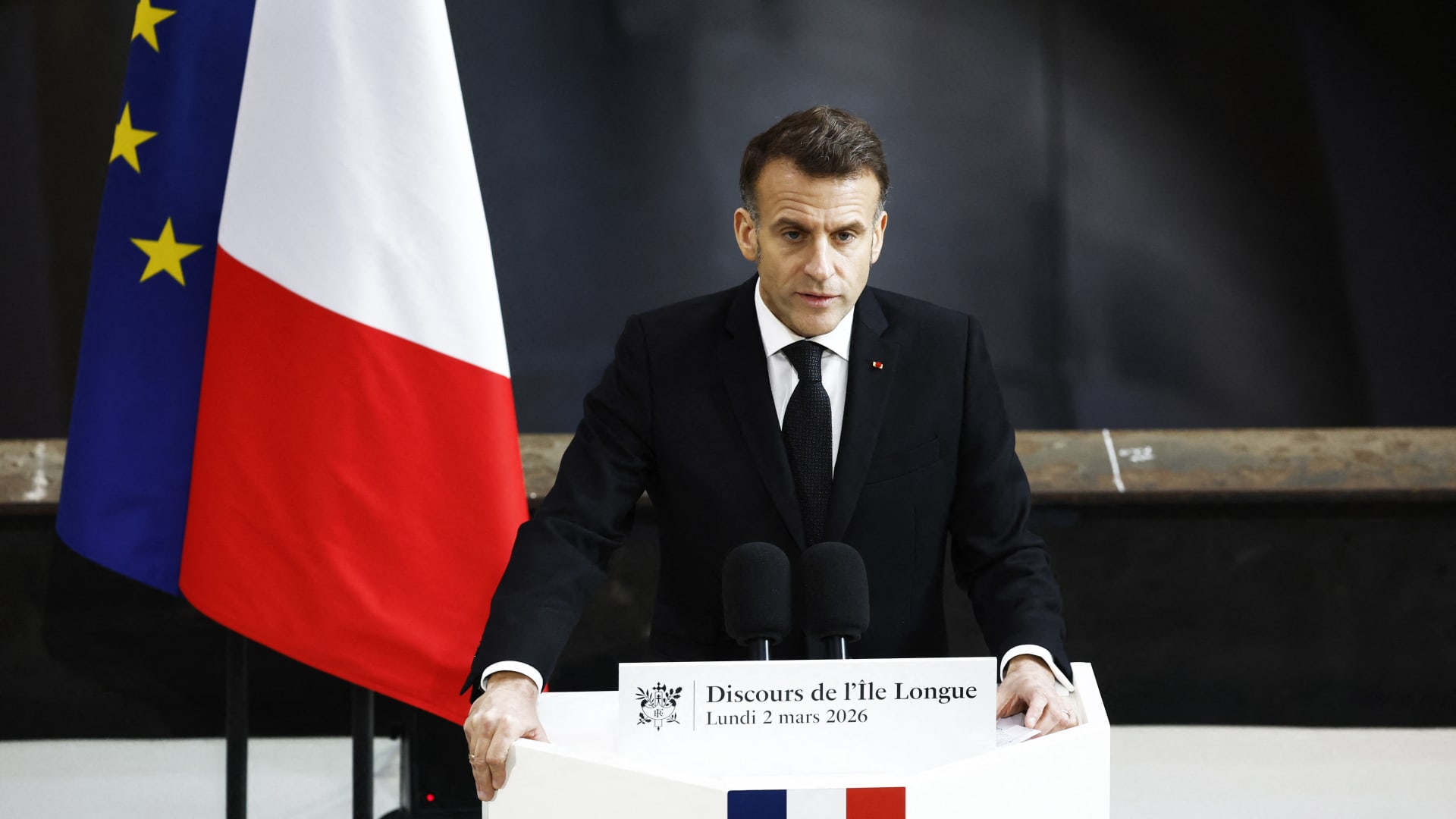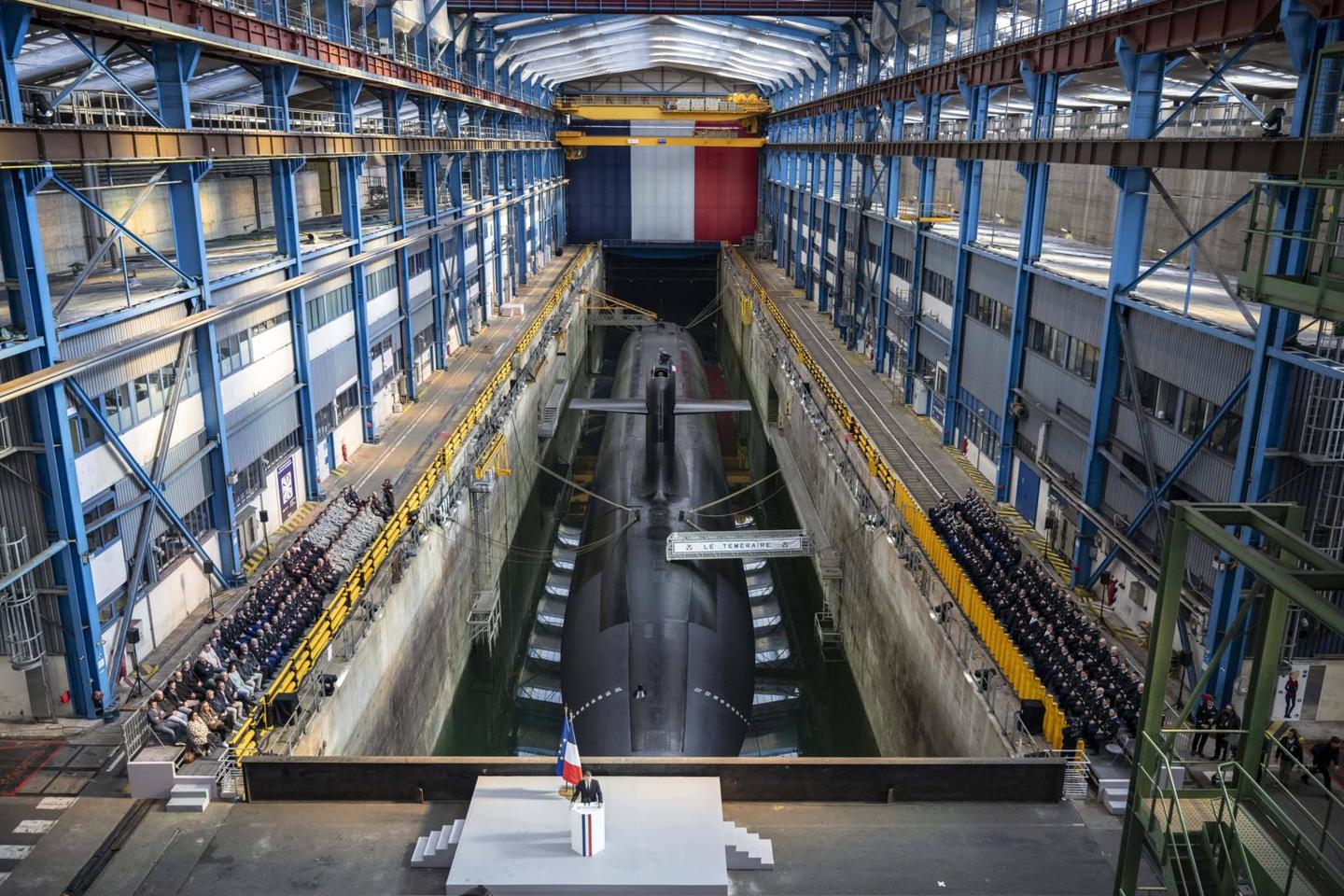
President Emmanuel Macron delivers a speech at the Île Longue nuclear submarine base in Crozon, Brittany, on March 2, 2026. ELIOT BLONDET -POOL/SIPA
At a time when every domain of military affairs has been affected by the proliferation of high-intensity wars since 2022, nuclear deterrence has not escaped the ongoing geostrategic upheavals. It is now fully entering an era that one of France's leading strategic affairs theorists, political scientist Thérèse Delpech, had predicted in the mid-2010s, in her posthumous book, Nuclear Deterrence in the 21st Century: the "third nuclear age."
After a "first nuclear age," which was marked by the trauma of the atomic bombings of Hiroshima and Nagasaki in August 1945, and a "second nuclear age," which began after the fall of the Berlin Wall in 1989 and led to three decades of nuclear disarmament and arsenal reduction policies, the world has now entered what Delpech called an era of "strategic piracy." This period is, according to her, characterized by "the absence of rules," "deception," and, above all, by "the difficulty of maintaining effective deterrence strategies."
The phase that began at the turn of the 2000s, after authoritarian powers such as Iran, North Korea and China asserted their nuclear ambitions, has, experts unanimously agree, led to an unprecedentedly unstable situation today. This is both because more and more nuclear-armed states no longer hesitate to enter into direct confrontation – such as India and Pakistan, in May 2025 – and because nuclear deterrence now faces a new kind of challenge: challenges "from below" to its very foundations.