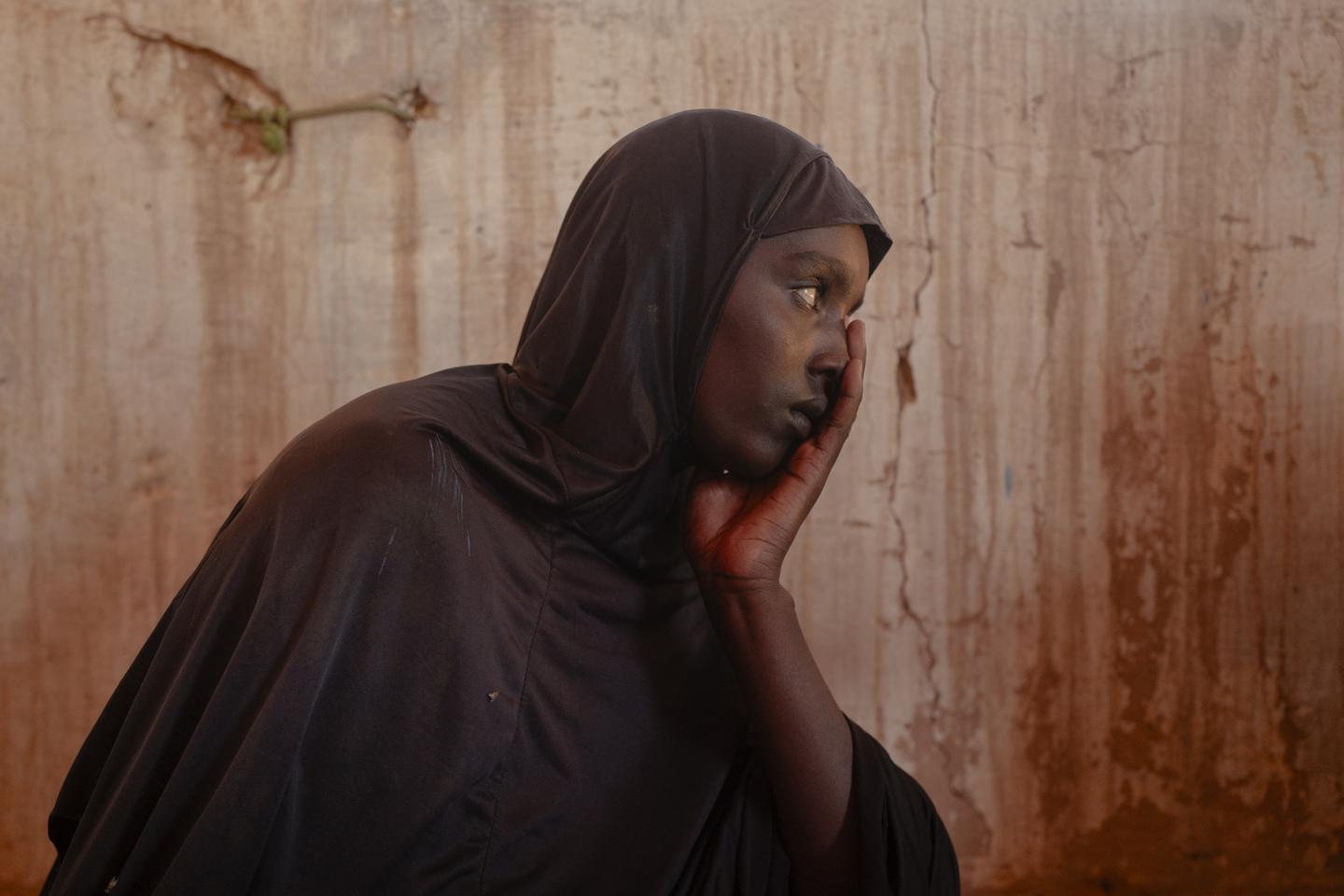
A Fulani refugee who fled the blockade imposed by jihadists from the Group for the Support of Islam and Muslims, at the Mbera refugee camp in Bassikounou, Mauritania, on the border with Mali, November 4, 2025. MICHELE CATTANI / AFP
The footage is extremely violent. In one video, posted in a Russian Telegram group on Wednesday, April 29, a charred, dismembered body is seen in broad daylight, with civilians encouraging the act. Another video shows a close-up of a corpse, on fire, surrounded by men. This horrific material, which is difficult to authenticate, has circulated widely on messaging apps since the joint offensive on Saturday, April 25 in Mali, led by the Jama'at Nusrat al-Islam wal-Muslimin ("Support Group for Islam and Muslims," JNIM) Group for the Support of Islam and Muslims (JNIM), an Al-Qaeda affiliate, and the Azawad Liberation Front (FLA), a Tuareg pro-independence armed movement.
The victims reportedly belonged to the Fulani and Tuareg populations. This has raised fears of renewed persecution of these communities, who are suspected of collaborating with jihadists and pro-independence groups, due to the presence of many of their members in armed movements.
In a notable sign of the climate of fear, no researcher or civil society member agreed to speak on the record, fearing reprisals. A Fulani rights advocate, reached by phone, said he had received "several reports" of disappearances since April 25 in the area of Kati, a garrison town on the outskirts of Bamako, the capital. It was in this stronghold of Mali's military authorities that General Sadio Camara, the defense minister, was killed in a suicide attack on the day of the terrorist assault.