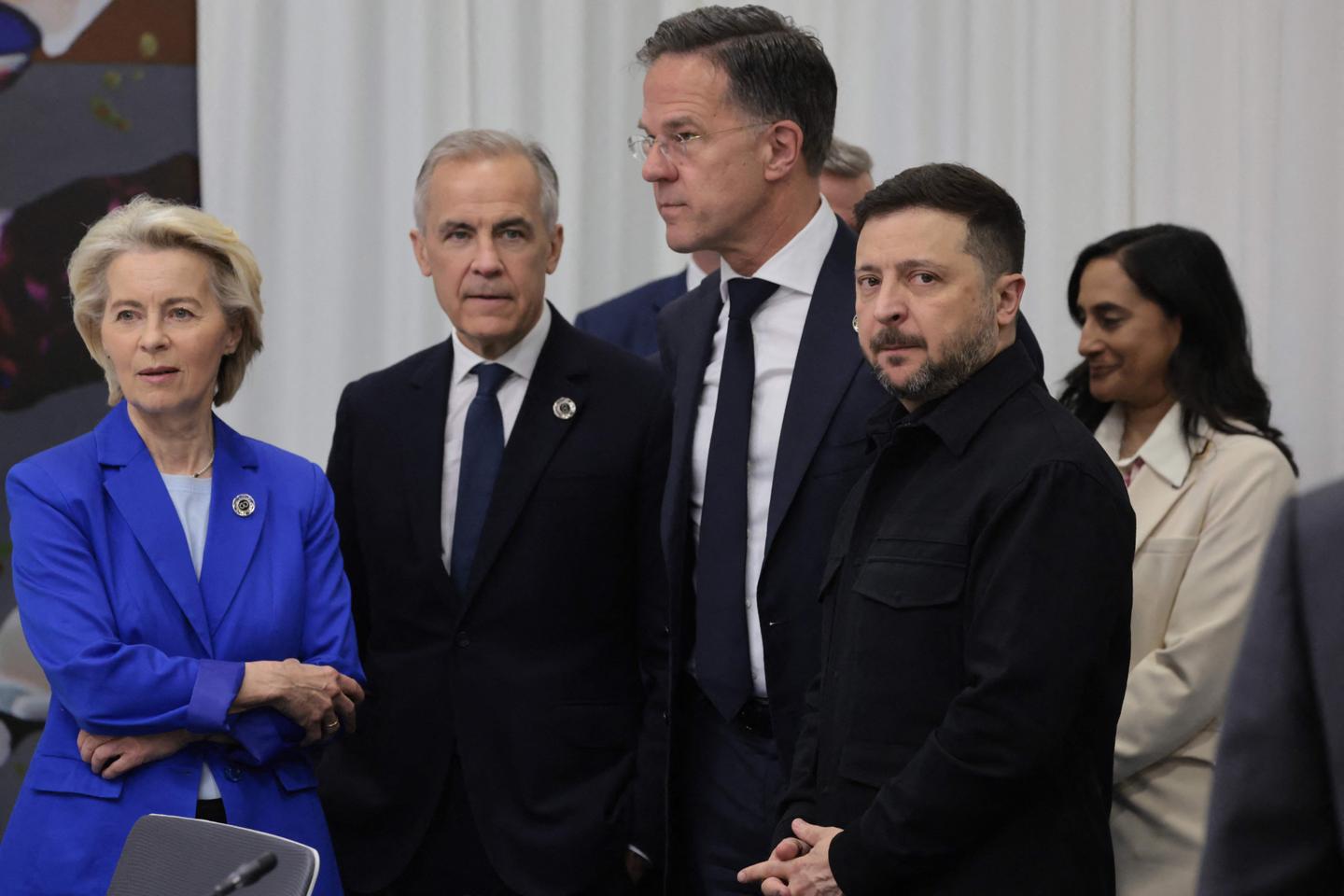
European Commission President Ursula von der Leyen, Canadian prime minister Mark Carney, NATO secretary general Mark Rutte, and Ukrainian president Volodymyr Zelensky in Yerevan on May 4, 2026. LUDOVIC MARIN/AFP
Not a single month now passes without a new blow to the North Atlantic Treaty Organization. After considering invading Greenland, a territory of Denmark and therefore an allied country, then describing NATO as a "paper tiger" and threatening to withdraw from it, US President Donald Trump, angered by the lack of European support for his war in Iran, further weakened the organization on Friday, May 1.
He not only announced the withdrawal of 5,000 American soldiers from Germany – a mostly symbolic gesture – but also reportedly suspended the deployment on German territory of long-range missile launch systems capable of striking targets inside Russia.
This "deprives Europeans of a key capability to deter Russia," said Gesine Weber, a researcher at the Center for Security Studies at ETH Zurich, and "therefore risks creating or widening a deterrence gap Europe might face with a withdrawal of the US from European security."
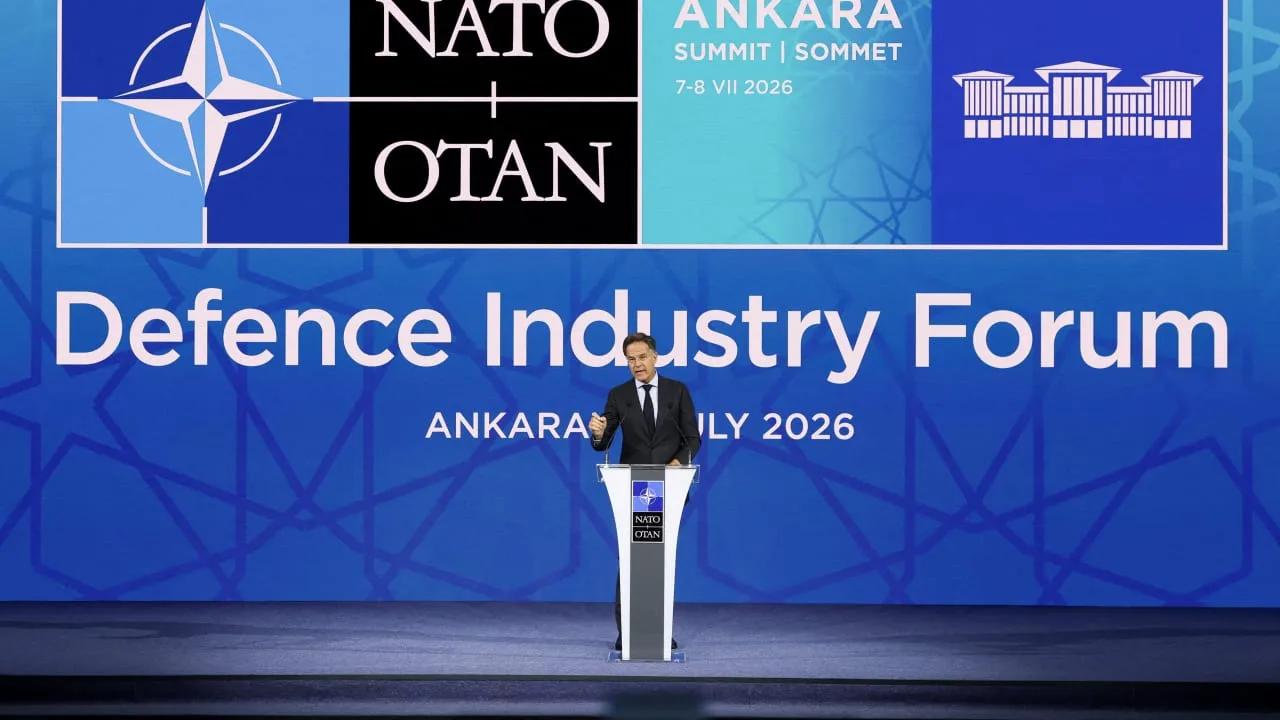
In Europe, no one wants to do without American support. "I would also argue that what I'm hearing from all my contacts with European leaders is that [they] have gotten the message. They've heard the message from the US loud and clear," said Mark Rutte, the secretary general of NATO, on Monday, May 4, in Yerevan, Armenia, where he was attending the European Political Community summit.