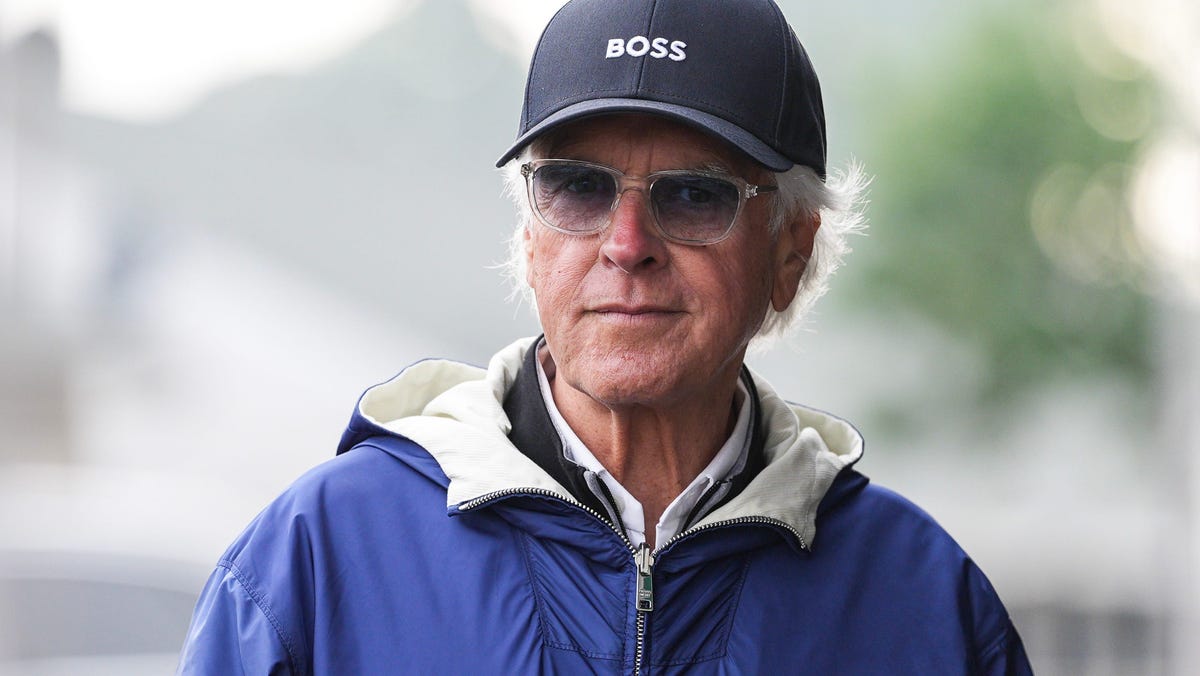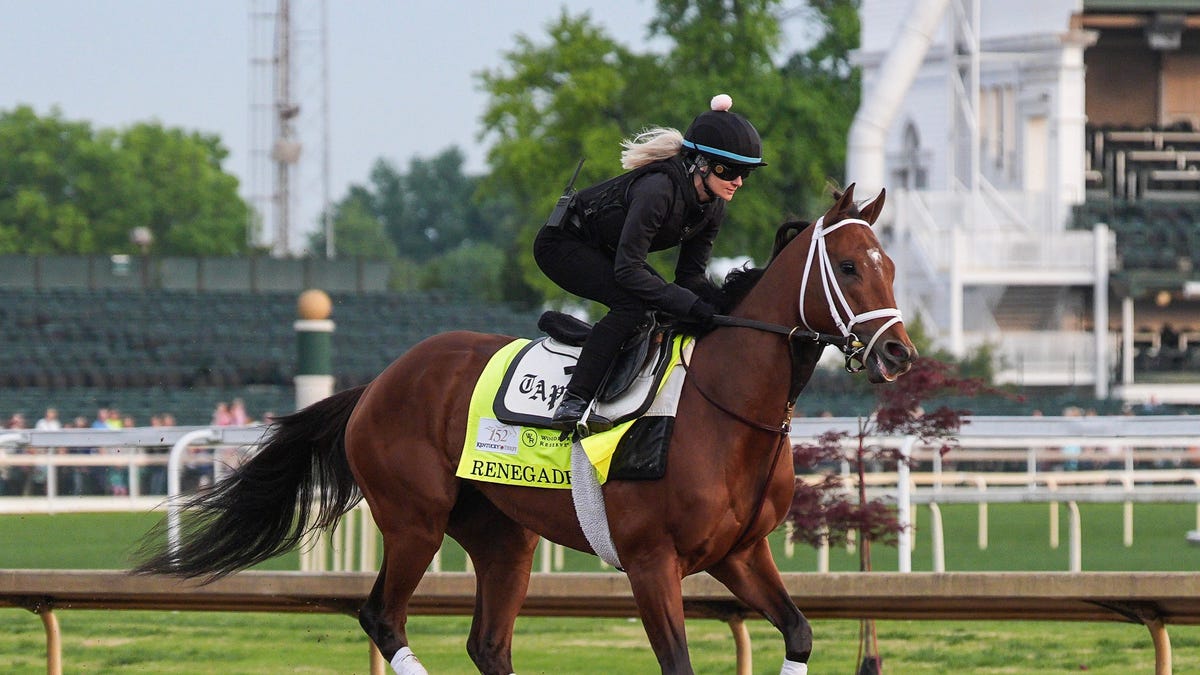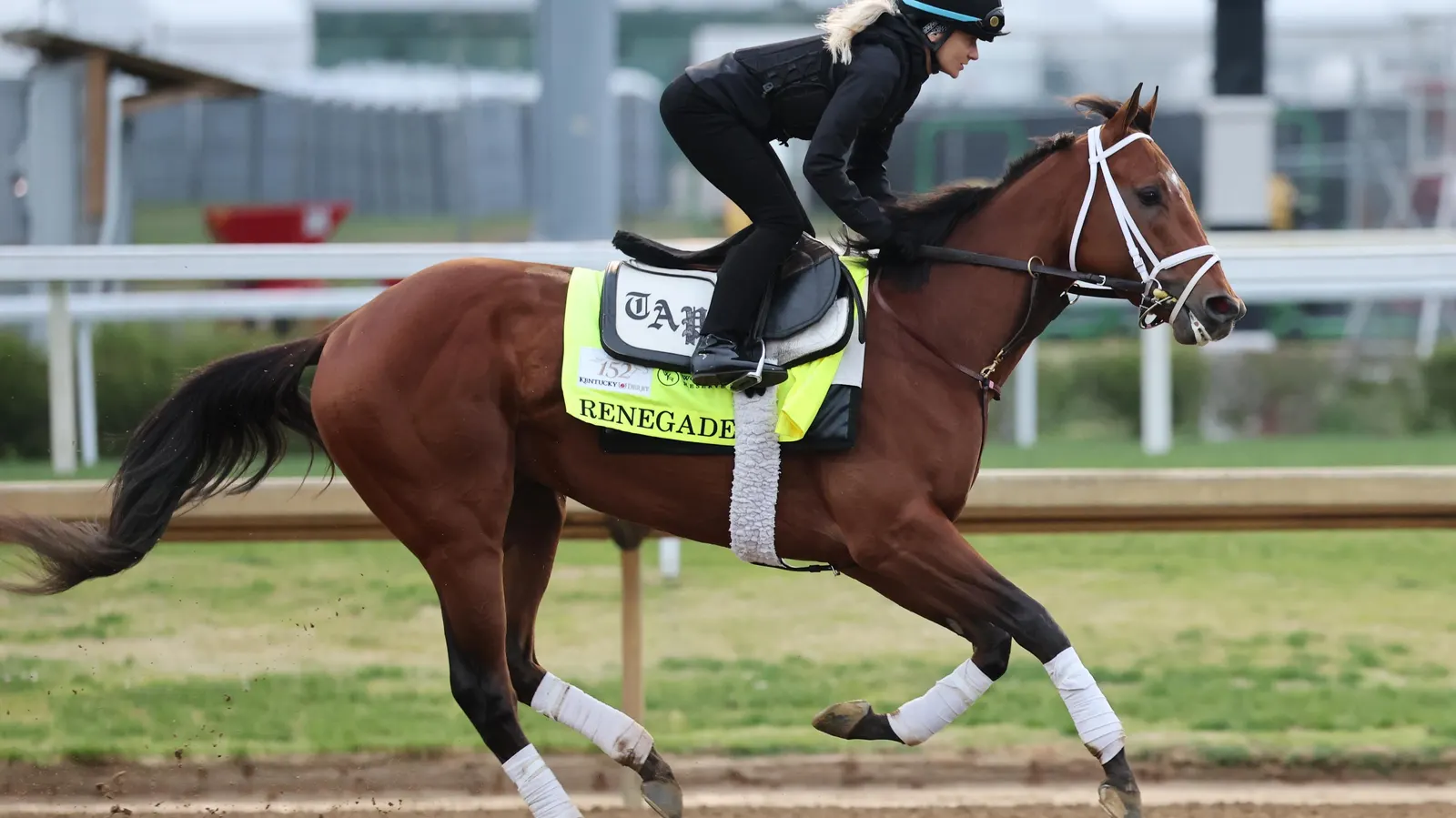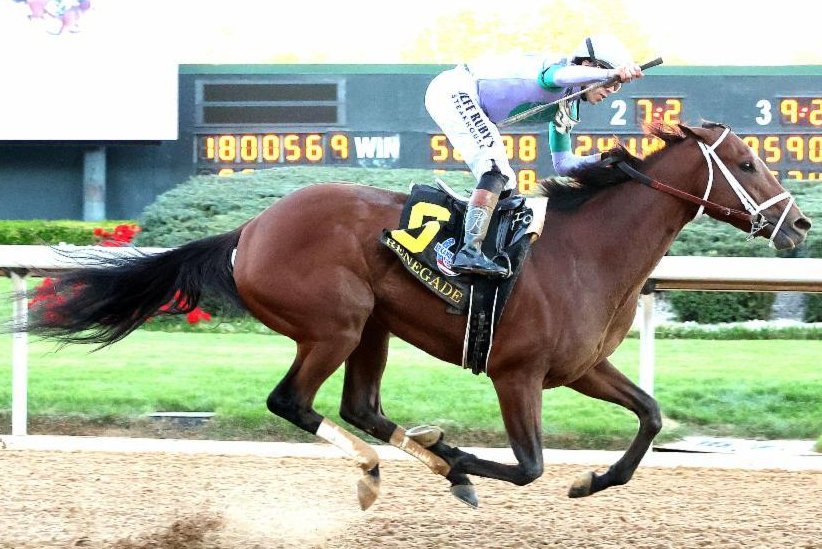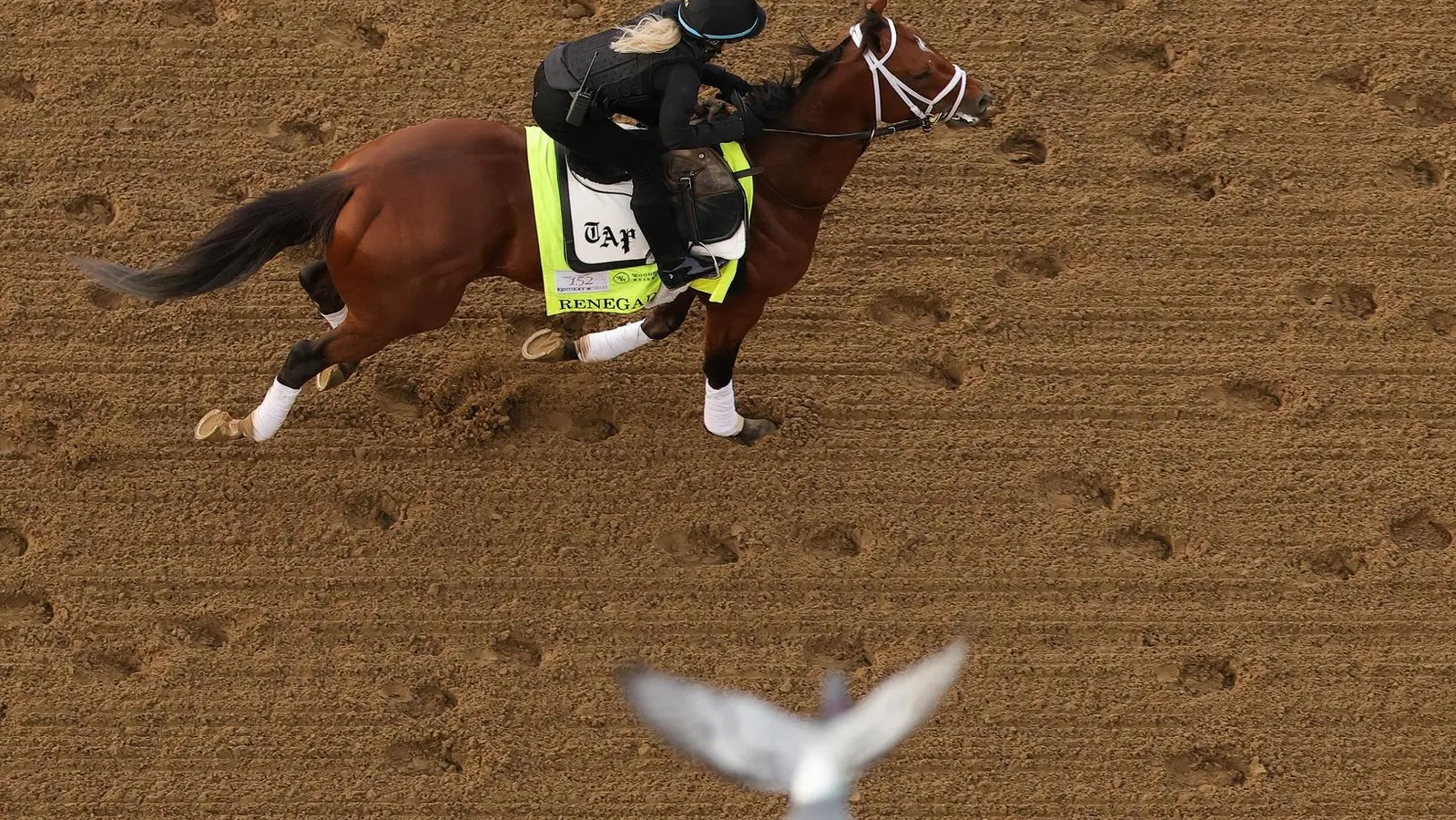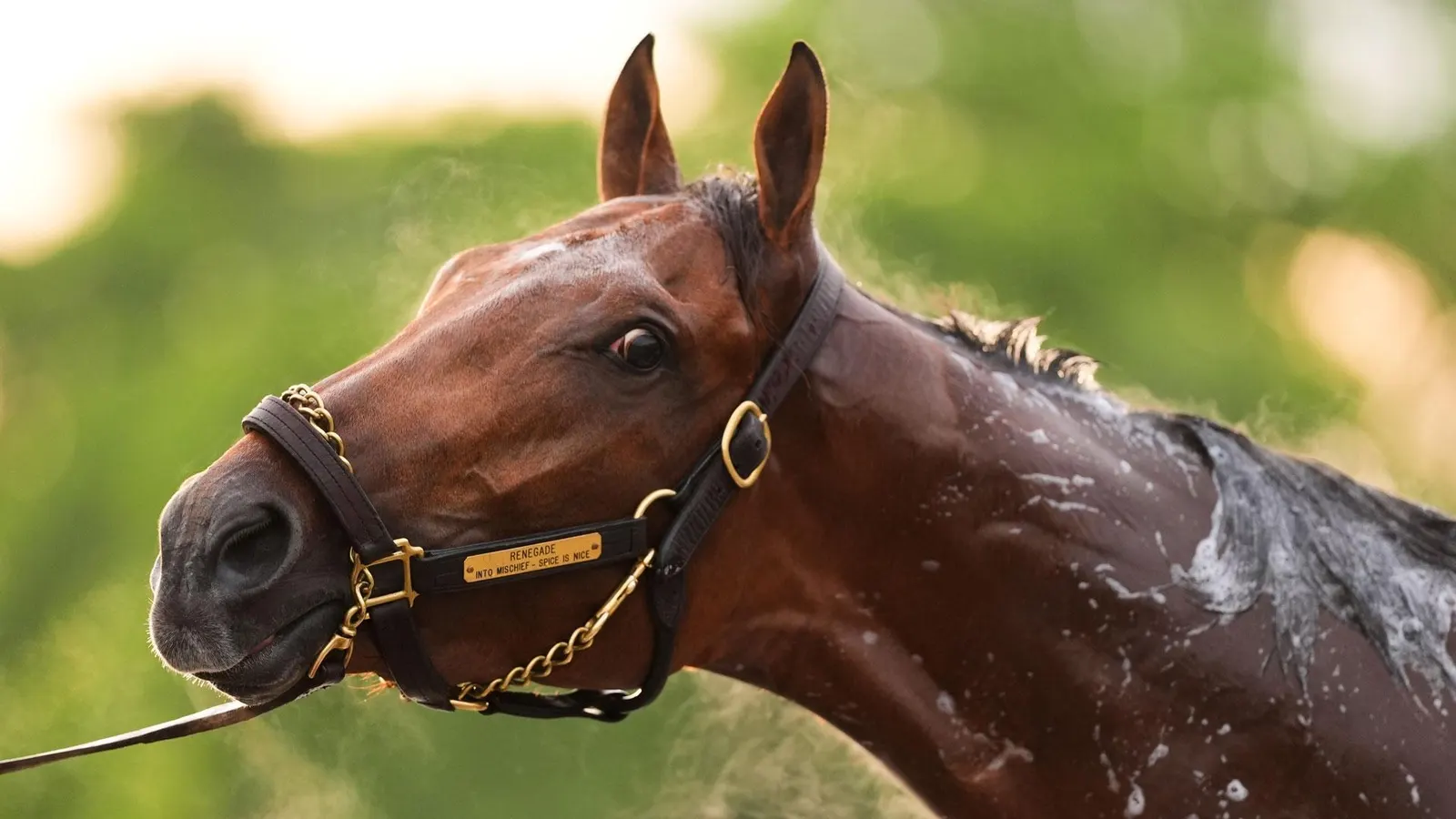
It’s a week before the 152nd Kentucky Derby and trucking tycoon Robert Low is tracking a different kind of shipment. Renegade, a 3-year-old colt raised on Low’s farm outside Springfield, Missouri, has just touched down in Louisville after flying in from Miami, fresh off last month’s triumph at the Arkansas Derby. “I'm just waiting to get a call letting me know that he's all comfortable and settled in. He’s a laid-back character,” chuckles Low in his gravelly southern drawl. Low and his wife, Lawana, high school sweethearts who wed in 1973, bred Renegade at Primatara Farm, their 300-acre horse breeding operation in the rolling hills of the Ozarks, 15 minutes from downtown Springfield. Over three decades in racing, the Lows have raised hundreds of thoroughbreds there, including former Kentucky Derby contenders Steppenwolfer in 2006 and Magnum Moon in 2018. For Low, Renegade represents the kind of homegrown Derby favorite he has long chased. “We’ve been in the racing business for 30 years and always dreamed of having a horse like this,” says Low, 76.Primatara Farm (bottom left) and Robert Low's home, captured via Google EarthVia Google EarthPrimatara Farm is just down the road from the Lows’ palatial 70,000-square-foot home, a monument to the fortune Low made in trucking. Built with imported Bulgarian marble, the house has six guest suites (each complete with its own kitchenette and separate living and dining areas), 17 bathrooms, a 6,000 sq-foot wine cave, a 12-car garage designed to double as a ballroom, and a racetrack jockey club-themed game room. “We have parties occasionally with friends, but it’s more for charities, auctions … as well as politicians that we like,” says Low, who has given $8 million to Republican candidates and PACs since 2000, including $500,000 to Donald Trump in 2024.The source of Low’s wealth is New Prime, Inc., the refrigerated trucking giant he cofounded in 1970 with his mother and built into one of the largest privately held carriers in America with over $2.5 billion in estimated annual revenue last year. Over five decades, Low turned Prime into a multibillion-dollar empire—and himself into one of Missouri’s richest with an estimated $5 billion net worth. Using his abundant downhome charm, he has inspired an army of drivers who, like him, think they too can run their own businesses. However his unique model cleverly shifts most of the risk and operating costs to his truckers. “I eat lunch with them,” says Low, CEO of Prime, which is owned exclusively by him and his wife. “Friday mornings we have a driver meeting where it’s unscripted. They can ask anything they want or make any comment they want.” Some days Low can be found playing pickup basketball at the company gym and or in the company cafeteria. Low is obsessed with winning and efficiency, but unlike most mega carriers, Prime relies almost exclusively on independent contractors, who comprise 90% of its 10,000-person driver fleet. As owner-operators, they shoulder the expenses typically borne by carriers—truck payments, insurance, vehicle maintenance, as well as administrative costs—that can be burdensome and unpredictable. And while these truckers may be independent contractors, they’re not independent from Prime. They lease and buy trucks from Prime’s affiliate, Success Leasing, which is owned by Low. They also depend on Prime’s logistics network for load assignments, fuel discounts and software. This setup allows Prime to keep labor off its books while maintaining operational control. Prime typically keeps 28% of hauling revenue, leaving the rest for drivers.“The inherent efficiency of an independent contractor that's buying their own fuel and making their own truck payments and using their own tires at their expense, they just do it more efficiently,” argues Low. “It’s a beautiful model. People naturally become more entrepreneurial, they become more efficient.” Fostering a model that plays into driver’s desire to be their own bosses sometimes invites legal scrutiny. In 1997, the trade association Owner-Operator Independent Drivers Association sued Prime and its affiliate Success Leasing, alleging that Low’s two companies used their contracts with independent truck drivers to take improper deductions from drivers’ pay, hold back money in reserve accounts, and impose lease terms the drivers said were unfair, all in violation of federal leasing rules. After five years of litigation, Prime prevailed in court. “The company obviously is good at crafting a contract that basically authorizes them to do the things that they do,” says Todd Spencer, president of OOIDA. More recently, in 2020, Prime settled two class action lawsuits by agreeing to pay up to $28 million to a class of more than 26,000 current and former Prime drivers over claims that the company violated minimum-wage laws. One suit, brought by Dominic Oliveira, alleged that Prime’s pay system shortchanged drivers and trainees by paying by the mile instead of for all hours worked, making deductions that pushed pay below minimum wage, and misclassifying some new drivers as independent contractors. The other, brought by Rocky Haworth, focused on Prime’s “B-seat,” or junior team, drivers, alleging that the company’s cents-per-mile and flat-weekly pay formulas left those newer drivers earning less than minimum wage for the time they spent working. The Oliveira case reached the Supreme Court, which ruled in an 8-0 decision that transportation workers labeled independent contractors can still fall within the Federal Arbitration Act’s exemption for “contracts of employment,” meaning Prime could not force those drivers into arbitration.Despite the litigation, plenty of Prime drivers told Forbes they loved working for Prime. “I had a great experience with them," says former driver Monrico Cummings, 30, a Florida resident who leased a truck from Prime for two years and made enough money to buy his own truck, which he now operates on his own. Cummings says that in his first full year of driving for Prime, he took home roughly $150,000 before taxes on $300,000 of topline revenue working 55 to 60 hours per week. Thriving in an industry that has long suffered from a shortage of qualified drivers, recruitment is paramount at Prime. The first click on its homepage is a driver application and for those interested, its lease to buy program offers “no money down” and “no credit checks.” There are also “in-house” jobs available at the company’s 11 facilities from Wilsonville, Oregon to Minooka, Illinois and Pittston, PA. Homey photos of its smiling truckers and their families adorn the website, many of whom have personalized their colorful semis with giant logos from their favorite sports team and other patriotic slogans. Lifestyle is as important as profits for drivers, many of whom have taken up trucking as a second career. “We believe life is too short not to have fun,” says the company's statement of values. There are numerous company events for families, including its “Night of Millionaires” dinners, celebrating drivers who have logged more than a million safe miles.Adam Warcewicz, a 59-year-old driver in Kentucky, says he joined Prime in 2017 as an in-house company driver, then moved into short-term leases before using savings to buy trucks through Prime’s lease-purchase program. Over time, he trained other drivers, leased them his trucks, reinvested his profits and slowly built a six-truck operation—running hauls exclusively for Prime—that generated roughly $1.3 million in revenue last year, with about $200,000 in pre-tax cash return after expenses, including wages paid to his drivers. “There's a big learning curve,” says Warcewicz about being an owner-operator. “You have to have a business mindset.”Prime’s success, and the loyalty of its drivers and employees, is living proof that a founder's cult of personality can overcome business hardships and legal challenges. “The one thing I really liked about Prime is that when you actually go to their hub, the owner was really close to all the drivers that wanted to be close to him,” says Herb Velez, a 42-year old Colorado resident who drove for Prime for two years during the pandemic. “He played basketball with you. He'd sit there and he'd have conversations with you. He'd talk about the struggle because he himself understands it.”Long before the Derby horses and Ozark compound, Robert Eugene Low began showing signs of the unbridled ambition that would ultimately propel him into Forbes ranks of the world’s wealthiest. Born in 1949, he grew up on a farm in the 259-person town of Urbana, Missouri. His father Carl Low (d. 1999) worked as a state market news reporter and radio host covering the livestock industry, while his mother, Vera Low (d. 2012), was a beautician and homemaker. To help fund his studies at the University of Missouri, Low sold off some of the family's cows to finance his purchase of a dump truck, which he then traded in for a box truck which could haul freight long distances. In 1970, he incorporated Prime, Inc. while still in college and rented his truck to a high school friend. Within months the friend quit, so Low dropped out of college and started driving full time. But Low didn’t want to just be a driver. Working with his parents, who helped run the business in its early years, Low borrowed money to purchase trucks and hire drivers. He found a steady stream of freight hauling produce back and forth from California to the Midwest and East Coast. By 1979, he employed around 300 full-time drivers and turned a $1 million profit. “I was 30 years old at the time and thought, ‘This is pretty good. I like this trucking thing.’”His fortunes turned when the Federal Reserve, under new chairman Paul Volcker, pushed interest rates toward 20% beginning in 1979 to beat back inflation. That drove Low’s debt-financed Prime, Inc. into Chapter 11 by 1981. It languished in bankruptcy for four years. Low’s mother Vera took out a $50,000 loan against her house to help keep the business afloat. “I was just out of balance, way too much debt compared to the amount of equity in the company,“ recalls Low. “Chapter 11 for a small-time farm boy is a dishonorable thing, and we paid our debts.”Robert Low, CEO and Chairman of New Prime, Inc.New Prime, Inc.The early 1980s did not just nearly wipe out Low financially. They also produced the darkest and least known chapter of an otherwise remarkable career. During a hunting trip near the old mining town of Creede on Colorado’s western slope in October 1983, Low stabbed A.D. “Duane” McCowan, a friend and trucker who occasionally hauled freight for Prime. Five days earlier, the two had been arguing over money and leases. (Low testified that he did not remember the argument). McCowan was kneeling down setting up his tent when Low stabbed him in the back with an eight-inch hunting knife, according to previously unreported court records. McCowan nearly died and Low was charged with first-degree assault by Colorado's District Attorney’s office. After fourteen months in court, Low was acquitted during a 1984 bench trial after his lawyers successfully argued that he had suffered from a state of toxic psychosis. Leading up to and during the trip, Low had been compulsively consuming dozens of HOLD cough drops, which contain dextromethorphan, a powerful suppressant that in high doses can produce dissociative side effects. Combined with sleep deprivation, his lawyers argued, the binge had rendered him temporarily insane at the time of the stabbing. The case ultimately went up to the Colorado Supreme Court, which disapproved of the trial court’s reasoning but did not reverse the acquittal or seek a retrial because of double-jeopardy protections. McGowan ultimately recovered from his wounds, and passed away in 2022 at the age of 84. “Colorado was over 40 years ago,” says Low, who calls it an “unfortunate ordeal.” McGowan’s widow refused to talk about the case with Forbes: “It’s past news and I don’t want to cause Robert any problems.”Having survived his criminal case and Prime’s near collapse, Low relaunched his trucking operation into an industry that was being remade by deregulation. The 1980 Motor Carrier Act loosened decades of federal control over who could haul freight, where they could haul it and what they could charge. Competition surged, rates came under pressure and a wave of failures rippled through the industry as old-line carriers struggled to adapt. Before deregulation, being a trucker “was quite lucrative. It was a good job,” says economist Clifford Winston of the Brookings Institution. “It was a major win for the consumers” by driving down prices but “very hard on the truckers, and very hard on firms that weren't efficient.” Low’s approach to operating efficiency was straightforward. Copy the strategies of the most efficient operation in the business, Fort Scott, Kansas-based Midwestern Distribution, a larger outfit that Prime had been leasing its trucks to. Midwestern was famous for recruiting new truckers with a “dollar down” lease program, which promised ownership at the end of the lease, whose lengths varied depending on maintenance bills. However, many truckers never completed their payments, which benefited Midwestern, because it could recycle the truck, with a new lease, to a fresh hopeful driver. “Now the term is predatory. We didn't use that word back then,” says Ralph Eschbaumer, 64, who worked as a dollar trucker with Midwestern from 1985 to 1987. Starting in the early ‘80s, Low began recruiting Midwestern managers including Midwestern vice president Fred Mertz and marketing executive Steve Wutke. Their task: implement Midwestern’s business model. “That’s how Robert turned Prime Inc. around,” says Mitch Hixon, 70, who worked at Midwestern from 1978 to 1987. “It is the foundation for how it grew into the hugely successful business it is today.” Low disputes this. “Regarding Midwestern, they had a good model but to say we fully adopted it is largely overstated.”Where Midwestern and Prime’s business approach differ, is in the corporate culture Low has fostered and its resultant loyalty he gets from his independent contractor drivers and his 2,000 W-2 employees, who are often on the frontlines communicating with drivers in its fleet. There are bonus-incentive schemes at every level of the company to reward high performers. He also invested heavily in beautifying Prime’s headquarters—building a gym, providing on-site childcare, opening a Starbucks—among other perks. “It’s the Apple of trucking,” gushes Stephen Tassin, 67, who joined Prime in 1989 as a page, and worked for years as a fleet manager. “Everyone who works there will make more [money] than their counterparts at another company.” Low has also made sure that his gritty blue-collar business traversing America’s highways is backed up by data-driven technology. Prime was early, pouring $4.3 million into satellite communications in 1992, effectively putting a computer in every cab when many competitors were still using payphones. Prime’s Springfield headquarters features eco-friendly tire recycling centers and water-reclamation systems. Low’s business interests now go well beyond trucking, and so do the disputes surrounding them. In February, Low, Prime, several Prime executives, Killian Construction (a Springfield-based general contractor Low controls) and Wolverine Land Holdings (a lending company he controls) were named in a federal racketeering lawsuit brought by the developer of a luxury $200 million Nashville high-rise, which alleges that Killian mismanaged the project and pushed the developers into predatory loans from Wolverine. Low and Prime had not responded to the complaint as of publication. “It's an attempt at a money grab without merit that we will fully litigate,” says Low. A similar Florida case tied to a Panama City tower called Calypso was later settled on undisclosed terms. Says Low, “Calypso was a victory for us.”Even Low’s ownership of Kentucky Derby favorite Renegade shows his gut for shrewd dealmaking. Two years ago, when the colt was an unproven yearling, fellow billionaire and thoroughbred breeder Michael Repole, the cofounder of sports drink BodyArmor, purchased the horse from Low at auction for around $950,000. Almost immediately, Low regretted it and struck a deal with Repole to buy back a 50% interest in the horse at the same valuation. “Getting a horse of this quality is like one in 20,000,” marvels Repole.No doubt those are odds worth taking for someone like Low who became a billionaire after dropping out of college, surviving bankruptcy and beating a criminal assault rap. More from ForbesForbesInside Suno’s $2.5 Billion Bet That AI-Made Music Is Here To StayBy Rashi ShrivastavaForbesHow Eric Trump Got Rich From Bitcoin While Losing Investors A FortuneBy Dan AlexanderForbesFrom Coffee Kiosk To Billion-Dollar Business: How Scooter’s Became One Of America’s Top FranchisesBy Chloe SorvinoForbesMichael Jackson’s Estate Spent Millions To Sanitize His New Biopic. Crowds Don’t Seem To Care.By Matt Craig
Meet The Wily Billionaire Trucking Boss Behind Kentucky Derby Favorite Renegade
The inside story of how Missouri farm boy Robert Low dropped out of college, survived a criminal assault trial thanks to temporary insanity, and went on to build one of the nation’s biggest trucking empires.
2,731 words~12 min read