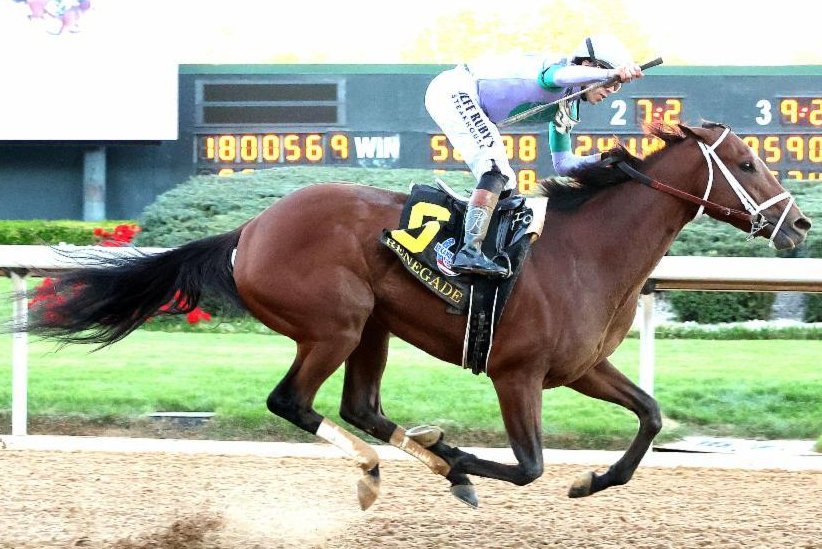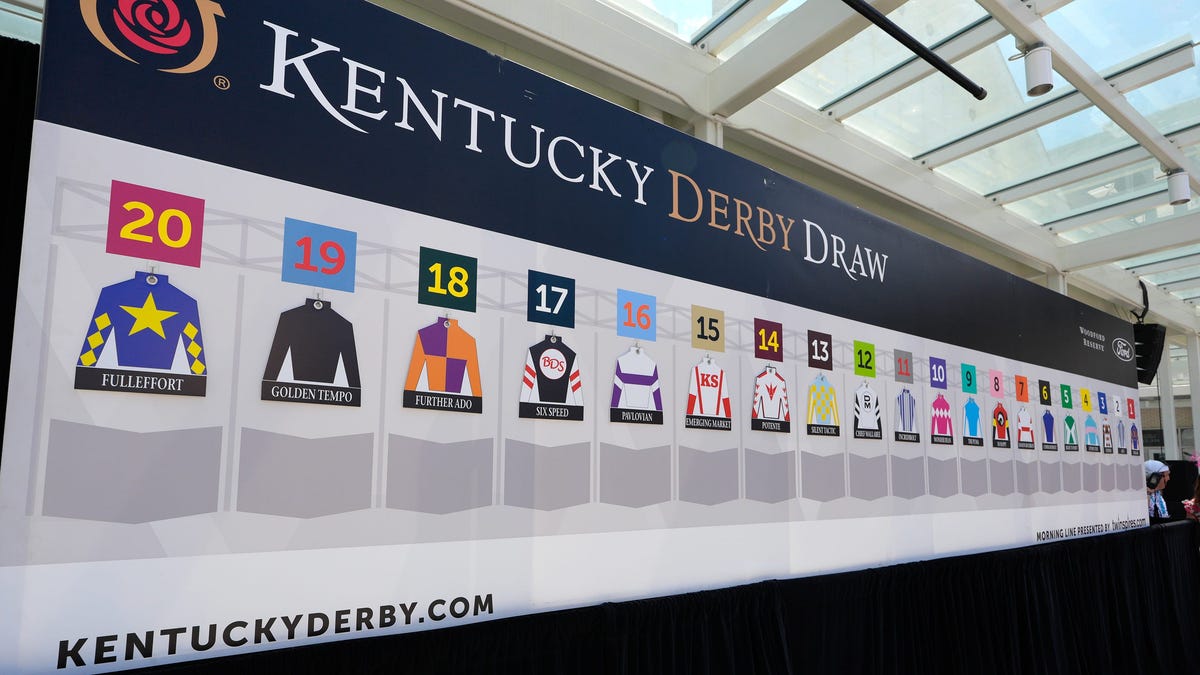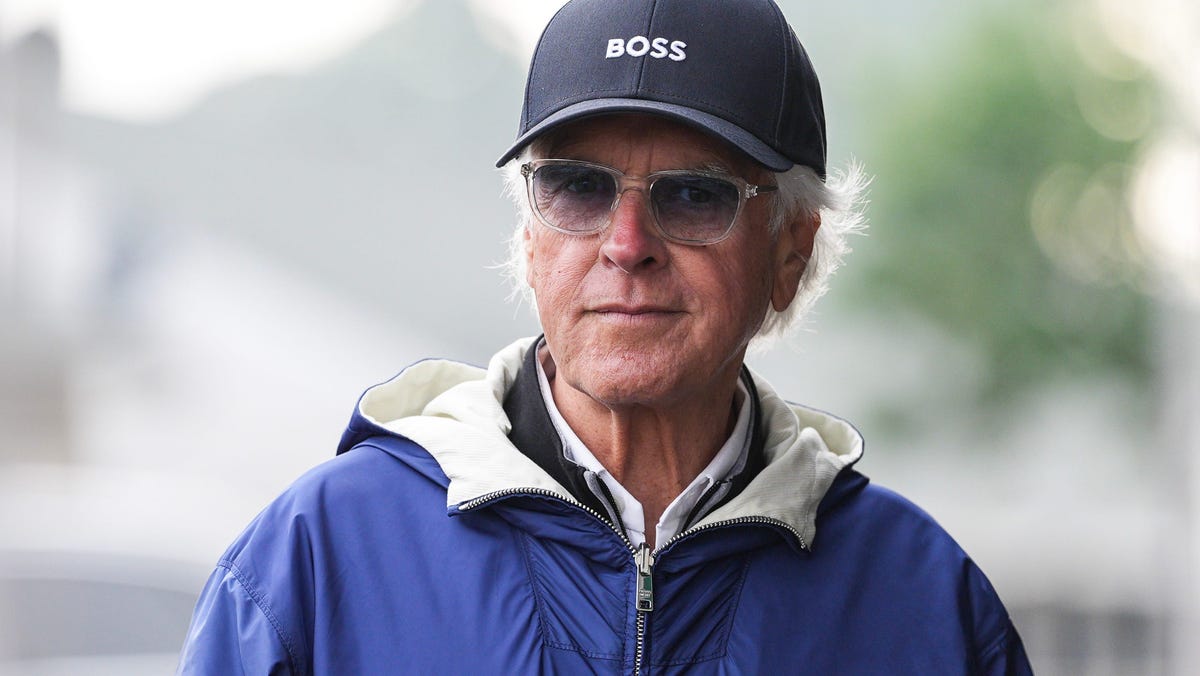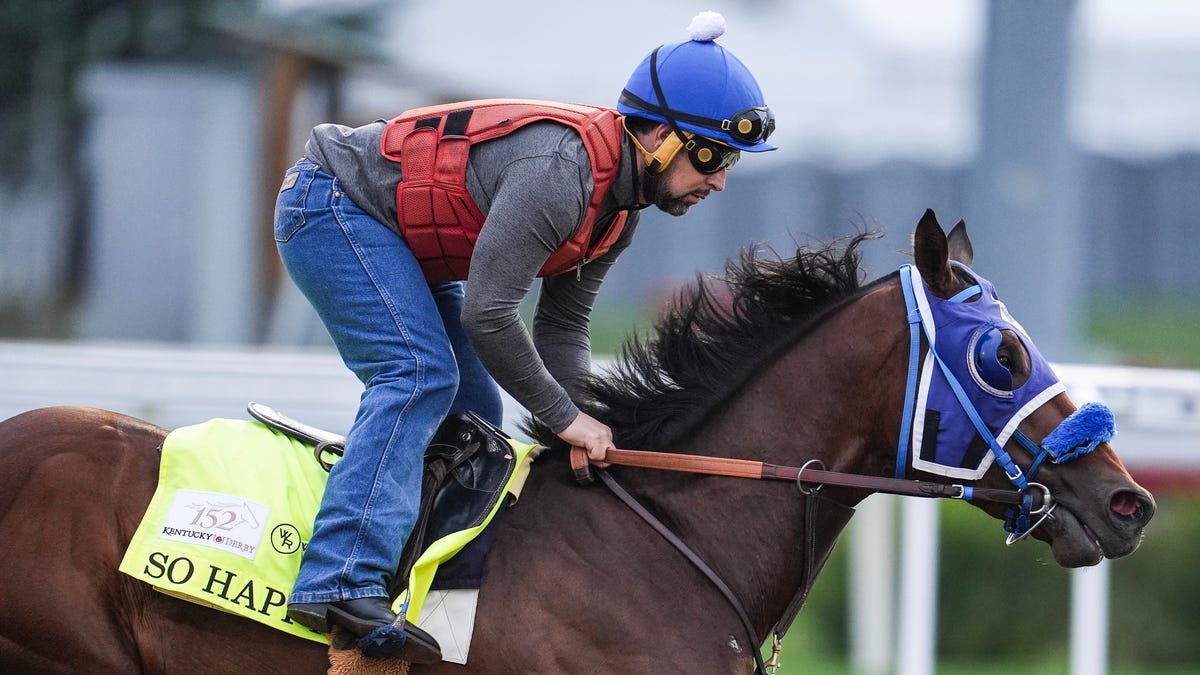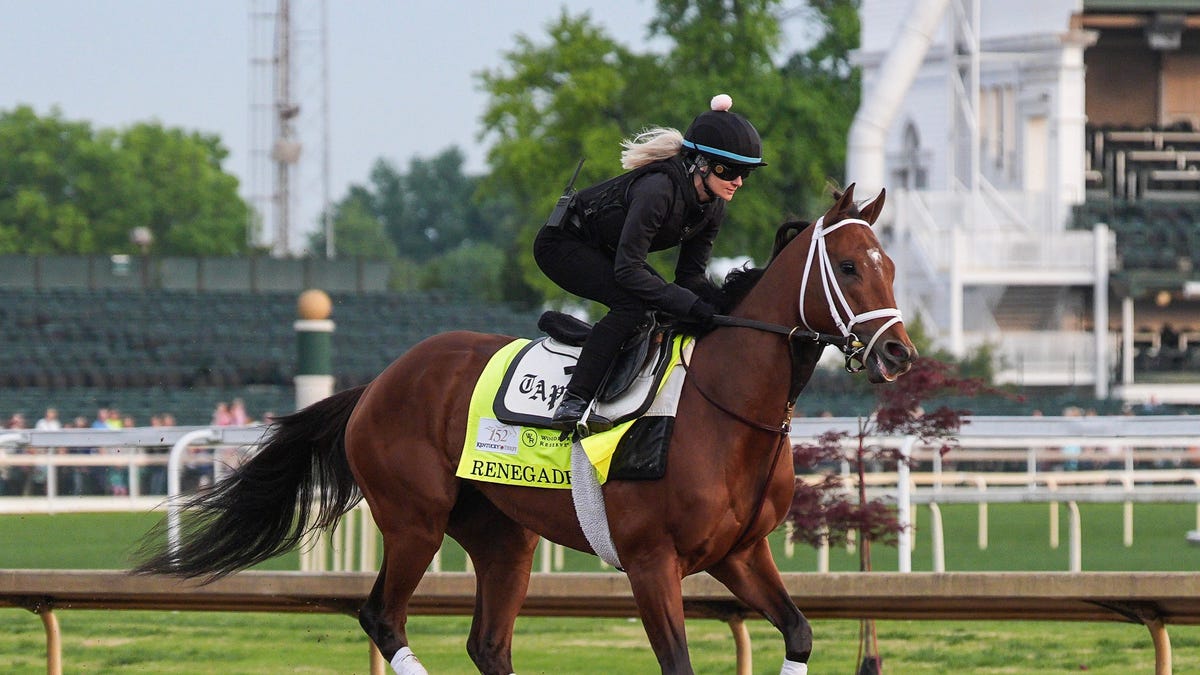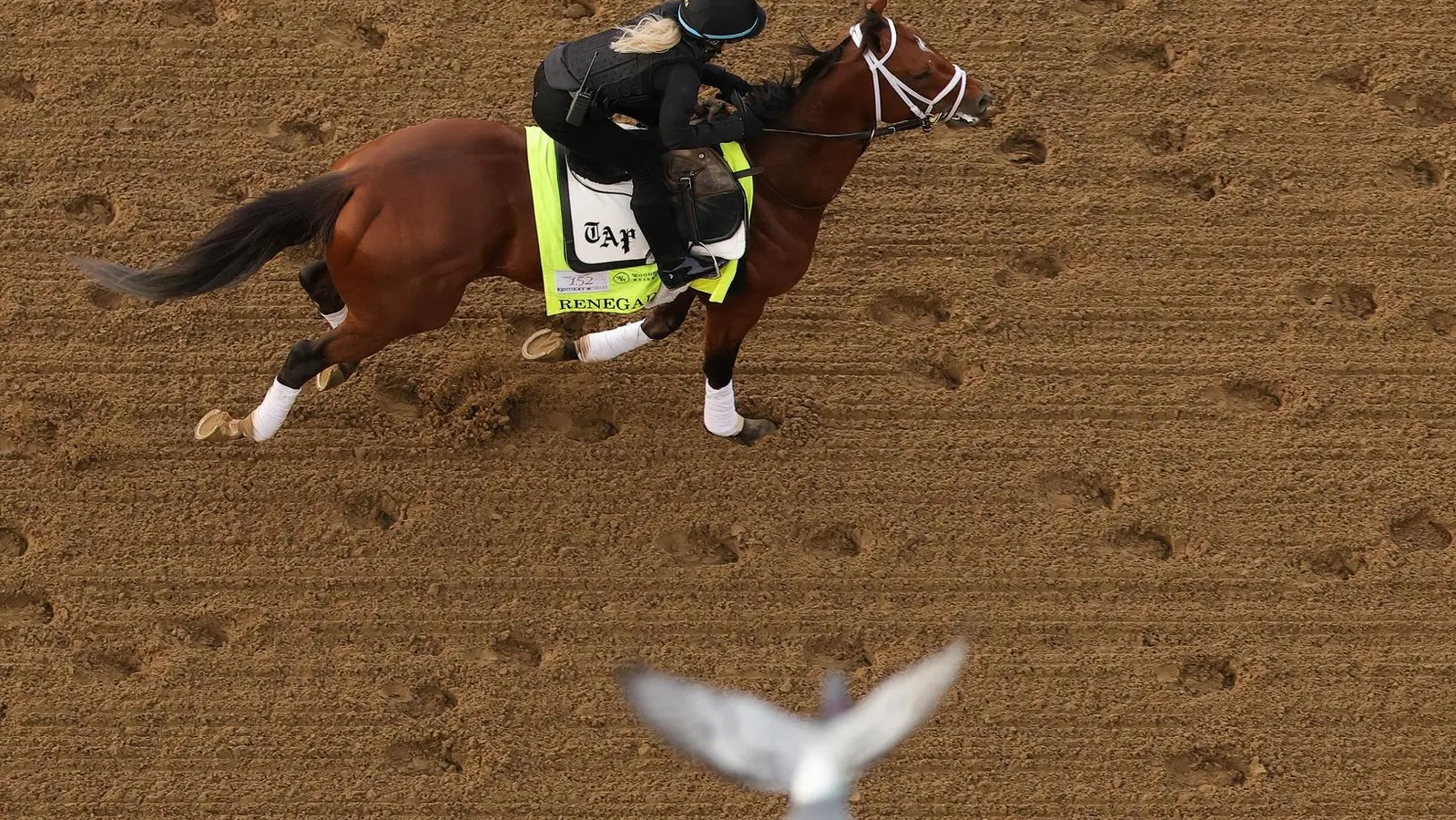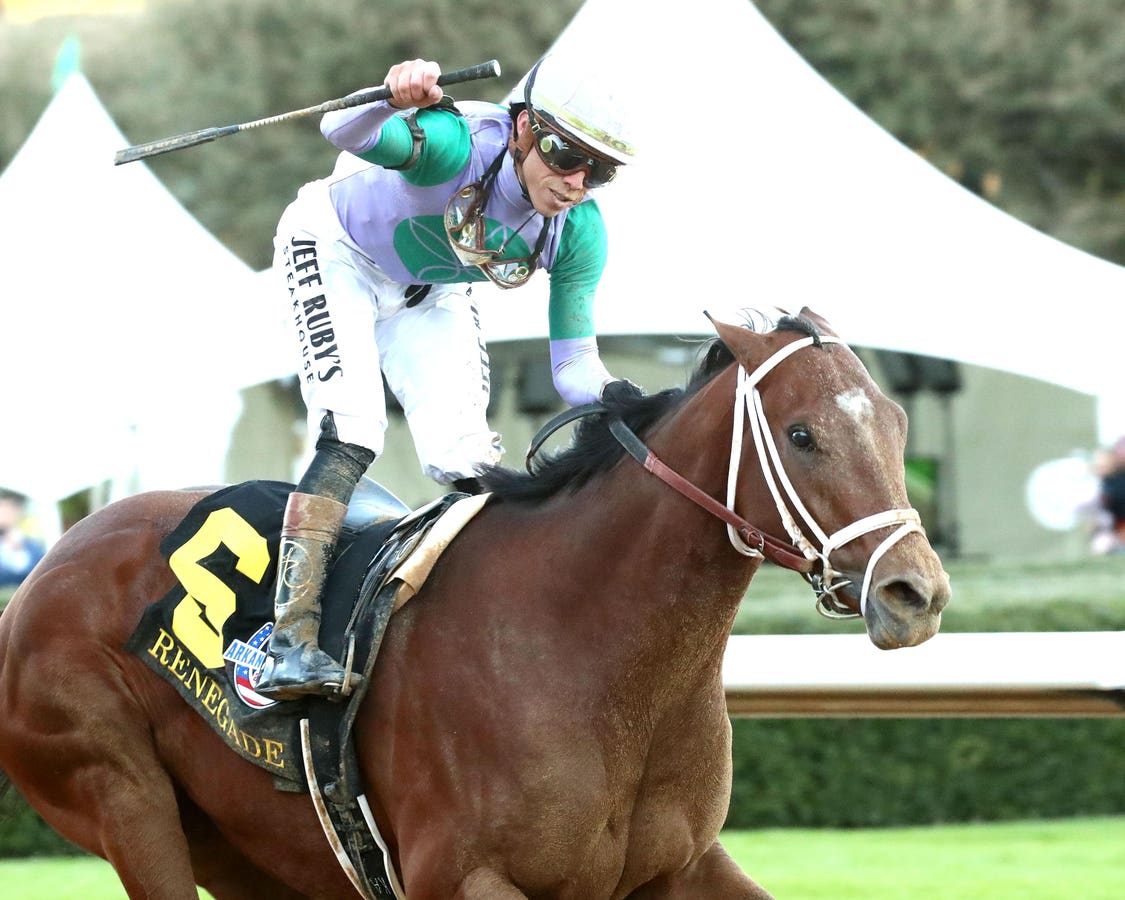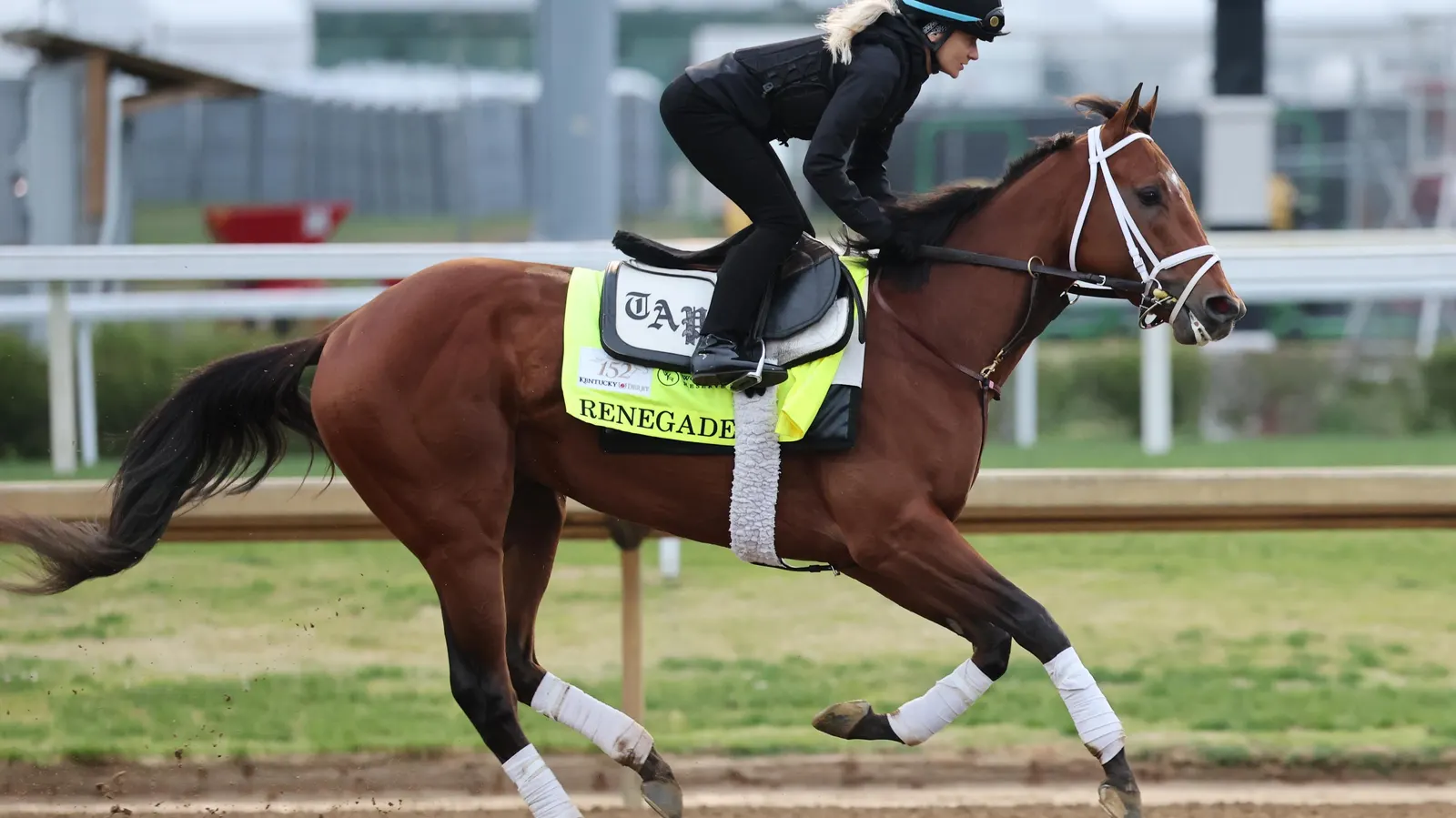
LOUISVILLE, KENTUCKY - APRIL 26: Renegade trains on the track during morning workouts ahead of the running of the 152nd Kentucky Derby at Churchill Downs on April 26, 2026 in Louisville, Kentucky. (Photo by Michael Reaves/Getty Images)Getty ImagesAs Churchill’s sunny, outdoor post-position draw for the $5-million, 2026 Kentucky Derby got underway on April 25, there was a sociable background hum in the seating area as trainers, owners and the press met and greeted each other. But in the early going as leading unofficial backstretch favorite Renegade’s paper was pulled, and the horse received the dreaded Churchill stall on the rail, there was a sudden, noticeable silence. You could almost watch the thought race through the crowd: Thank God that wasn’t me. And yet: Minutes later, as Churchill’s new odds captain Nick Tammaro wielded his very first Kentucky Derby morning line stamp on the field, there was young Renegade as the top dog, at 4-1. Bit of whiplash, that, and it inspired two questions: First, does stall No. 1 in the Churchill “new” 20-horse gate somehow not carry the “curse” of producing no Derby winners, even though it’s 0-6 since its debut in 2020? And, perhaps more importantly, second: What is it about Renegade (and jockey Irad Ortiz Jr.) that makes Mr. Tammaro think that the dismal record of the post position — in the new gate or in the old 14-horse one — doesn’t matter? LOUISVILLE, KENTUCKY - APRIL 27: Todd Pletcher, trainer for Renegade, looks on during morning workouts ahead of the running of the 152nd Kentucky Derby at Churchill Downs on April 27, 2026 in Louisville, Kentucky. (Photo by Michael Reaves/Getty Images)Getty ImagesIn answer to the second question, as trainer Pletcher and part-owner Mike Repole (of Vitamin Water and Body Armor fame) have both given us to understand, the Churchill rail is what it is, and they will try to make the best of it. In the larger sense, Renegade’s late-running power surge to win the Arkansas Derby by four lengths proved a couple of things to the world, not least that the horse possesses the precise tool kit for the Derby distance and its demands, as Hall of Fame trainer Pletcher has publicly noted. Like Further Ado in the Blue Grass, Renegade put a very great deal of room between himself and the peloton in the last furlongs of the graded stakes, and that got him his hundred-point invitation to the big race. And to the first question inspired by Mr. Tammaro’s odds: Stall No. 1 in the Churchill gate in the face of a 20-horse field thundering down into the first turn does still mean that Irad Ortiz will have to take back — or that he must, more daringly and dangerously, try to squirt out in front, then slide back off the pace as the dense pack works up the backstretch. In Renegade’s case, getting out in front in a Kentucky Derby is probably what you don’t want to ask the late closer to do. But any way you cut it, the stall adds a daunting, traffic-rich tactical series of sidesteps to Renegade’s burgeoning do-list in the race — in addition to whatever tactical problems Pletcher, Ortiz and Repole were thinking they faced just having to work their man to the front in the last two furlongs on Saturday. Breaking from the rail in a Derby gives the equine athlete quite some choreography of gear-shifting in addition to the gear-shifting required of nominally “better” post positions. Racing Thoroughbreds don’t have automatic transmissions that seamlessly move through the paces of long, tough, talent-packed start-and-stop races. The question for Renegade — and the reason that the three-time Derby winning trainer Pletcher is less than sanguine about being slotted into this rail in this year — is simply that the extra layer of demand brought by the rail in a Derby can become the detail that befuddles and disorients his young athlete in the teeth of competition. Which brings us back to the first question inspired by odds-czar Tammaro’s position that Renegade has the moxie to overcome all track disadvantages as well as all of his foes: The Churchill rail hole is “dreaded” not just because it’s 0-for-6 since the new gate was introduced. Of the last fifteen Derbies, nine (or 60%) have been won by runners starting wide, from stall Nos. 15-20. That implies that the ordinarily holy racing notion of “saving ground” is far less important in a Kentucky Derby than the simply doing what you have to do to get a clean trip. In reference to Renegade, it means that anything he and Ortiz devise to get around the traffic will be better for them than staying inside. It will remain an irony of Saturday’s race — and of Derby history — that all outside post positions are not alike, and some can even be worse than the rail. Derby champ Ferdinand did in fact win the big race from the rail in 1986, forty years ago, the last contender to do so. Post 14, by contrast, last produced a winner sixty-five years ago, in 1961, when Carry Back (who also won the Preakness) went off as the 5-2 favorite and breezily carried the day with a commanding two-plus length stretch run. Pletcher, Ortiz and Repole will be hoping their boy can snap the rail hole’s four-decade drought with a dancing, traffic-free run on Saturday. But he’s going to have to bring his whole tool kit to the party — including a level of maturity that has not yet been fully exercised — to do that.
Kentucky Derby Favorites Who’s Who: Top Morning Line Racer Renegade
Despite being handed the "dreaded" rail hole, top favorite Renegade may have the tools to live up to his billing. Here, a look at whether he'll show that on Saturday.
931 words~4 min read