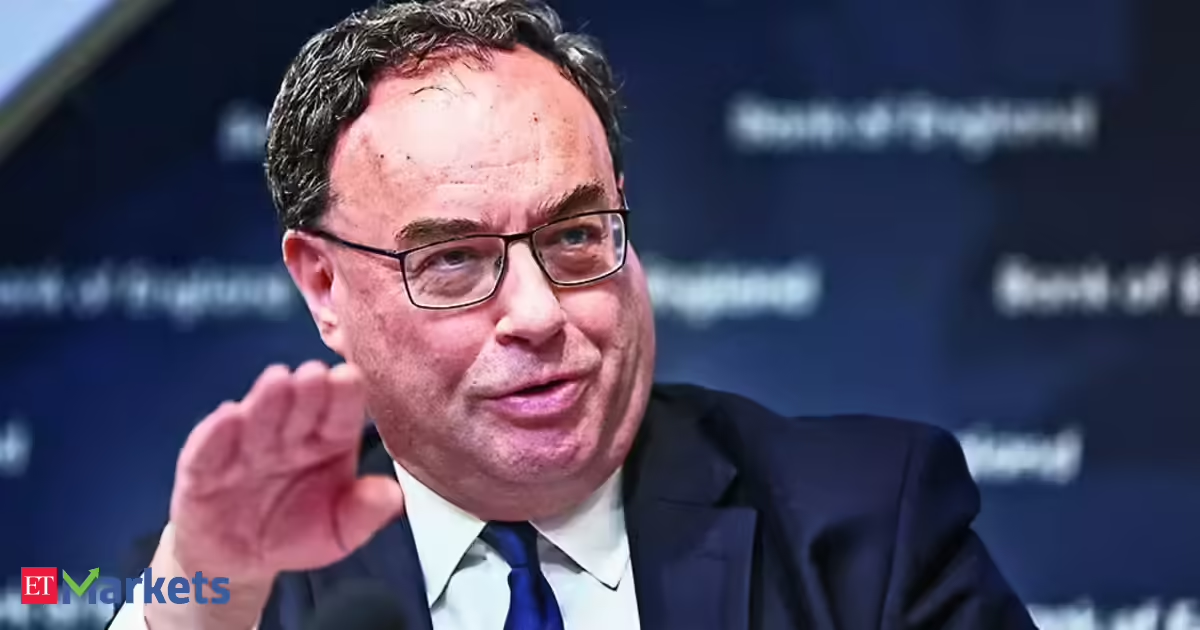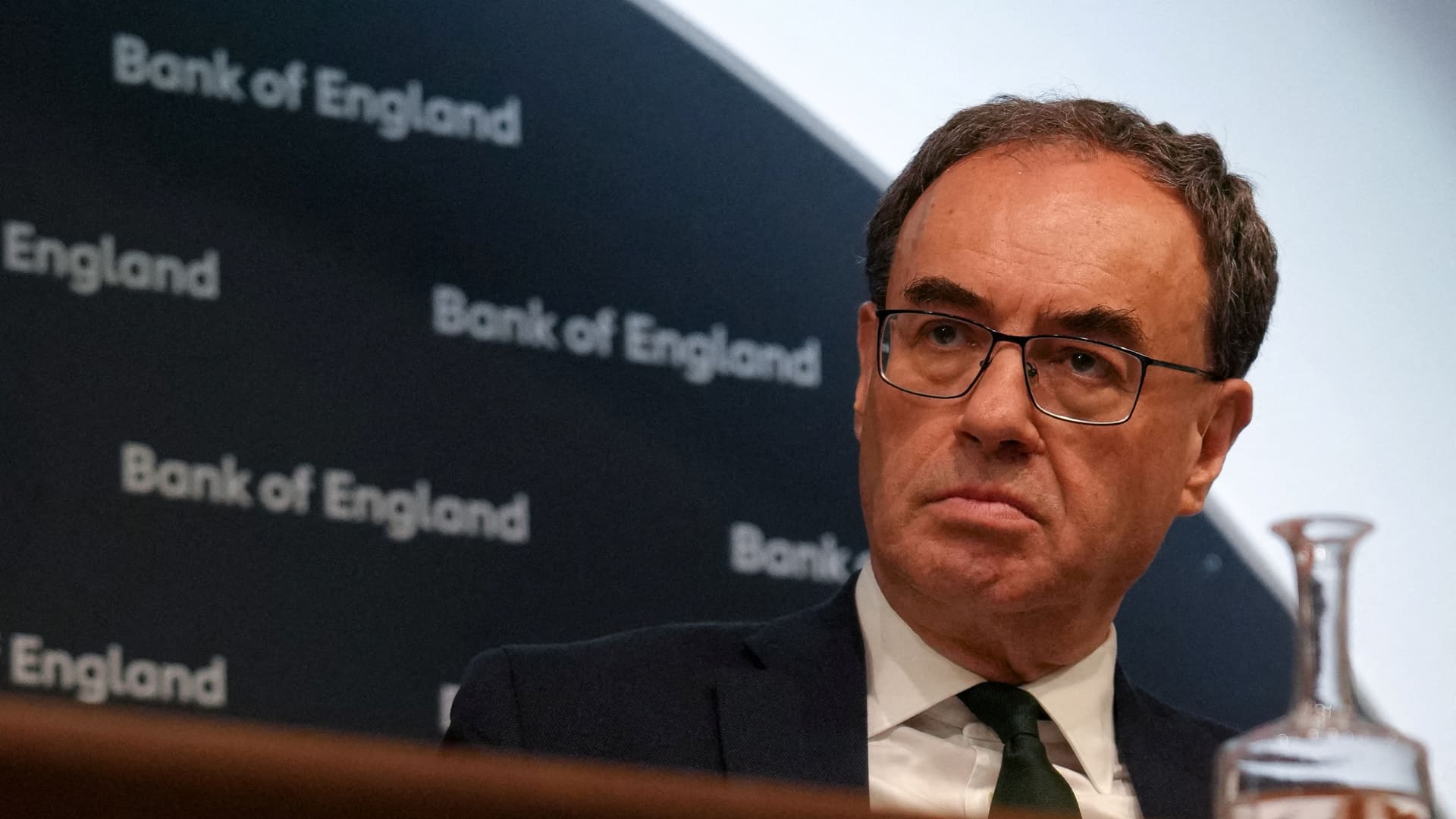
Bank of England policymakers must contend with the “most difficult combination” of economic effects, according to governor Andrew Bailey, as the U.K. faces the consequences of an energy price shock.
The U.K. central bank chief told CNBC in an interview on Thursday that the outlook for energy prices is “very uncertain” but a “a long lived effect” of this kind will likely see price growth feed into the rest of the economy and embed inflation more deeply.
“This is what we’d call a negative supply shock. In other words, unfortunately, the increase in price of energy product... is also having...a negative effect on activity in economy,” he said. “That’s a difficult combination.”
It came after the bank’s Monetary Policy Committee voted in an 8-1 split to maintain the benchmark rate, known as the “Bank Rate”, at 3.75%, with known hawk BOE Chief Economist Huw Pill the only dissenter voting for a 25 basis-point increase.
Bailey struck a hawkish note, warning that a protracted energy price crunch could force BOE to take action on monetary policy.