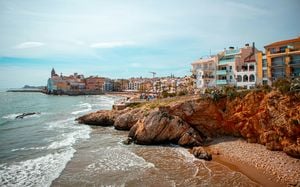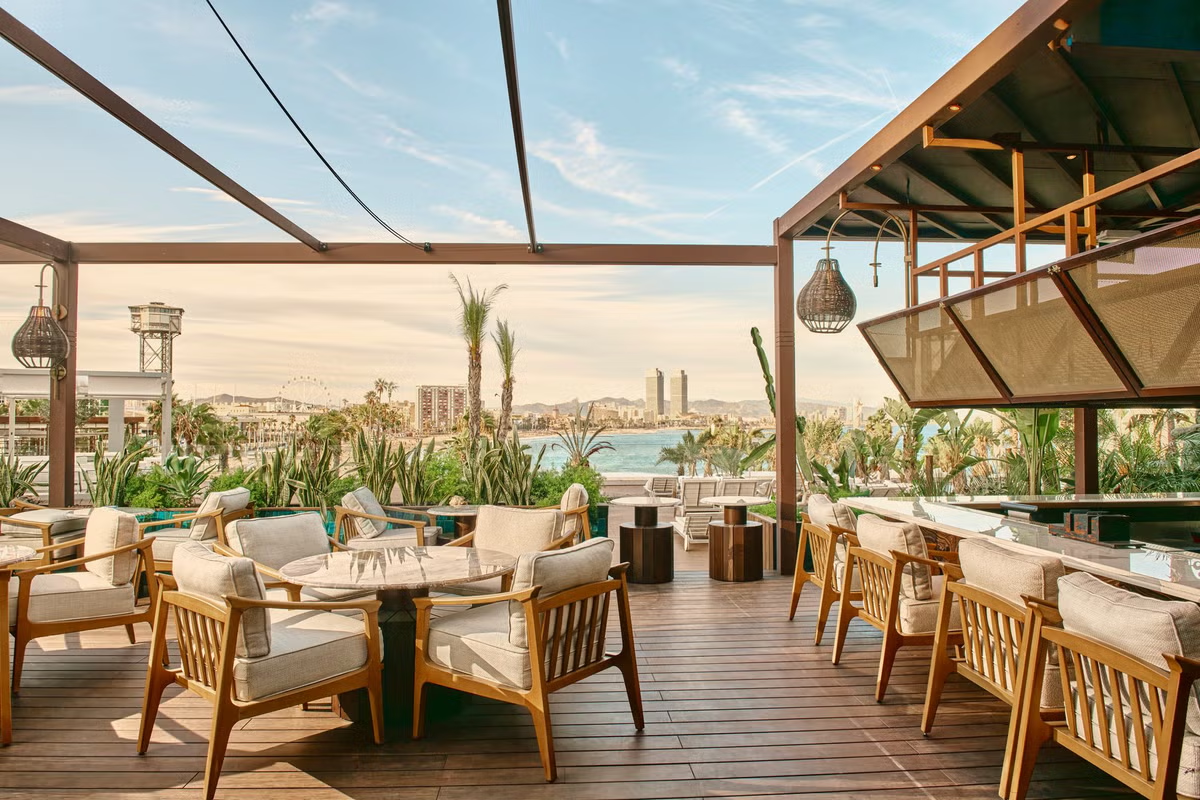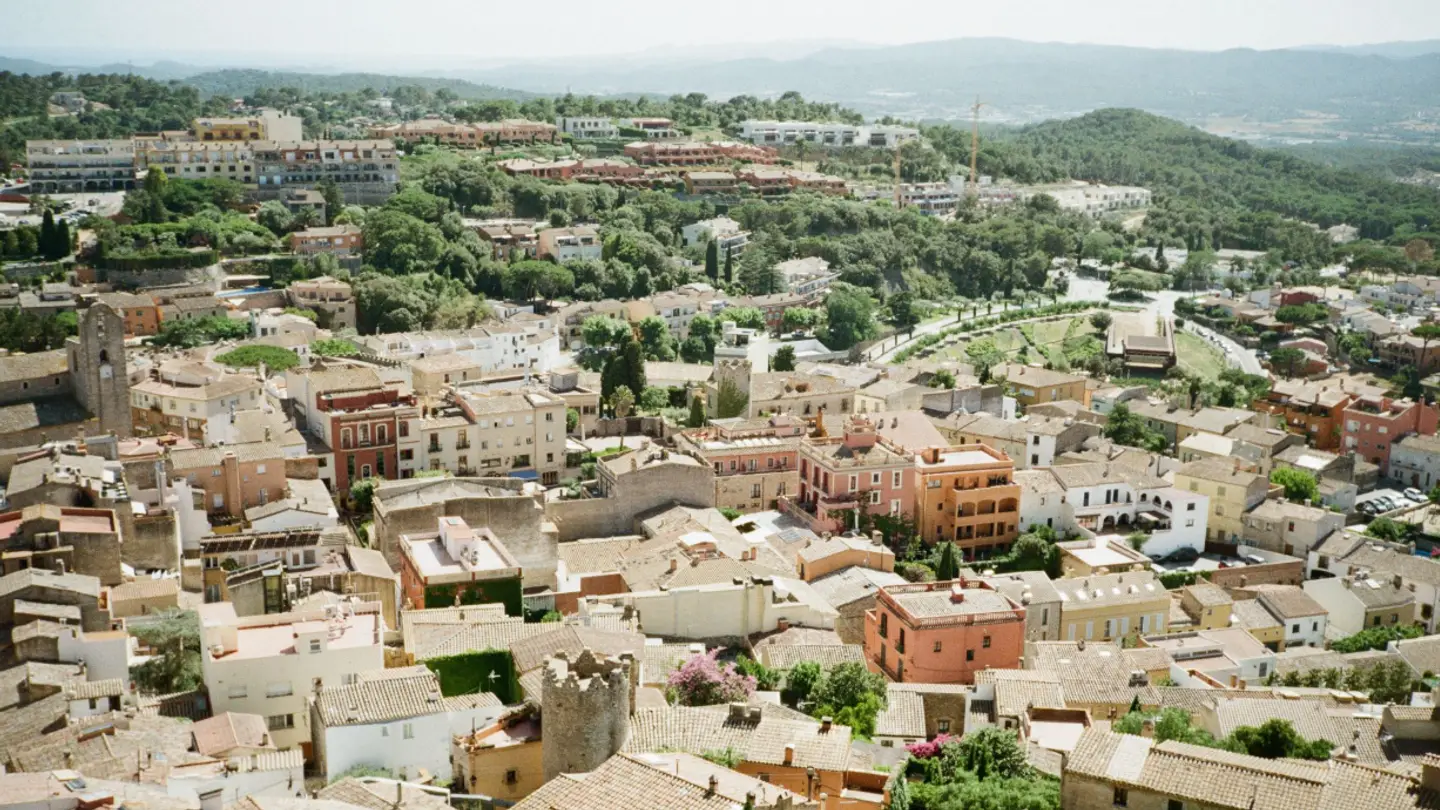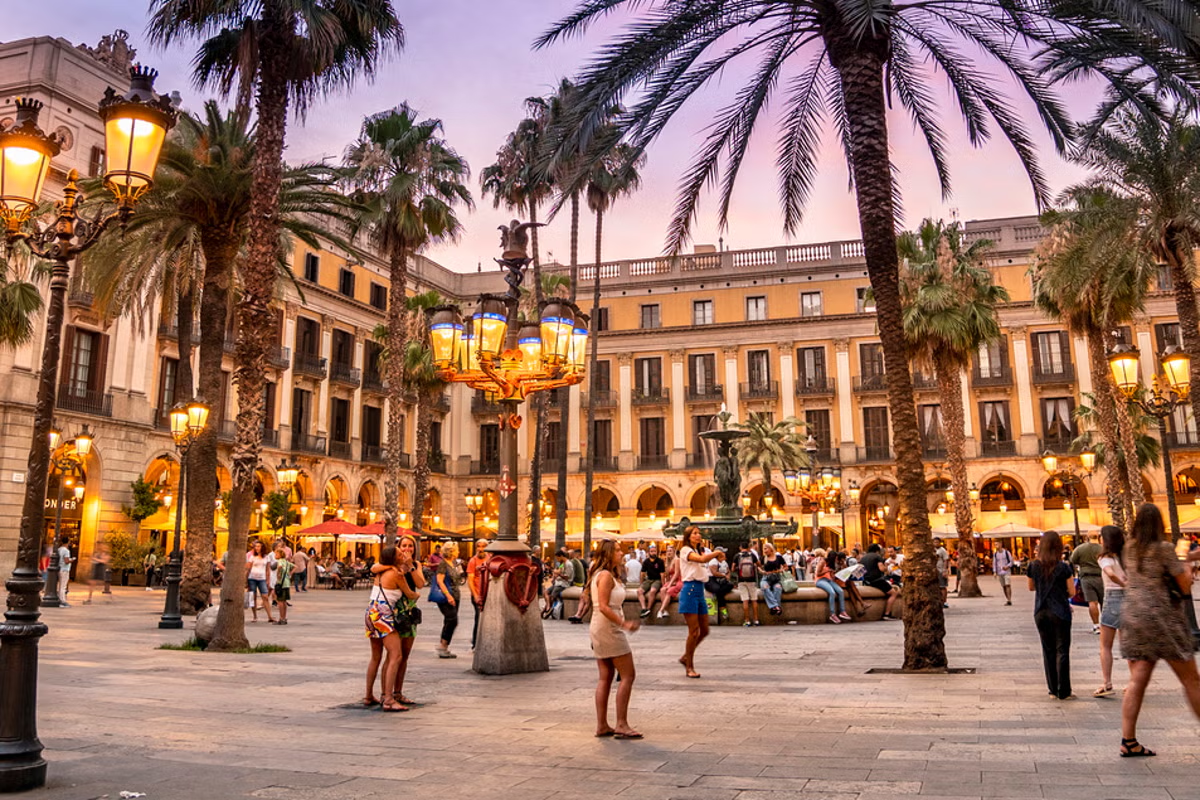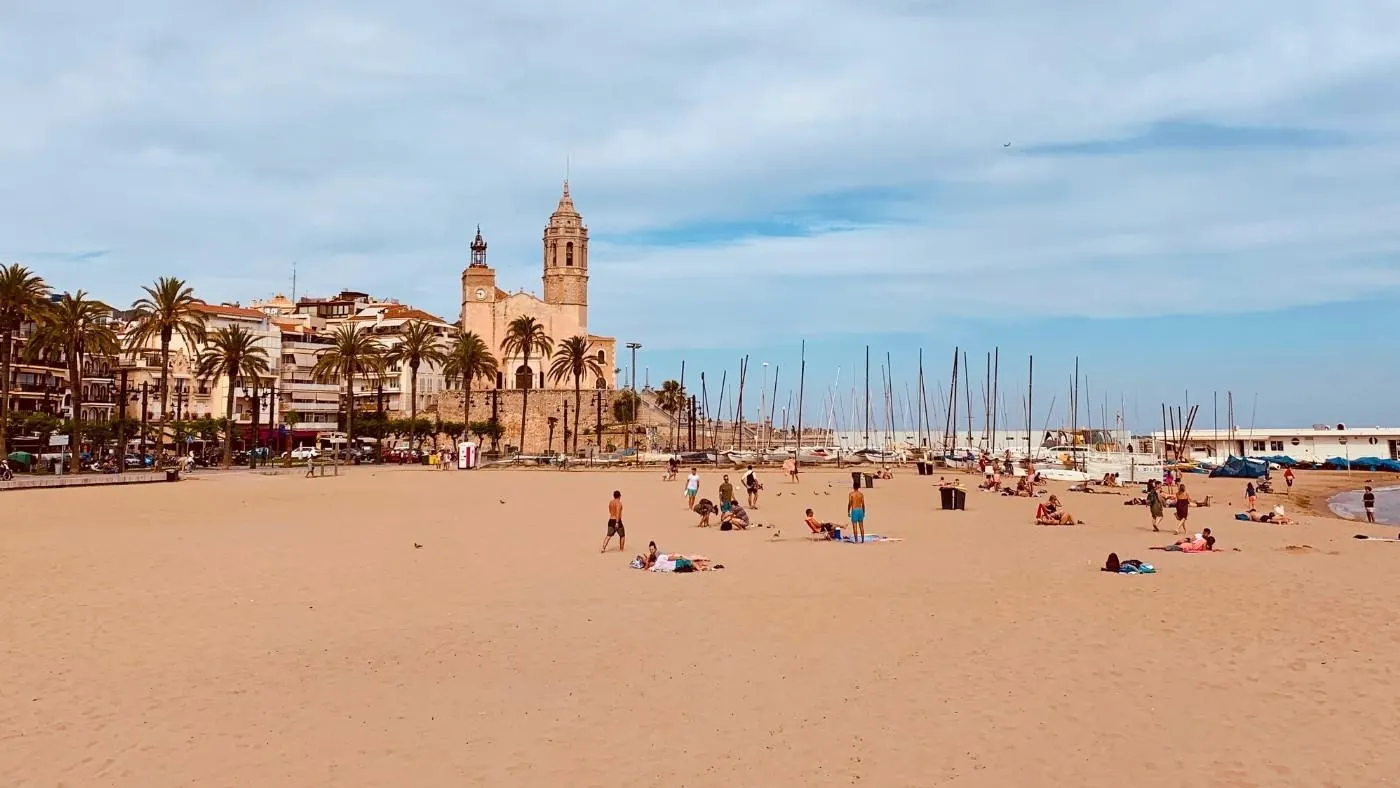
Sitges is renowned for its vast beaches.David NikelBarcelona’s popularity shows little sign of slowing. Even in the shoulder season, tickets to major attractions can disappear days in advance and the city’s most famous streets can feel relentlessly busy.For a change of pace without sacrificing on cuisine or culture, Sitges makes a compelling case.Under an hour by train from Barcelona, this long-established resort town offers a polished beachfront aesthetic with a deeply rooted artistic and cultural identity.It works well as a day trip from the city. Yet for many visitors, it makes even more sense as a base: a place to unwind after a carefully planned trip to Barcelona, or to skip the city crowds altogether.A Different Kind of Coastal StyleSitges feels curated without feeling contrived. The seafront promenade, lined with palms and low-rise buildings, sets the tone.Boutique hotels and upscale apartments overlook a long string of sandy beaches, while cafes spill out onto wide pavements designed as much for lingering as for passing through.There’s a quiet confidence to the place. Unlike larger Spanish resorts that lean heavily into nightlife or package tourism, Sitges has evolved into something more balanced.The beachfront promenade in Sitges is a popular meeting place throughout the day.David NikelStylish without being showy, it attracts a mix of Barcelona weekenders, international visitors, a vibrant queer community and long-standing locals, all existing comfortably side by side.A Compact Old Town With Real CharacterStep away from the promenade and the town reveals its older layers. The historic center is compact with narrow streets that wind between whitewashed buildings and small squares.At its heart stands the Iglesia de San Bartolomé y Santa Tecla, perched above the sea. The church is one of the most recognisable landmarks in the region, but the appeal lies as much in the atmosphere around it as the building itself.Early mornings and late evenings are particularly rewarding, when the day-trippers have gone and the town resets. Seek out the narrow street Carrer d'en Bosc for an old-world atmosphere at any time of day.An Artistic Legacy That Still Shapes SitgesSitges’ reputation as a cultural hub dates back to the late 19th century, when artists and writers began to gather here, drawn by the light and the coastal setting. That legacy remains visible today.The former home of artist Santiago Rusiñol, now the Cau Ferrat Museum, offers a window into that creative past. Nearby, the Museu de Maricel broadens the picture with a collection spanning centuries of Catalan art, housed in a striking seafront complex that feels as much a part of the experience as the works themselves.The Cau Ferrat Museum hosts an eclectic collection of art in the former home of famous Catalan artist and writer Santiago Rusiñol.David NikelThese are not blockbuster museums in the Barcelona sense. They are smaller, more intimate spaces. You can move through the collections at your own pace, often without the queues that define the big-city experience. Guided tours are available and well worth considering, but do book ahead as English-language places are limited.The artistic legacy continues to this day. Many historic buildings in Sitges now house galleries hosting temporary exhibitions from local artists.Sitges Beaches Define The RhythmSitges’ coastline is central to its appeal. A string of beaches runs along the town, each with a slightly different feel.Some are family-friendly and many are just steps from the town. Others have a more relaxed, open atmosphere, while a few lean more toward an adult crowd.The beaches set the pace of the day. Mornings tend to start slowly, afternoons drift into early evening, and the shift from sand to bar or restaurant feels effortless.As the day goes on, the beach bars pick up energy, adding a livelier edge without ever overwhelming the laid-back mood.A Food Scene Built For LingeringDining in Sitges rewards those willing to take their time. Along the seafront, seafood restaurants serve fresh catches designed for sharing. Locals line up outside at Casinet for its signature paella. Reservations are essential if you want to join them.In the narrow streets of the central area, the tone shifts. Pintxos bars offer a more informal experience, with small plates, small beers and a steady flow of conversation.Expect long lines for paella at Casinet on the Sitges promenade.David NikelVenture a few streets back and you’ll find neighborhood eateries like El Secret, where a mix of locals and in-the-know visitors gather for creative dishes and well-made drinks served with a smile.An LGBTQ Destination That Feels IntegratedSitges is widely recognized as one of Europe’s leading LGBTQ destinations, but what stands out is how seamlessly that identity fits into the wider fabric of the town.The social heart of the scene centers on Plaça de la Indústria, a lively square just back from the seafront where terraces fill from late afternoon onward.Here you’ll find long-running institutions such as Parrots Pub, which has evolved from a simple bar into a broader cafe and hotel concept, yet still anchors the square with its unmistakable, colorful presence.Dedicated queer venues are easy to find, particularly in the surrounding streets, but they never feel isolated from the rest of Sitges. The LGBTQ community is woven into the town’s identity.Independent Shopping With PersonalityRetail in Sitges leans heavily toward the independent. Fashion boutiques, small galleries, and artisan stores dominate the landscape, selling everything from locally made soaps to Catalan sweet specialties such as turrón, the traditional nougat often associated with the region.It makes browsing feel more personal. You’re less likely to encounter familiar global brands and more likely to discover something distinctive.An Easy Base For Barcelona On Your TermsSitges’ proximity to Barcelona is one of its greatest strengths. Frequent trains connect the two, making it straightforward to dip into the city for pre-booked attractions and cultural experiences, then return to a calmer setting by the sea.That flexibility matters. It allows visitors to engage with Barcelona on their own terms, rather than being swept up in its busiest moments.Of course, Sitges itself is not immune to crowds. In peak summer, it can be very busy and prices rise accordingly, although it rarely reaches the peaks of La Rambla. Outside those periods, especially midweek or in the shoulder seasons, Sitges offers a more measured alternative.MORE FROM FORBESForbesBarcelona Is Busier Than Ever. Do This Before You GoBy David NikelForbesMust-See Ports On A Mediterranean Cruise, And Those To SkipBy David NikelForbesHow To Visit Venice On A Cruise In 2026By David Nikel
Sitges Travel Guide: Beaches, Culture And Hotels Near Barcelona
An easy day trip from Barcelona, Sitges offers great beaches, Spanish beach bars, paella restaurants and a relaxed, artistic rhythm.
1,057 words~5 min read