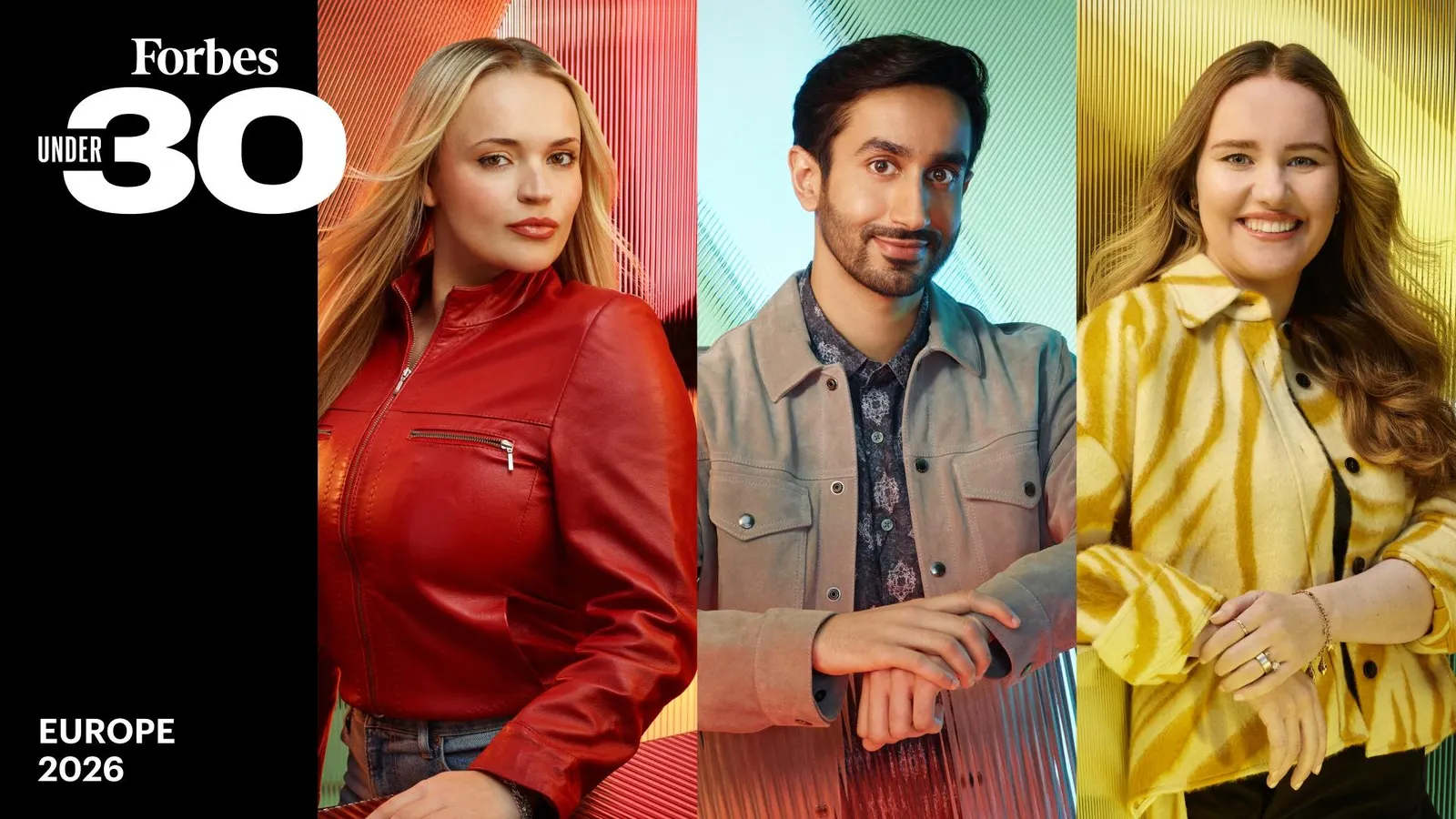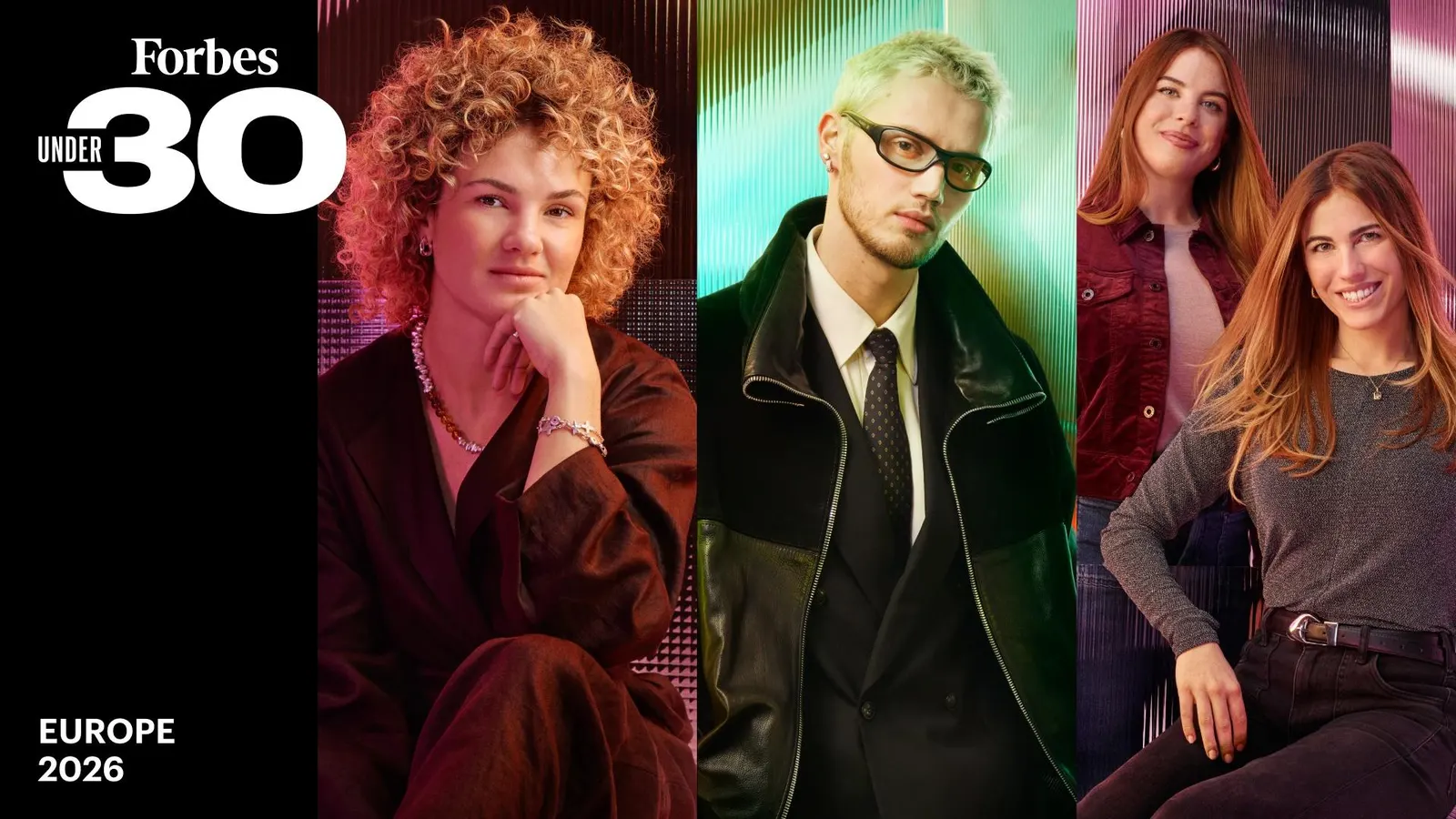
By Alexandra York and Zoya HasanFor years, Europe’s startup story has followed a similar pattern: companies struggling to raise large sums of money and founders fleeing to Silicon Valley to scale. But now, the narrative is changing. In just the past year, the AI boom has produced 45 new billionaires, and in Europe the newest members of the triple comma club include Under 30 alums Mati Staniszewski and Piotr Dabkowski of $11 billion (valuation) voice AI startup ElevenLabs; Fabian Hedin of $6.6 billion vibe-coding platform Lovable, plus unicorn companies like Victor Riparbelli and Steffen Tjerrild’s $4 billion generative video company Synthesia. The Under 30 Europe Class of 2026 reflects this shift—and signals where the continent’s startup ecosystem is headed next. While a handful of companies have brought operations to the States, the majority are growing and building at home, thanks to an influx of fresh capital. This year’s class has cumulatively raised more than $900 million in funding—up $100 million from last year—building startups that do everything from create cheaper semiconductor chips that run on light and change the way people get hired in the age of AI.Some of the best-capitalized companies on the Under 30 Europe 2026 list are SheMed, a telemedicine startup cofounded by sisters Chloe and Olivia Ferro, 24 and 26, in 2024. The platform connects women with healthcare providers and GLP-1 prescriptions for reasons other than weightloss—like alleviating PCOS or pre-menopausal symptoms. With $75 million in total funding, they closed a $50 million Series A in October 2025 at a $1 billion valuation. Nipping at their heels in the funding race are Peec.ai cofounders Marius Meiners, 29, and Daniel Drabo, 27; they’re building a marketing platform that helps business clients understand if their products are being talked about by AI chatbots—and if what they’re saying is positive. The two have raised $29 million from investors like Singular and fellow Europe alum Harry Stebbings’ 20VC. Every single category on the Under 30 Europe 2026 list has founders using AI to power their business models—but not always in obvious ways. Consider 29-year-old Clarisse Beurrier, cofounder of Cellcraft: She’s using AI to help companies grow animal cells in tanks that can replace meat products like burgers, sausages or patties on grocery store shelves. Or there’s Tess Bevers, 28, and David Kubanek, 27, of Novogaia; they’re using AI to discover new medicines from fungi.Entrepreneurs dealing in the physical world are just as prominent in this class. Hears, cofounded by Nick Nijhof, 28, and Bob Verlaat, 29, is designing comfortable ear plugs that protect from damage at loud events like concerts. With live events making their rebound, their revenue soared to $22 million in 2025. Also benefitting from the boom in live events is the face of this year’s Entertainment category, Mau P. The 29-year-old Dutch DJ and producer is playing shows in San Francisco to India to Dubai to Australia and even Salt Lake City, with a roster that includes Coachella and Ultra Music Festival, and residences at Wynn Las Vegas and Ibiza. Next up: He’s stepping into the founder seat with a newly launched imprint, Baddest Behavior Records. “I got here because some other really big DJs were really nice and generous to me,” Mau P says. “I would love to also be able to help producers in the way that people helped me.”Funding and AI innovation were not the only factors considered in building this list. Social following, too, was a factor, and this year’s class counts more than 291 million cumulative followers across TikTok, Instagram and YouTube. Taking the top spot there is 25-year-old German creator Noel Robinson, who’s garnered 75 million followers across platforms for his viral street dancing videos. Revenue from women’s sports is expected to reach $3 billion globally this year, and helping to fuel the ecosystem is rugby star Ellie Kildunne. She was named BBC’s Sports Personality of the year runner up in 2025 (edged out by none other than global golf legend Rory McIlroy). This follows her 2025 World Cup championship win, and being named the 2024 World Rugby Women’s 15s Player of the Year. Off the pitch, she hosts a Spotify podcast with her Red Roses teammate called “Rugby Rodeo,” has a Barbie created in her likeness, and published a book just last week. “With the rapid rise of women's rugby and women's sports, there's going to have to be someone that breaks those boundaries in the first place,” Kildunne, 26, tells Forbes. “I want to tell my story and hope that someone who's reading it will relate to the stories and they won't feel alone.”It’s a sentiment shared across many of these young founders, global stars and changemakers: Being young in business can be tough. But it can also be an advantage.“People definitely don't take you as seriously as they should,” says Sinead Gorey, the 29-year-old founder and designer behind her eponymous fashion brand. Her corsets have been worn by Lady Gaga and her boots made their way onto Sabrina Carpenter for her Short & Sweet tour. “But it makes you want to prove yourself more.”Beurrier of Cellcraft agrees: "You need to remember the power you have and not give it away.”To identify the 2026 class of the Forbes Under 30 Europe list, Forbes editors worked with expert judges—including actress Lashana Lynch, Instadeep CEO Karim Beguir, and Under 30 alumni like media entrepreneur Steven Bartlett and Synthesia cofounder Victor Ripabelli—to review more than 10,000 candidates, evaluating each one on impact, financial strength and innovation. (Want to know more about our methodology? Click here.)30 Under 30 2026 By The Numbers
By The Numbers: Meet The Forbes 30 Under 30 Europe Class Of 2026
The AI unicorns, cell manufacturers and unexpected entrepreneurs shaping the future of the European startup economy.
1,213 words~6 min read