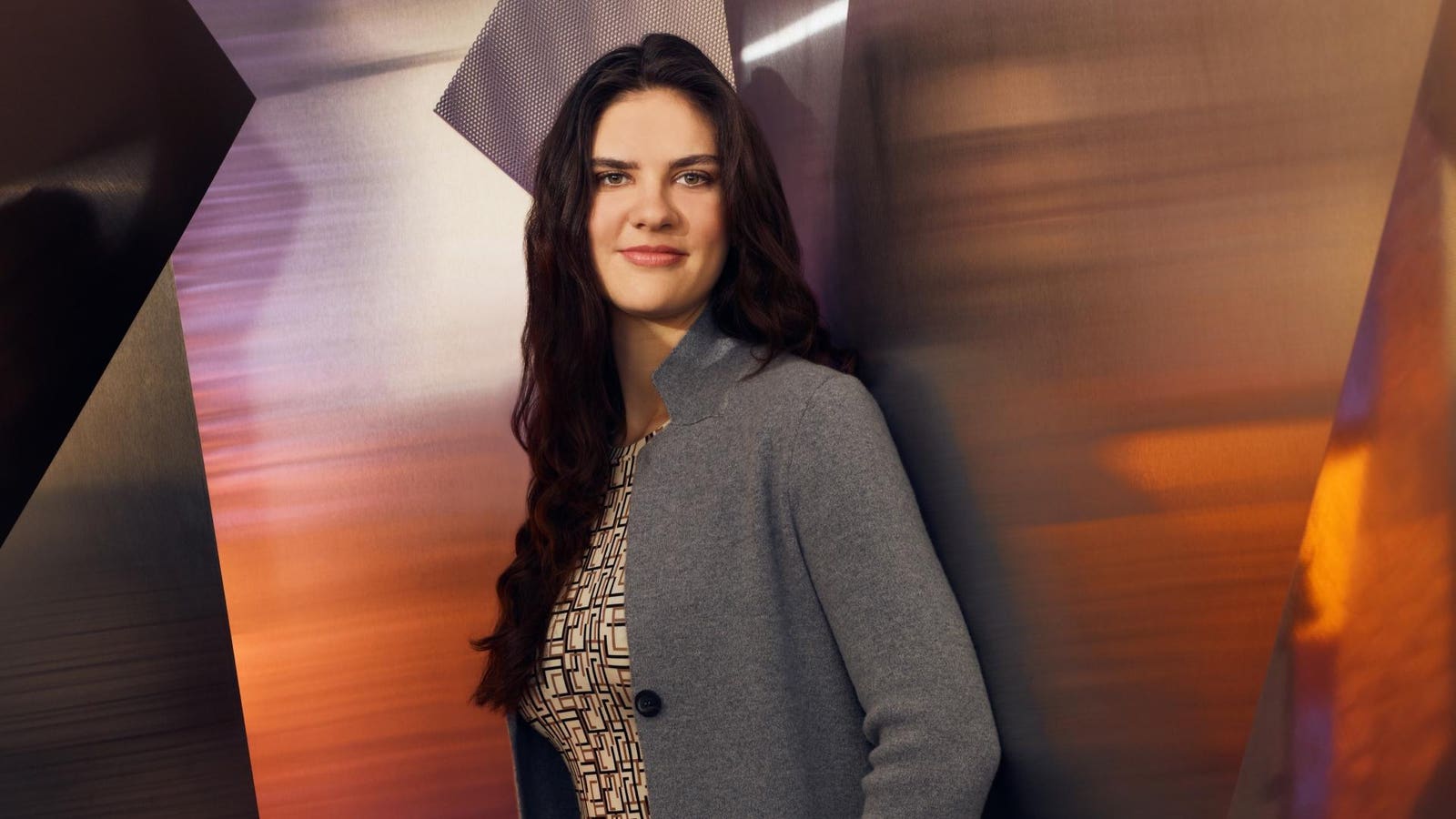
ByAlan Ohnsman, Igor Bosilkovski and Zoya Hasan Miha Jagodic’s idea for Bloq.it, a Lisbon-based startup operating a network of “smart” parcel lockers, arose from a common inconvenience: where to store things while on a beach holiday. “I saw just one local operating a stand collecting belongings, but few other options,” Jagodic, 29, told Forbes. It was an a-ha moment. “I understood there's a need to have some kind of space, maybe on a short-term basis, that people can use for exchanging items, picking up packages, and storing belongings. The idea of lockers evolved based on that.” Sebastian Nevols for ForbesCofounded in 2019 with João Lopes, 27, Bloq.it designs and manufactures lockers to store packages, runs the software that powers them, and manages the infrastructure that logistics companies use to deliver packages to them—eliminating the need for someone to be home. Bloq.it works with major logistics companies, including DHL, DPD, GLS, InPost, Vinted and Evri, and estimates its lockers are used by more than 100 million people annually in nine European countries. For a company inspired by a day at the beach, it’s become a fast-growing business, raising $33 million in its latest funding round and employing more than 400 people. And as he looks to keep expanding, Jagodic sees tech playing a big role. “We can't avoid the AI topic. As a company, we're building an AI department, so we're going to improve all areas,” he said. “But when we talk about manufacturing specifically, everyone's talking about putting robots in the factories. I mean, factories are very autonomous already.”And it’s technologies like AI and robotics, as well as 3D printing and data platforms, that continue to dramatically change every aspect of how goods are produced and delivered. They’re also making it easier and cheaper for young entrepreneurs to turn their ideas into serious businesses. Bloq.it is just one of the promising young companies spotlighted in the 2026 Under 30 Europe Manufacturing & Industry list. Candidates were evaluated by a panel of expert judges featuring Zhaopeng Chen, founder and CEO of Agile Robots; Vanessa Butani, chief sustainability officer for Volvo Cars; Amanda Birkenholz, principal for UVC Partners; and Vishal Soomaney Vijaykumar, cofounder of Messium and a 2025 Under 30 alum. This year’s honorees include founders across a diverse range of businesses, including satellite protection, factory technology, hydrogen storage, AI chip fabrication, the fashion industry, biotechnology and e-scooter production. All candidates must have been 29 or younger as of April 14, 2026, and never before named to a Europe, U.S. or Asia 30 Under 30 list.Biotechnology is an emerging opportunity for some 2026 listers. Take Netherlands-based Bionomic, which has raised $1.4 million to design technology to protect crops from soil-borne fungal diseases such as Fusarium, which cause billions in crop losses worldwide. The company began as a student research project when founders Diederik Mud, 29, and Stan Aanhane, 25, initially developed a diagnostic tool that tested for harmful fungus in soil. There’s also Novogaia, which is using artificial intelligence to discover new medicines from fungi. Cofounded by Tess Bevers, 28, and David Kubanek, 27, the goal is to bridge nature and modern drug discovery, since about half of all approved oral drugs are inspired by natural molecules.Looking to the heavens, aerospace startup Lodestar, based in the U.K., is developing autonomous “bodyguard” satellites. Using proprietary software, cofounders Neil Buchanan, 28, and Thomas Santini, 26, say their tech turns conventional satellites into “fighter pilots” in space. The company has raised $3 million from tech investors, including Entrepreneur First, Inflection.xyz, Lunar Ventures and a16z, and is on track to put its first two missions in orbit this year. Meanwhile, Switzerland-based RoBoa, a startup spun out of ETH Zurich, is developing soft, inflatable robotics for industrial maintenance and emergency applications. Cofounded by Alexander Kübler, 27, Pascal Auf der Maur, 28, and Betim Djambazi, 29, their robots can “grow” in confined, complex spaces, such as industrial piping, sewers and disaster debris, where humans and traditional rigid robots can’t reach. RoBoa has raised more than $2.5 million from backers such as the Innosuisse Startup Innovation Project, ESA BIC and the ETH Pioneer Fellowship.But this list isn’t limited to traditional manufacturing. Take Yanglin Sha, 27, founder of luxury fashion house Rue Agthonis, which has showcased at more than 20 runway shows across London, Paris, Milan and New York. Backed with $11 million in funding, she has built smart manufacturing into the core of her sustainable accessories brand, offering customers things like augmented reality try-ons, while handling backend inventory through smart warehousing and data analytics.The unifying thread connecting this year’s founders is how quickly robotics, automation, software and data can assist in creating a future marked by greater convenience, efficiency and security–and a desire to scale.“We've been strengthening the organization for the next wave of expansion,” Jagodic said. “We can see launching new products simultaneously, which is something we haven't been doing in the past, and opening in many geographical markets simultaneously as well. These are two big topics the whole organization's preparing for.”This year’s list was edited by Igor Bosilkovski, Zoya Hasan and Alan Ohnsman. For a link to our complete 2026 30 Under 30 Europe Manufacturing & Industry list, click here, and for full 2026 30 Under 30 Europe coverage, click here.30 UNDER 30 RELATED ARTICLESForbesBy The Numbers: Meet The Forbes 30 Under 30 Europe Class Of 2026By Alexandra YorkForbesHow We Make The Forbes Under 30 Europe ListBy Alexandra YorkForbes30 Under 30 Europe Science & Healthcare 2026: The Founders Using AI To Empower Patients And Unlock Scientific MysteriesBy Alex KnappForbes30 Under 30 Europe Social Impact 2026: Turning Innovation Into Social ProgressBy Brianne GarrettForbes30 Under 30 Europe Sports & Games 2026: How Ellie Kildunne, Eberechi Eze And More Turn Competition Into Commercial SuccessBy Alexandra York
30 Under 30 Europe Manufacturing & Industry 2026: The Builders Bringing AI, Robotics And Data To Industry
From factory floors to orbit, these Under 30 founders are building high-growth startups transforming Europe’s industrial economy.
956 words~4 min read