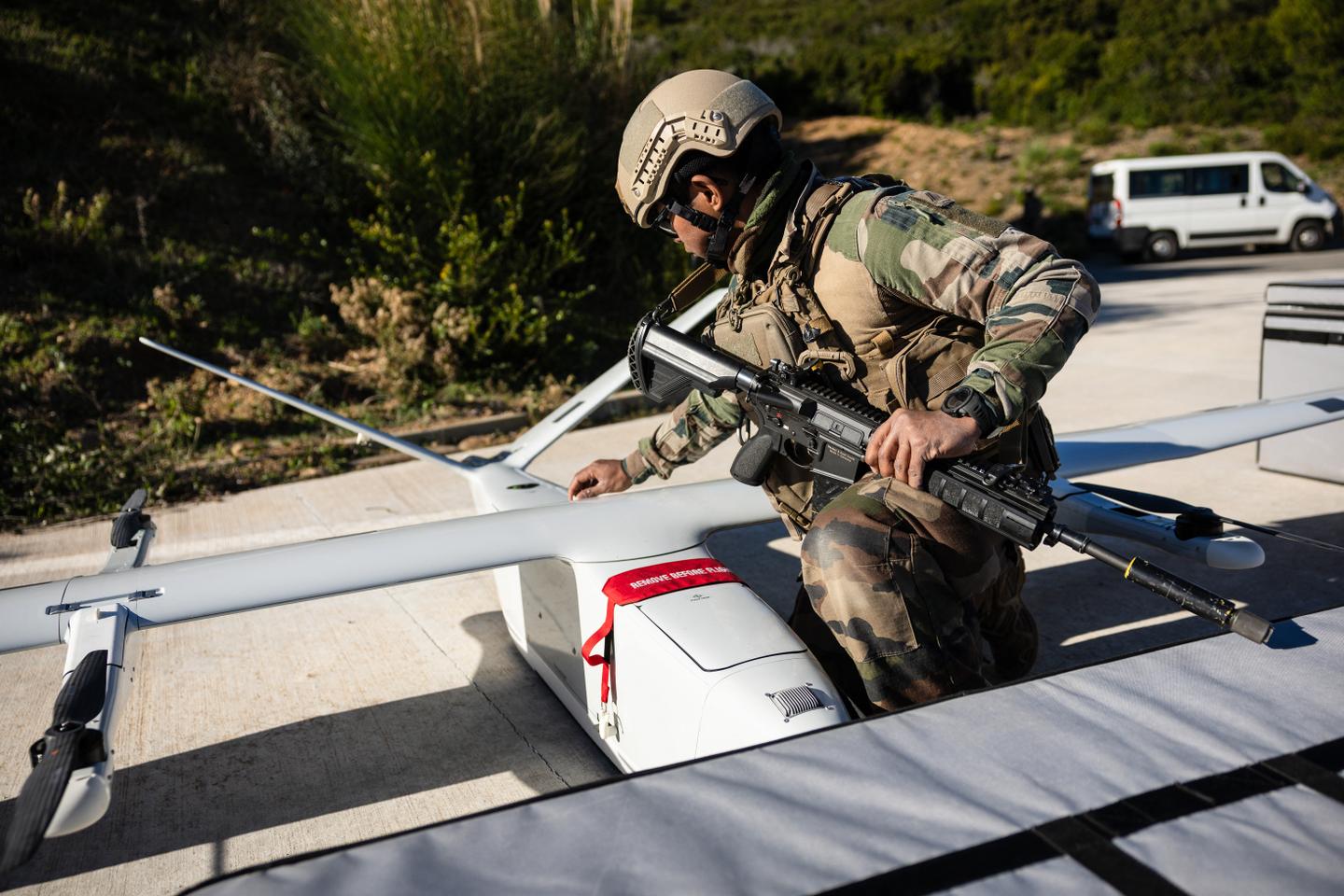
A French soldier inspects a DT46 drone during maneuvers on Île du Levant, in the Var region, on November 25, 2025. CLEMENT MAHOUDEAU / AFP
Before the Assemblée Nationale even began debating the update to the military planning law on Wednesday, April 8, which includes an additional €36 billion for the armed forces by 2030, the budgetary equation was already proving challenging. On Thursday, before the defense committee, Carine Camby, president of the first chamber of the Court of Auditors, warned MPs that the financial sustainability would be complicated. "The additional effort for defense will require significant [budgetary] trade-offs, unless new resources are found," Camby said, explaining the opinion issued by the High Council of Public Finances on this bill on Wednesday, following a referral by the government.
In short, France currently lacks the means to fulfill its military ambitions unless it engages in serious debate over its economic, fiscal and budgetary policies. According to the High Council of Public Finances, the increase in defense funding planned by the new military planning law will inevitably prevent France from meeting its European commitments on public spending from 2027 onward. Since the adoption of the initial version of the military planning law in 2023, the government has been aware of this situation. The financial squeeze was expected for the year of the presidential election, but it was also dreaded. The High Council of Public Finances has now quantified this constraint, with supporting figures.