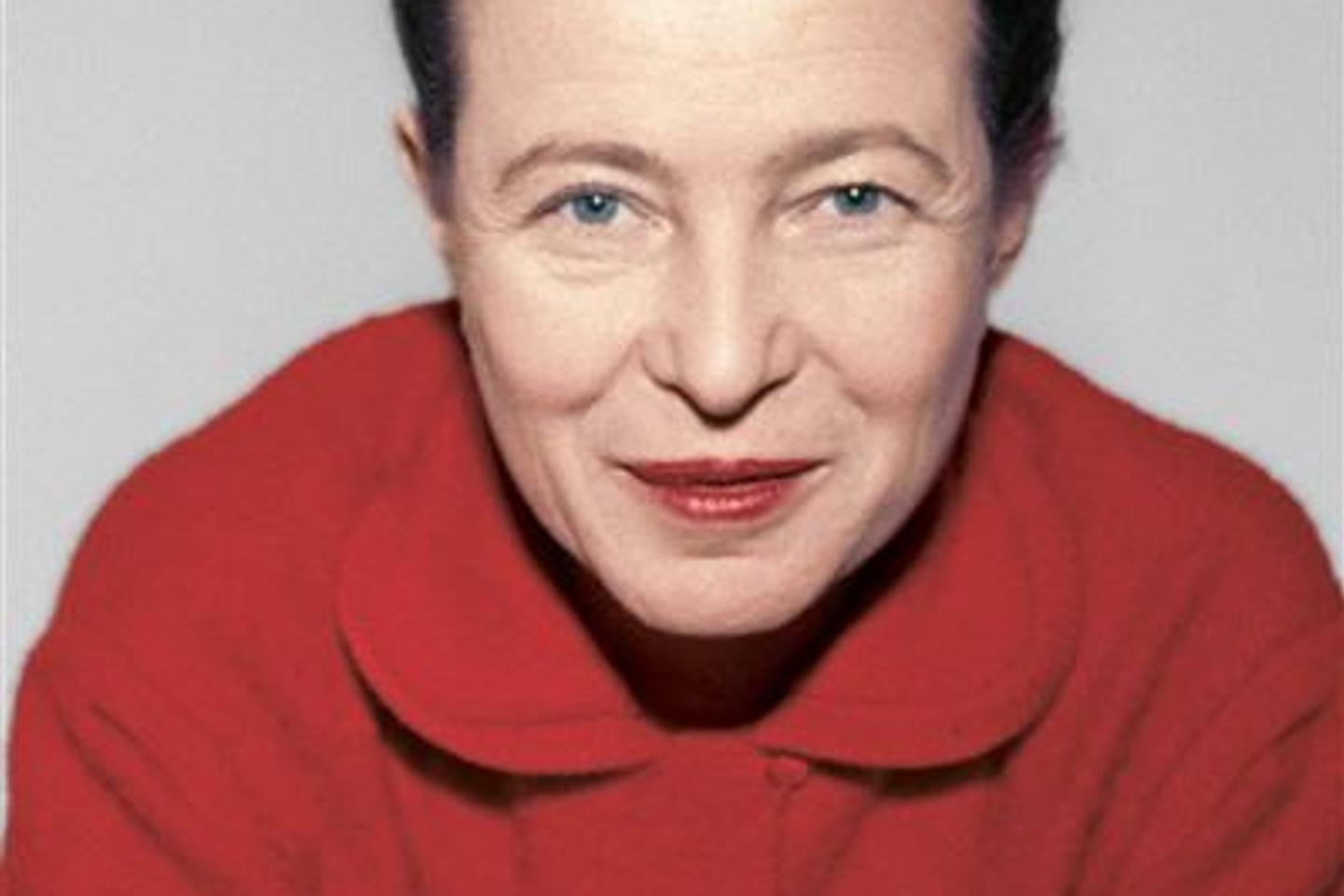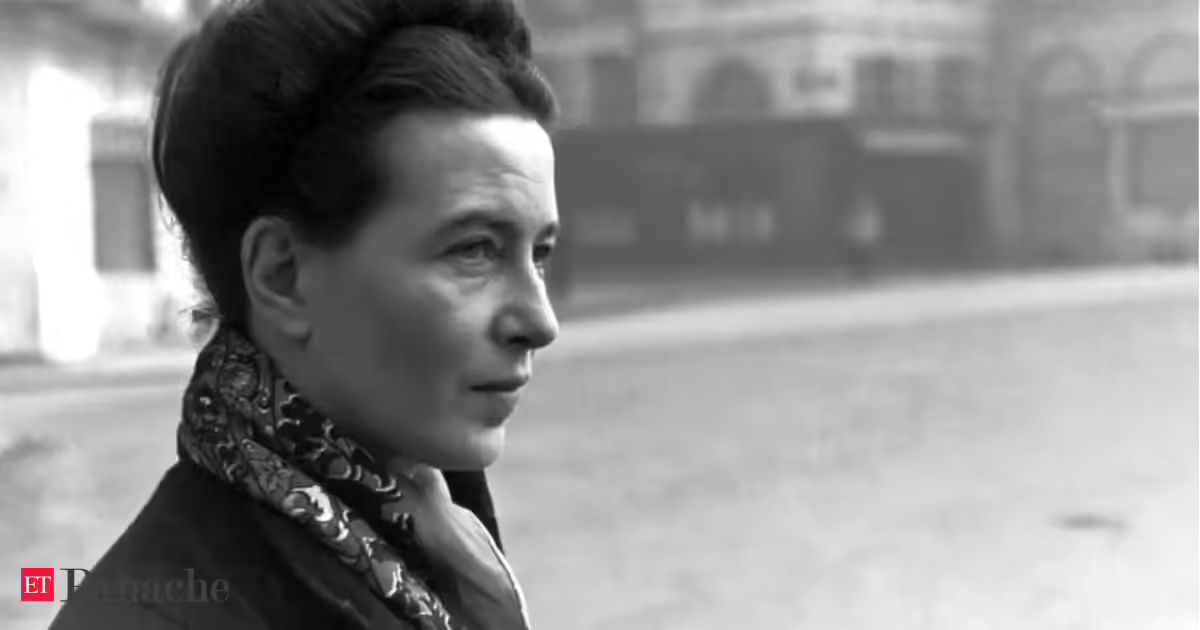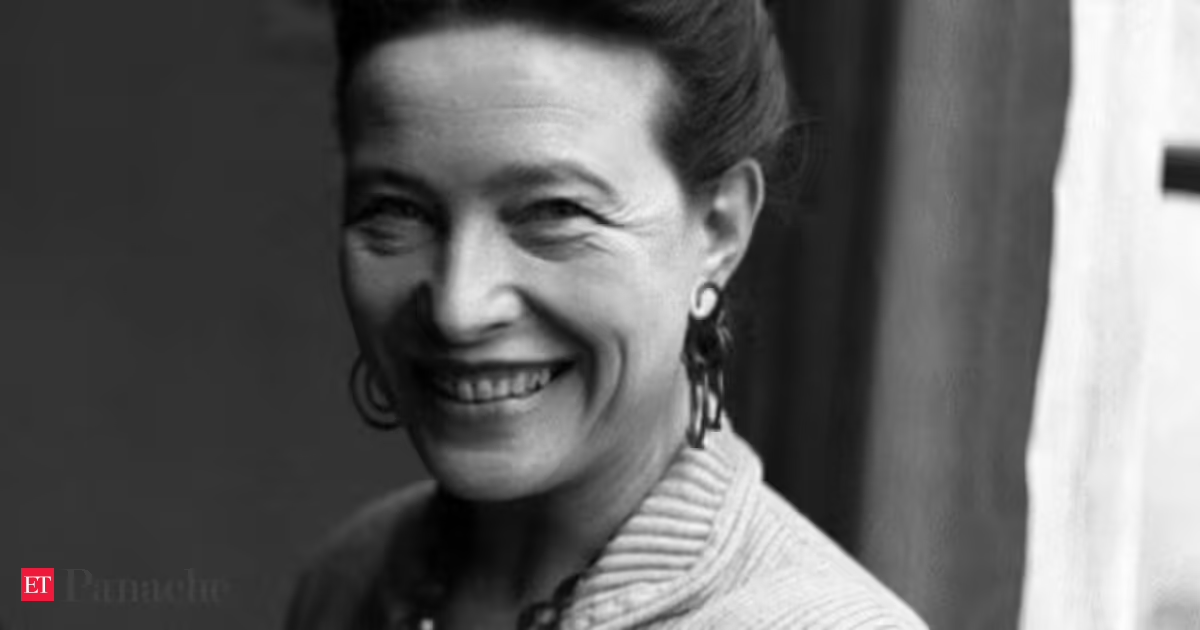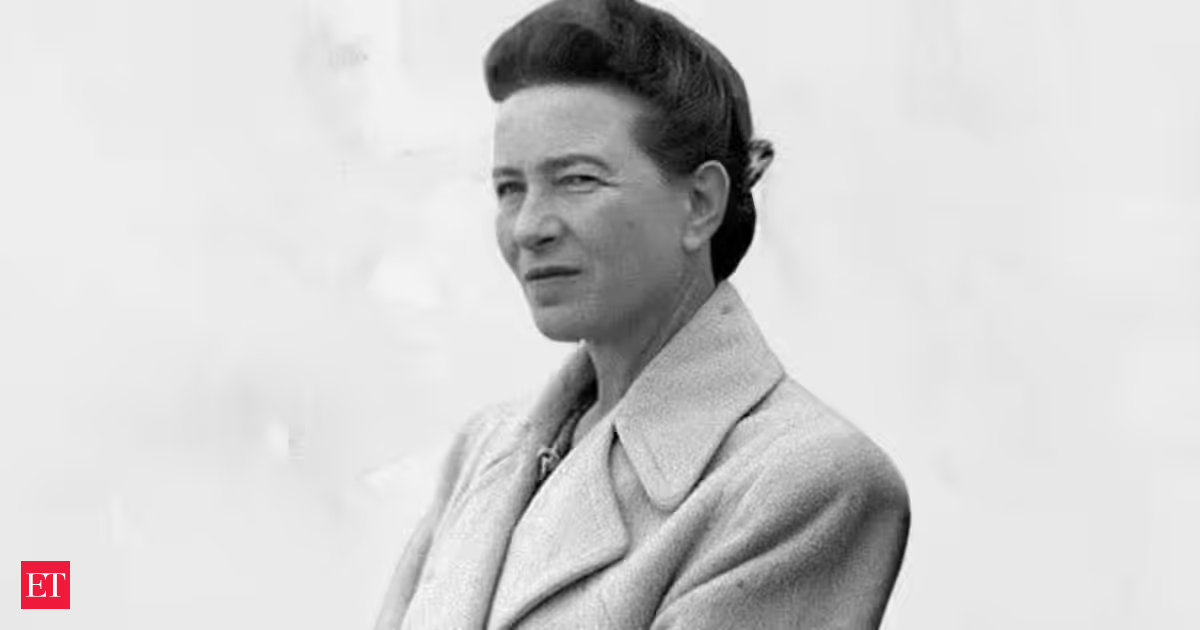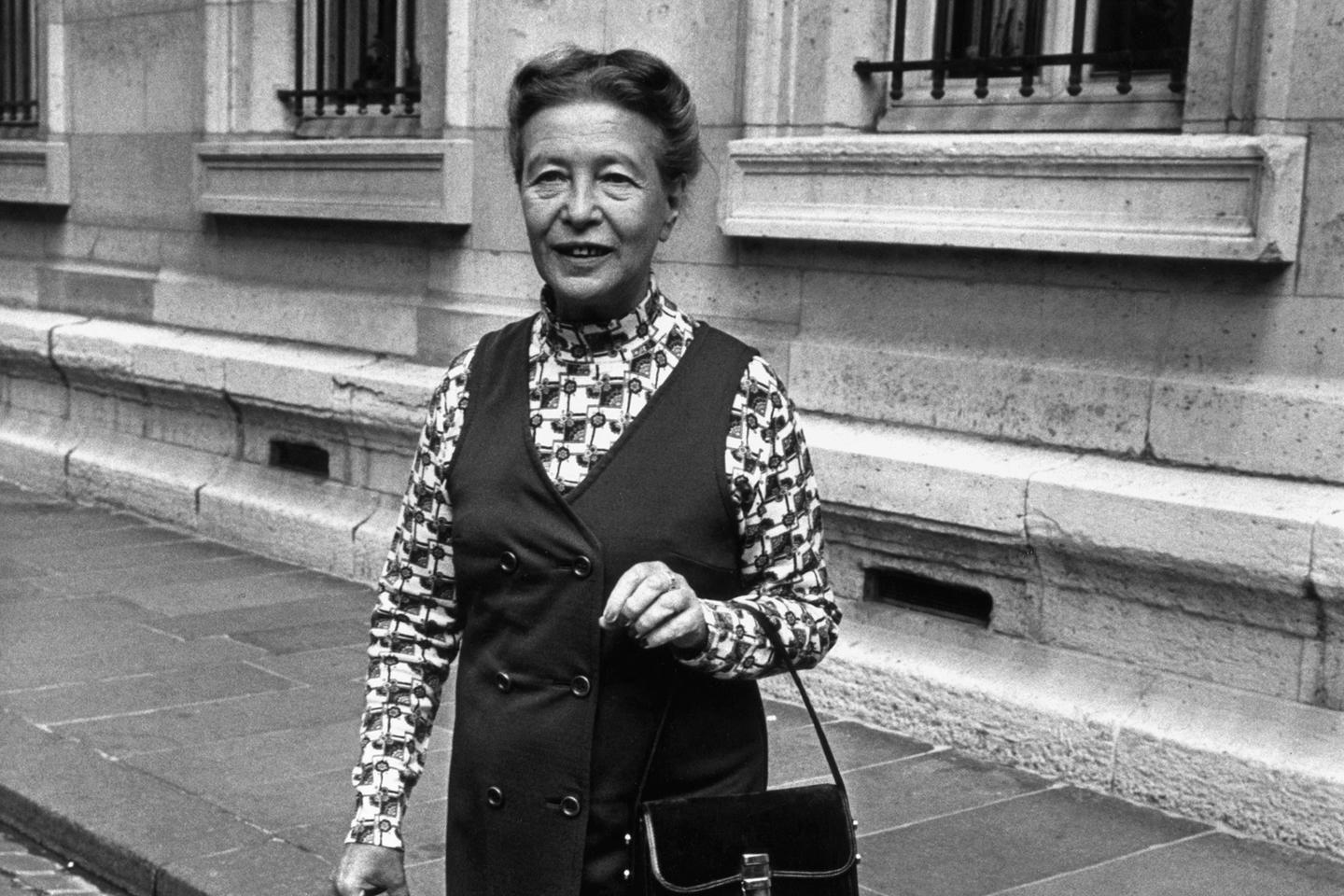
Simone de Beauvoir, in Paris, 1971. GEORGES BENDRIHEM/AFP
What role does Simone de Beauvoir (1908-1986) play in the lives and work of Louise Chennevière, Pauline Delabroy-Allard and Blandine Rinkel? These writers share their reflections.
Blandine Rinkel: 'Beauvoir teaches me to look others fully in the face and, overcoming fear, to think'
I was for a long time intimidated by the "de" in Simone de Beauvoir's name. As a teenager in Rezé [western France], I imagined that Mémoires d'une jeune fille rangée (Memoirs of a Dutiful Daughter, 1958) must be a book filled with English hats, cascading laughter and complex perfumes. How could I have thought that Beauvoir inhabited a pastel and affected world? What a mistake. Luckily, I was set right when, after moving to Paris upon finishing high school, I bought La Force des choses (Force of Circumstance, 1963) at the Boulinier bookstore, drawn by its title, then quickly read the rest of her memoirs. I loved everything about them. Her classical yet sharp writing describing the world of post-war intellectuals, but also the scorn Beauvoir showed for the vanity of those same intellectuals. In my notebook from my twenties, I found this passage that I copied out: "Each time I recognize [vanity] in a colleague, I am aghast. How can anyone destroy himself for the sake of a mask? (...) A man's truth includes his objective existence and his past, but it is not inevitably limited to such fossilizations. It is in their name that the self-important man denies the perpetual newness of life (...) and ends up a museum piece. This sclerosis always involves hypocrisy."