"The Handmaid's Tale" is nowhere near its end.
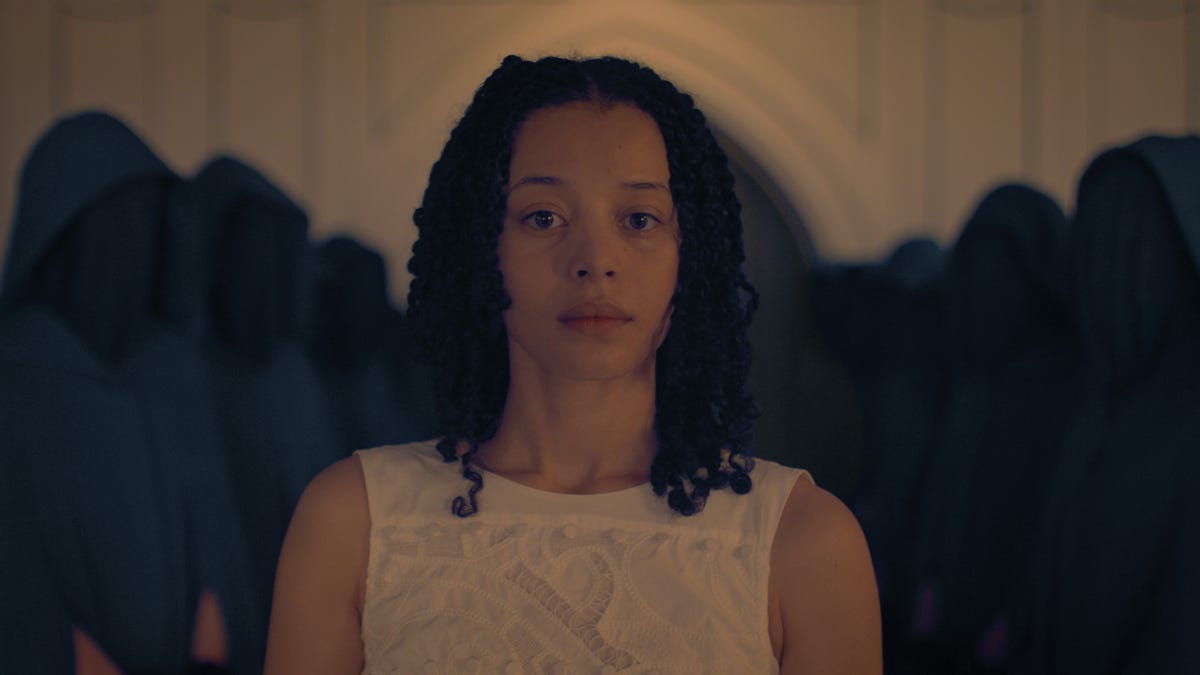
Less than a year after Hulu's landmark, eventually exhausting signature series ended, the world of Gilead returns in "The Testaments," based on author Margaret Atwood's 2019 novel that continued the story she started back in 1985 with her original book. This time, the perspective shifts from the red-clad handmaids forced into sexual servitude by the oppressive patriarchal Gilead regime to that of the "plums," the richest and most privileged daughters of Gilead's high commanders, adolescents on the cusp of womanhood and mandatory marriage.
If you haven't read or didn't know about Atwood's newer novel, the show may seem puzzling: a spinoff/sequel so close to the end of the original series with a different setting to, presumably, explore the exact same themes? Did the audience really need (or want) more from the world of Gilead, nearly 10 years after the first show exploded into the zeitgeist and then slowly, at times painfully, faded away?
As a series, "Testaments" (streaming Wednesdays, ★★ out of four) is frustrating, vacillating between deeply intriguing and deeply boring, and at times wasting a strong cast of promising young women ready for Hollywood stardom. It is so directly correlated to "Handmaid's" that it cannot escape its shadow to become a story of its own ‒ a feat the best sequels, prequels and spinoffs manage to achieve. It is an exercise in unmet potential, and a prime example of franchise fatigue. Maybe in three years, a return to Gilead might have had more impact. In 2026, it just feels tiring.