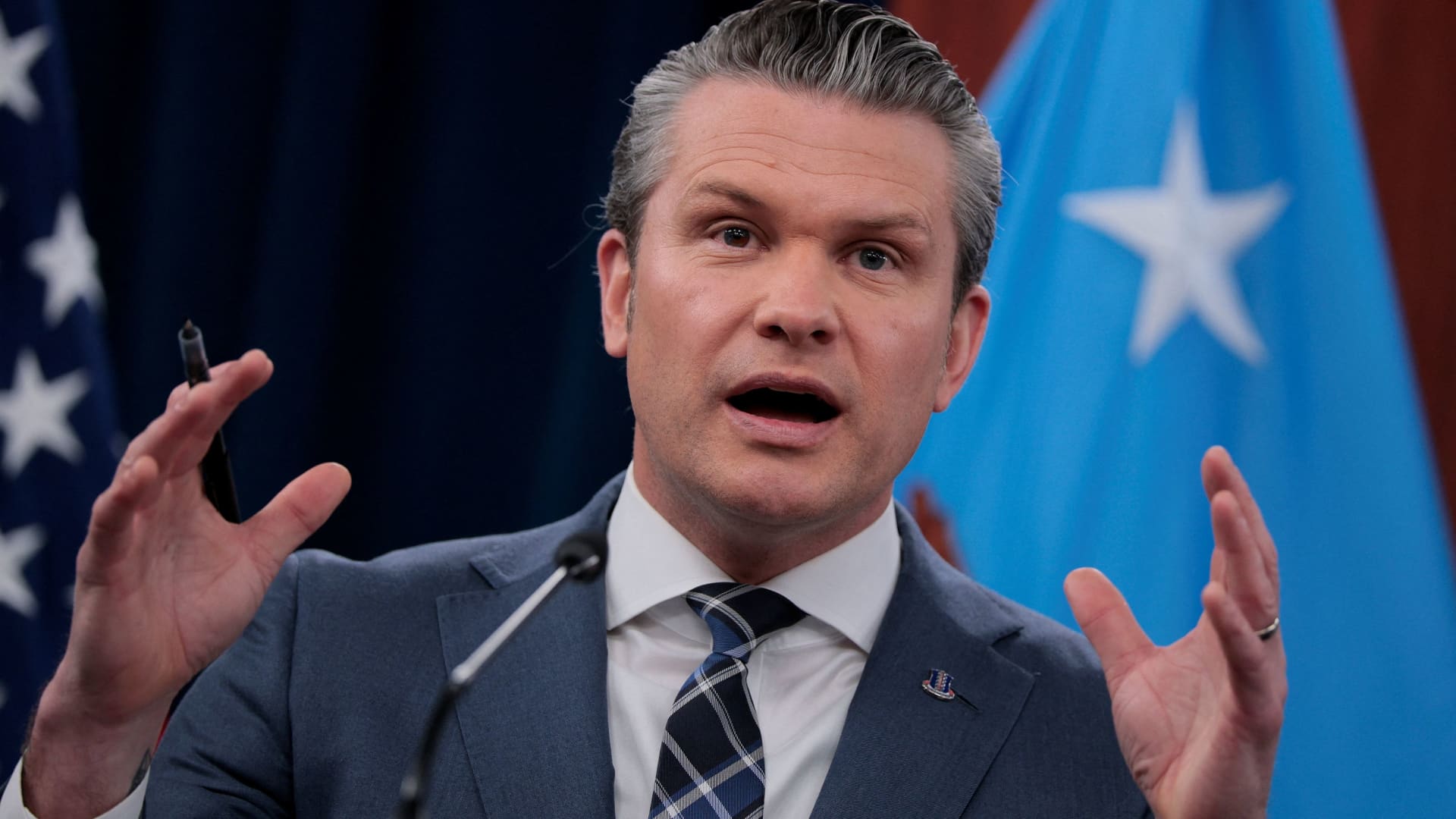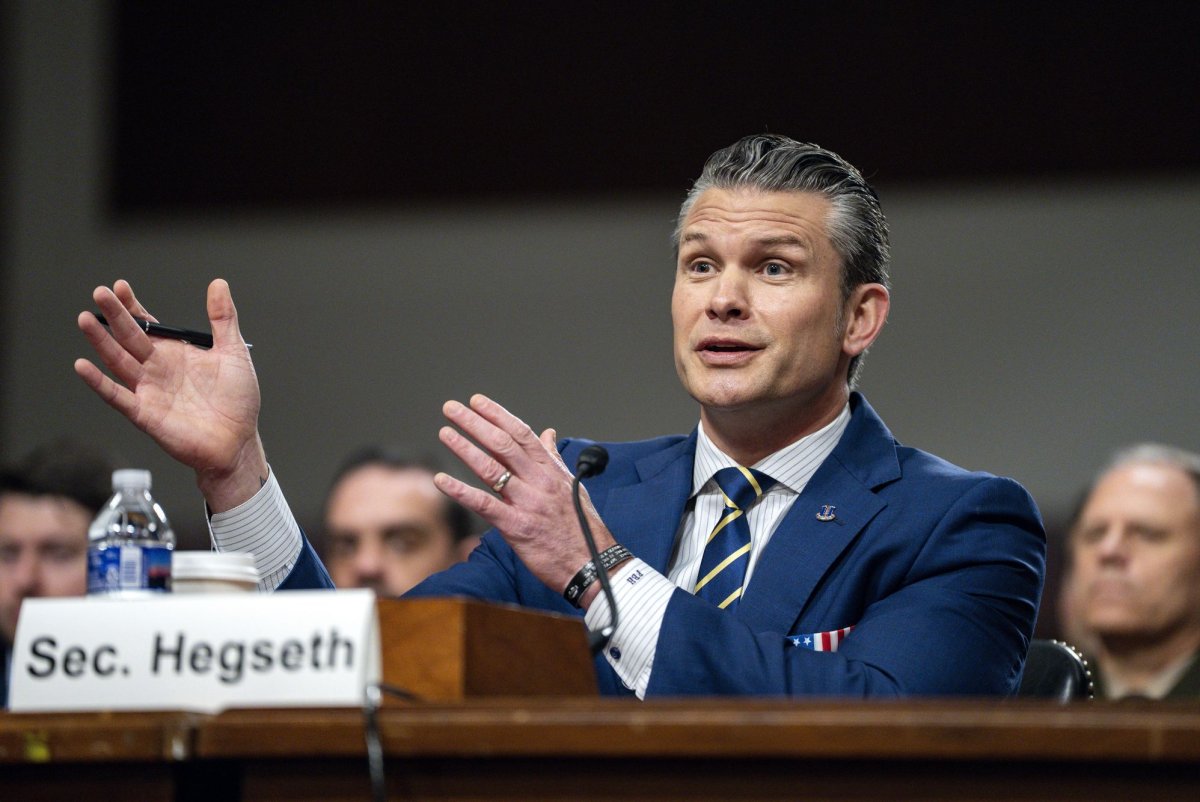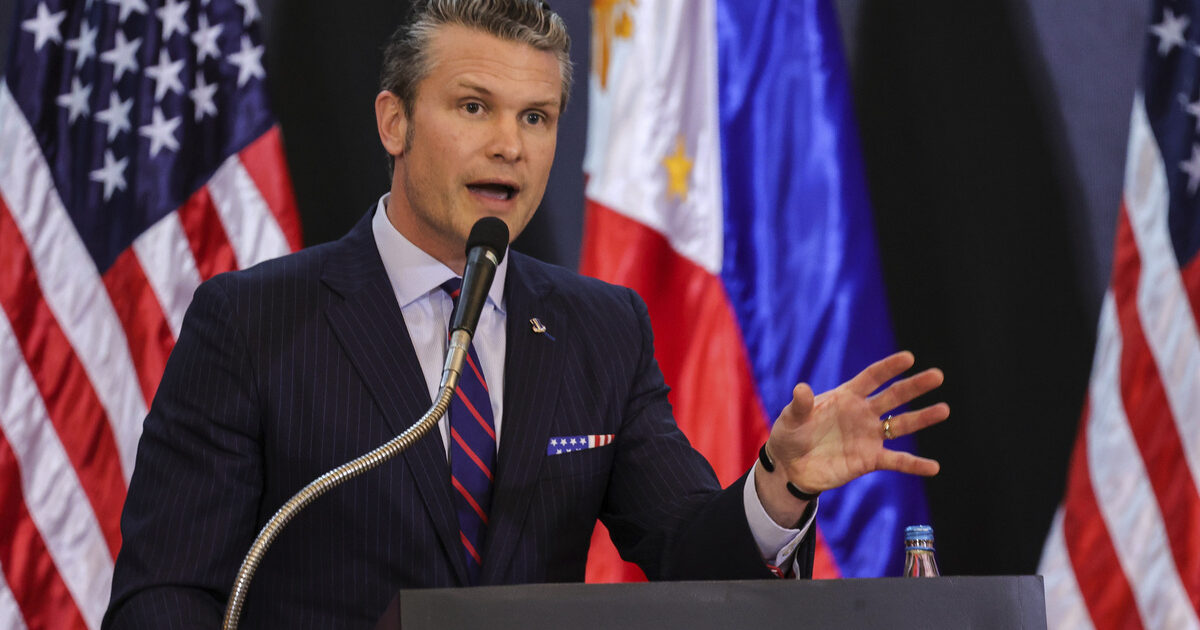
ToplineSenate Democrats have joined their House counterparts in investigating allegations Defense Secretary Pete Hegseth tried to make a “multimillion-dollar investment” in defense stocks right before the Iran War—which the defense secretary has strongly denied—raising questions about the ethics of such a purchase but also how Hegseth would’ve funded such a major money transfer. Secretary of Defense Pete Hegseth looks on during a press briefing at the Pentagon in Washington, DC, on March 31.AFP via Getty ImagesKey FactsHegseth’s stock broker at Morgan Stanley reached out to BlackRock in February, before the Iran invasion, about making a “multimillion-dollar investment” in the firm’s ETF for defense stocks, the Financial Times reports based on multiple anonymous sources, and the inquiry was flagged internally at BlackRock.The Pentagon strongly denied the report and called for the Financial Times to retract the story with spokesperson Sean Parnell calling the story “entirely false and fabricated,” while Morgan Stanley and BlackRock have not commented.A coalition of Senate Democrats launched an investigation into the reporting, ABC first reported Thursday, sending a letter to Hegseth demanding answers about his finances after Democrats on the House Oversight Committee launched a separate probe earlier in the week.Hegseth couldn’t invest in the fund because it was not available for Morgan Stanley clients, according to the Financial Times, and it’s unclear if the defense secretary went on to invest in any other defense stocks or ETFs, though executive branch employees have to report any trades of stocks or other securities within 45 days of the transaction taking place.But it’s also unclear if Hegseth could afford such a large investment, since he reported his liquid assets ranged between only $460,000 and $1.1 million last year, and Forbes estimated his total net worth at $3 million.The report happens amid suspicious—and highly lucrative—betting on prediction markets times with major announcements from President Trump.What Do We Know About Hegseth’s Finances?Forbes estimated Hegseth’s net worth at approximately $3 million when he joined the White House in early 2025. Much of that fortune belongs to his wife, however, with the defense secretary’s personal wealth likely closer to $1 million or less. While Hegseth took in millions from his former Fox News salary and revenue from his books and speeches, real estate documents suggest Hegseth and his wife have spent some $19,000 monthly on the mortgage for their Goodlettsville, Tennessee, property, and Hegseth has gone through multiple divorces, with documents from the second one suggesting he had to pay at least $1.3 million in spousal maintenance and child support. It’s unclear how Hegseth’s finances may have changed since he joined the Trump administration, but he now commands a far lower salary—$235,100—than the more than $2 million he took in annually at Fox News. He can still receive royalties from his books, but will not be able to pen any new books or make money through speeches while in office. The defense secretary also reported selling off a slew of stocks between February and April 2025, which would have netted him somewhere between approximately $127,000 and $680,000—less than he would need to make a new multimillion-dollar trade.What Fund Did Hegseth Try To Invest In?The Defense Industrials Active ETF (IDEF) is a fund that allows investors to put their money in major defense stocks, and includes major defense contractors like RTX, Lockheed Martin, Northrop Grumman and Palantir. BlackRock notes the fund allows investors to invest in “companies that may benefit from increased government spending on defense and security amid geopolitical fragmentation and economic competition.”Democrats Launch InvestigationsDemocrats on the House Oversight Committee were first to launch an investigation following the Financial Times report, sending letters Tuesday to Hegseth, Morgan Stanley and BlackRock in light of the reporting. “Attempting to profit from a war you helped engineer using insider information is shocking and outrageous even by the standards of the Trump Administration,” the Democrats wrote to Hegseth, asking him to preserve all communications regarding his financial investments and turn over documents to the committee by April 14. Sens. Elizabeth Warren, D-Mass., Richard Blumenthal, D-Conn., Tammy Duckworth, D-Ill., Ed Markey, D-Mass., and Gary Peters, D-Mich., then sent a letter to Hegseth Wednesday evening that argues the Financial Times’ reporting would be a “serious breach of the public's trust” if accurate, and asks him to answer questions about his finances and what steps he’s taking to avoid conflicts of interest. Did Hegseth Do Anything Illegal?Since reporting indicates Hegseth only tried to buy defense stocks, and there’s so far no confirmation he actually did, it’s so far unlikely his efforts would rise to the level of insider trading, which require securities transactions, like buying or selling stocks, to actually have taken place. Senate Democrats noted in their letter that Hegseth buying defense stocks could also violate the ethics agreement he signed upon taking office, and federal ethics rules that prohibit executive branch employees from having financial conflicts of interest. The Department of Defense’s standards of conduct also prohibit agency employees from owning stock in 10 top defense contractors that are included in the defense fund, Senate Democrats noted, including Lockheed Martin, Northrop Grumman, General Dynamics, Huntington Ingalls Industries, Boeing, RTX Corporation and L3Harris. Lawmakers also noted federal ethics guidelines advise against investing in “sector funds focused on a single industry” because doing so “creates the possibility of a liability for you under the criminal conflict of interest statute.” Hegseth Spokesman Calls It A ‘dishonest Smear’“Neither Secretary Hegseth nor any of his representatives approached BlackRock about any such investment,” Parnell said Monday about the Financial Times report. “This is yet another baseless, dishonest smear designed to mislead the public.”Pattern Of Successful Betting On Trump Behavior In addition to the new controversy over Hegseth’s alleged stock inquiry, on prediction markets users appeared to make well-timed bets correctly predicting military operations in Iran and beyond. CNN reports one user has made nearly $1 million since 2024 making largely correct predictions about operations in Iran, part of some $529 million in total that was traded concerning the timing of the strikes. Federal prosecutors in New York are probing potential insider trading through prediction markets, CNN reports, also noting prescient bets involving the capture of Venezuelan leader Nicolás Maduro.Concerns Increase About Conflicts Of InterestHegseth’s reported investment inquiry comes as officials throughout the Trump administration have raised concerns for potential conflicts of interest. Numerous officials have investments or ties to companies that could pose conflicts with their governmental roles, ProPublica reported, including Deputy Secretary of Defense Stephen Feinberg retaining ties to Cerberus Capital Management, a private equity fund that owns defense contractors, and former lobbyists like Attorney General Pam Bondi and White House Chief of Staff Susie Wiles now holding positions that stand to benefit their former clients. (All White House officials have denied any wrongdoing or ethical conflicts.) Prior to Monday’s Financial Times report, Hegseth came under controversy for being one of a number of Trump officials who sold off stocks right before President Donald Trump’s “Liberation Day” tariff announcement last April that spooked the stock market, with Hegseth selling between $100,000 and $550,000 worth of stock days before. Ethics officials told NOTUS the trades were unlikely to constitute insider trading, but should still be scrutinized in light of Hegseth’s position. “An appearance of wrongdoing, an appearance of insider trading, or the appearance that people are more focused on their stock portfolio than working on behalf of the American public is just as bad as if a violation actually occurred,” Delaney Marsco, ethics director at Campaign Legal Center, told NOTUS.Surprising FactIf Hegseth had invested in the defense fund in February and held onto it, he actually would have lost money, as shares of the fund have dropped by nearly 13% over the past month since the start of the Iran War. BlackRock’s website notes $10,000 invested in the fund in the last week of February, days before the Iran invasion on Feb. 28, would only be worth $8,857 when the Financial Times’ report was published March 30.Further ReadingForbesHere’s How Much Pete Hegseth Is Worth—And It’s Less Than You Might ThinkBy Kyle Khan-Mullins
Democrats Investigate Pete Hegseth Allegedly Trying To Buy Millions In Defense Stocks
Hegseth’s spokesperson has categorically denied the report and called on the Financial Times to retract it.
1,338 words~6 min read