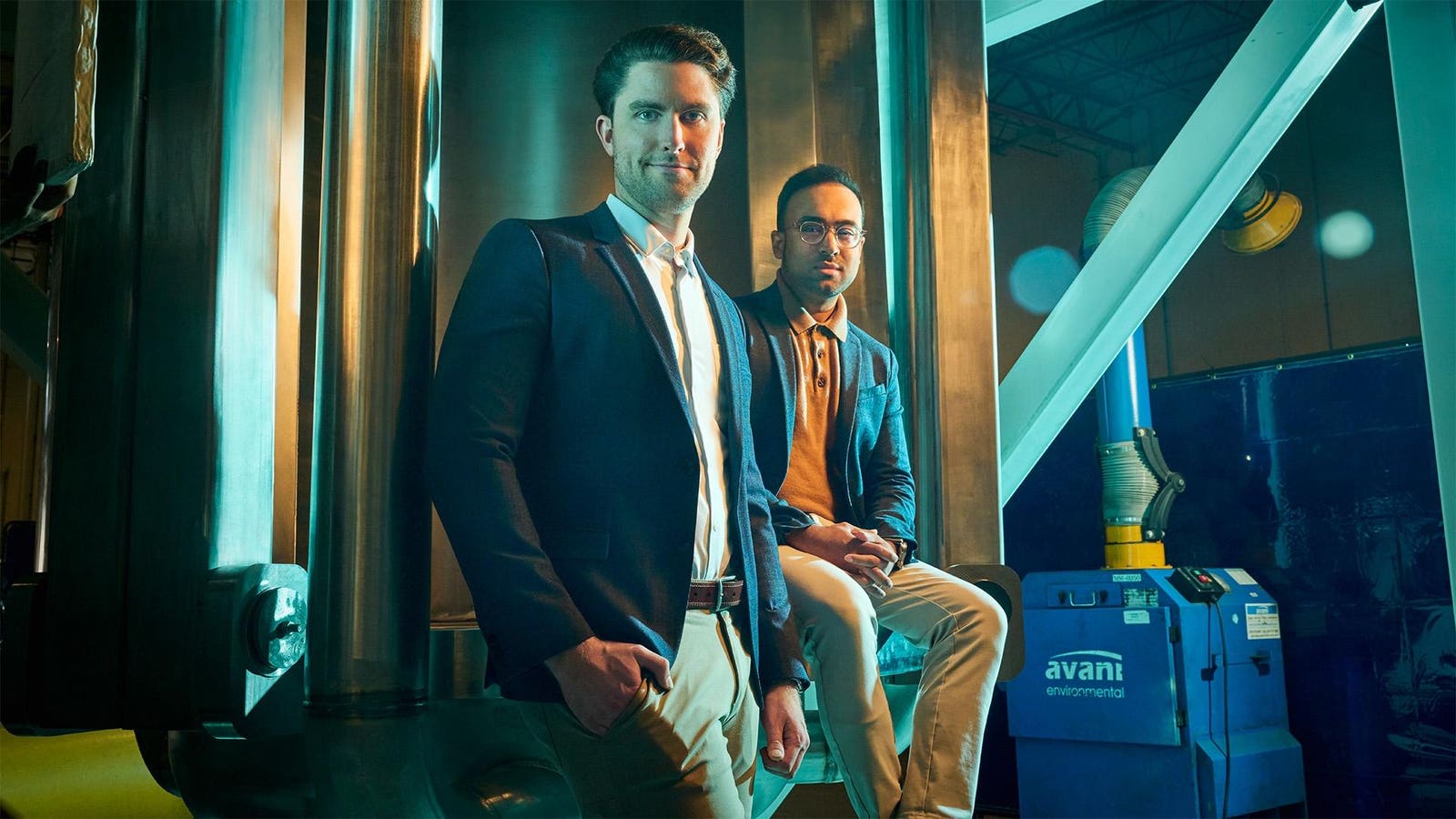
For more than a decade, Elizabeth Muller and her father have taken a three-mile hike, usually twice a week, through the hills of Berkeley, California, stopping for coffee and brainstorming on the way. “I would have an idea and she would have an idea,” says Richard A. Muller, who devised the modern carbon dating method used to determine the age of ancient plant and animal remains before he was 33 and won a MacArthur Foundation “genius” award at 38. Now, after 40 years of teaching at the University of California at Berkeley, the 82-year-old physicist is on the verge of having his greatest commercial impact, thanks to his business-minded daughter and those long walks. “Nuclear brings out big emotions on all sides,” says Liz, 47. “As a kid growing up in Berkeley, all my teachers and friends were anti-nuclear, and the city became a nuclear-free zone.” She too leaned anti-nuke, even though her father’s mentor, Nobel Prize winner Luis Alvarez—who worked with Robert Oppenheimer on the first atomic bomb—was “like a grandfather to me.” But after college at UC San Diego, she moved to Paris in 1999 to earn a master’s at ESCP Business School and worked in international finance there for eight years. In France, she explains, everyone supported nuclear power as a “clean, reliable global warming solution.” She returned to Berkeley determined to tap her dad’s genius. cody pickens for forbesIn 2022, on one of those walks, the Mullers hatched the idea behind their nuclear power startup, Deep Fission. The concept is surprisingly simple: Drill a 30-inch-diameter borehole a mile into the earth, fill it with water, then insert a teeny-tiny nuclear reactor that will boil the water at the bottom and send it up a separate pipe to run a steam turbine. Each hole will generate 15 megawatts, enough to power 12,000 homes. Put 70 of them in a field and you can power a one-gigawatt artificial intelligence data center. Once up and running, it should also be cheap (about six cents a kilowatt hour, they estimate), because sticking a reactor deep in the ground under 160 times atmospheric pressure eliminates 80% of traditional power plant costs, which go to concrete buildings and thick steel vessels. “We are using the gravity of the water to give the reactor the same pressure,” Richard explains. Last August the Department of Energy included Deep Fission as one of ten companies in its Reactor Pilot Program, designed to quickly test a new generation of smaller reactors that are easier to build. “The pull of electric demand from data centers warranted a new approach,” says Rian Bahran, deputy assistant secretary for nuclear at the DOE. While the other reactors are innovative in their own ways, they’re all variations of the traditional above-ground model. getty images Carbon CluesRadiocarbon dating, which measures the age of organic materials like wood, bone and charcoal based on radioactive decay, has debunked scores of frauds, fakes and hoaxes since it was invented in the late 1940s (and later greatly improved by a young Richard A. Muller in the 1970s). Here are a few famous examples. Shroud of Turin Heralded for centuries as Jesus’ burial shroud, with Christ’s face supposedly miraculously imprinted on it. A 1988 analysis showed the 14.5-foot-long piece of linen is actually a Medieval fake. Contraste de Formes The Guggenheim Museum suspected its copy of the French modernist Fernand Léger’s 1913 painting was a fake. A test revealed trace amounts of carbon in the canvas from late-1950s nuclear bomb testing, proving it. Persian Princess In 2000, the governments of Pakistan and Iran argued over possession of a mummified Persian princess allegedly from around 600 BC—until testing showed that the coffin had been built with modern tools and the woman inside had died in the 1990s. Kouros Statue Carbon dating of its patina proved that the Getty Museum’s 6-foot-9-inch “ancient” Greek statue of a nude youth is indeed made of marble that dates back thousands of years. But many experts believe a skilled counterfeiter figured out how to mimic decay, so the museum now labels the piece as being from “about 530 BC”—“or modern forgery.” So far, with Liz as CEO and Richard as chief technical officer, Deep Fission has raised $122 million, most recently at a $1 billion (post-money) valuation. Liz retains 19% of the company, Richard holds 10% and billionaire Palantir cofounder Joe Lonsdale’s 8VC owns an 8% stake. They expect to sell shares this year to help cover R&D and an $84 million test reactor, and to achieve criticality, meaning a self-sustaining chain reaction. (The Trump administration has set a goal of having three new reactors reach criticality by July 4, but the Mullers make no promises.) Still, assuming they can get an expedited license from the Nuclear Regulatory Commission, they hope to start selling commercial power in 2027—years ahead of the other DOE-backed reactor startups. Those include Oklo, which boasts an $8.3 billion market cap and is building its first reactor at Idaho National Lab; Aalo Atomics, which has raised $136 million and is also building at Idaho; Valar Atomics, with $150 million raised for its Utah-based reactor; and Kairos Power, which plans to sell electricity from its reactor under construction in Oak Ridge, Tennessee, to help power a Google data center. Deep Fission’s first test borehole is being drilled in Parsons, Kansas (population 9,400), on the grounds of the 14,000-acre Great Plains Industrial Park, a site used for munitions production during World War II. When the feds handed the land over to a public-private partnership 14 years ago, they required that it be zoned for heavy industry, including nuclear. When not splitting atoms Liz Muller dances salsa.Cody Pickens for ForbesDeep Fission’s 30-inch-diameter hole will go down a mile into solid rock. They’ll lower in a reactor canister containing four standard 5%-enriched uranium fuel assemblies that they can activate remotely by removing neutron-absorbing control rods, allowing the fission chain reactions to speed up. The radioactive zone is isolated at the bottom of the hole, so the steam that wafts to the surface is not dangerous. In this closed-loop system, condensed steam goes back into the borehole, limiting water consumption. “It’s about the simplest reactor that could be conceived,” Richard says. The path to simple wasn’t straight. After Richard retired, he and Liz started a nonprofit to study climate change. Once a skeptic, he concluded the problem was real and that the best ways to reduce emissions were nuclear power for the U.S. and other developed countries, and moving China from coal to fracked shale gas (which has half the emissions). The Mullers teamed up with a former president of Shell Oil to form Global Shale and aimed to do experimental drilling in China with researchers at Wuhan University. Chinese authorities kiboshed the venture, but the retired prof had caught the capitalist bug. “Starting a for-profit company in order to move with greater flexibility and speed is something I discovered I loved,” Richard says. illustration by patrick welsh for forbesHow To Play ItBy Jon D. MarkmanInterest in nuclear power is surging globally as countries search for ways to meet growing electrification needs. The best way for investors to play this trend is still Cameco Corp. The Saskatoon, Saskatchewan–based uranium producer holds some of the world’s largest deposits. Nuclear power is heavily reliant on uranium U-235, the fissionable material used in most current nuclear facilities. Cameco is vertically integrated though its stake in the enrichment firm Global Laser Enrichment and a 49% stake in Westinghouse Electric, the OEM for approximately half of the world’s operating nuclear plants. Based on rising demand for nuclear assets, we believe shares can rally to $155, a gain of 39.6% from the current price of $111. Jon D. Markman is president of Markman Capital Insight. He also learned a lot about geology and drilling. A light bulb went off when he heard DOE was looking into borehole disposal of nuclear waste. In 2016 the Mullers founded another for-profit company—Deep Isolation, which has raised $60 million, most recently at a $200 million valuation—to focus on waste disposal. In 2021, they showed they could place and retrieve canisters of spent fuel rods in horizontal boreholes a half-mile down. All of America’s reactor waste could fit in 2,200 holes, they calculate. But not unless Congress unlocks the $51 billion nuclear waste fund (built through a tax on nuclear power) by overriding a flawed 1987 law requiring it be used for a yet-to-be-built national waste repository in Yucca Mountain, Nevada. In the meantime, Deep Isolation generated $6 million in revenue last year by working with governments in Bulgaria and Croatia on waste from Soviet-era reactors. Deep Fission's initial drilling is underway in Parsons, Kansas, two hours south of Kansas City.Deep FissionIn 2022, Richard started investigating boreholes for live reactors after a potential disposal customer asked whether fresh fuel rods accidentally placed in a borehole could go critical, triggering a self-sustaining fission chain reaction. He concluded that a standard fuel assembly wouldn’t go critical but could with the addition of more uranium. Most intriguingly, if it went critical, the surrounding rock would contain the pressure and temperature, limiting any danger. That’s when the Mullers launched Deep Fission. “It felt like the universe was telling us something,” Liz says. Richard used his retirement savings to bootstrap the company until outside investors trickled in. Pablos Holman, whose small angel fund was an early investor, marvels at the idea’s potential for faster regulatory review and deployment—a “regulatory hack,” he calls it. A decade ago, Holman worked on reactor design at TerraPower, the Bill Gates–backed venture which only this March (18 years after it was founded) got NRC approval to build an 840-megawatt reactor. It might go online by 2032. The Mullers are fast-tracking going public, too. Last year, Liz spearheaded reverse mergers with public shell companies for both Deep Fission and Deep Isolation, soon to culminate in public listings. As for Deep Fission’s potential customers, the Mullers say data center builders have expressed interest in a total of 800 reactors generating 12.5 gigawatts (more than New York City uses). “We have to build fast enough to meet data center demand before they decide to go with something else,” Liz says. They’re also eyeing a Pentagon project to develop micro-reactors for military bases. What could go wrong? Not much, claims Richard, who coauthored a 2021 paper with four geophysicists calculating that even if an earthquake hit one of his reactors buried a mile deep, it would take 500,000 years for radiation to migrate 1,000 feet through the rock—and not enough would get through to pollute the groundwater. “The borehole solves it all,” he says. “There’s no safer place for a reactor than with a mile of rock pressing in.” Not all residents of Parsons, Kansas, are convinced. “It’s going to be us who take the risks and have to live with the consequences of their actions,” Marjorie Reynolds told a small crowd at a public meeting she organized in February to rally opposition to Deep Fission’s plans. But with the site zoned for nuclear, once Deep Fission gets its approvals from DOE and the state, “there’s not really an avenue to block it,” says Brad Reams, executive director at Great Plains Industrial Park. And other local leaders are enthusiastic. “I see it as a generational opportunity for Parsons. We really need to be open to it,” says Tom Shaw, a city commissioner and former mayor. Naturally, the Mullers already have a plan for safe disposal of spent fuel rods from mile-deep reactors. Instead of pulling them out of the hole, they’ll pour in a mix of cement and rock to seal it all in place, Richard says, “so the Earth doesn’t even know it’s there.” More from ForbesForbesHow AI Is Ushering In A New Nuclear AgeBy Christopher HelmanForbesThis Daring Developer Wants To Power America’s AI FutureBy Christopher HelmanForbesThe American LNG Billionaires Set To Cash In On War With IranBy Christopher Helman
Acclaimed Physicist And His Daughter Are Burying Tiny Nuclear Reactors A Mile Underground
Liz Muller convinced her dad Richard to forego retirement and become an entrepreneur. The result is a revolutionary approach to making atomic energy cheaper and safer.
1,992 words~9 min read