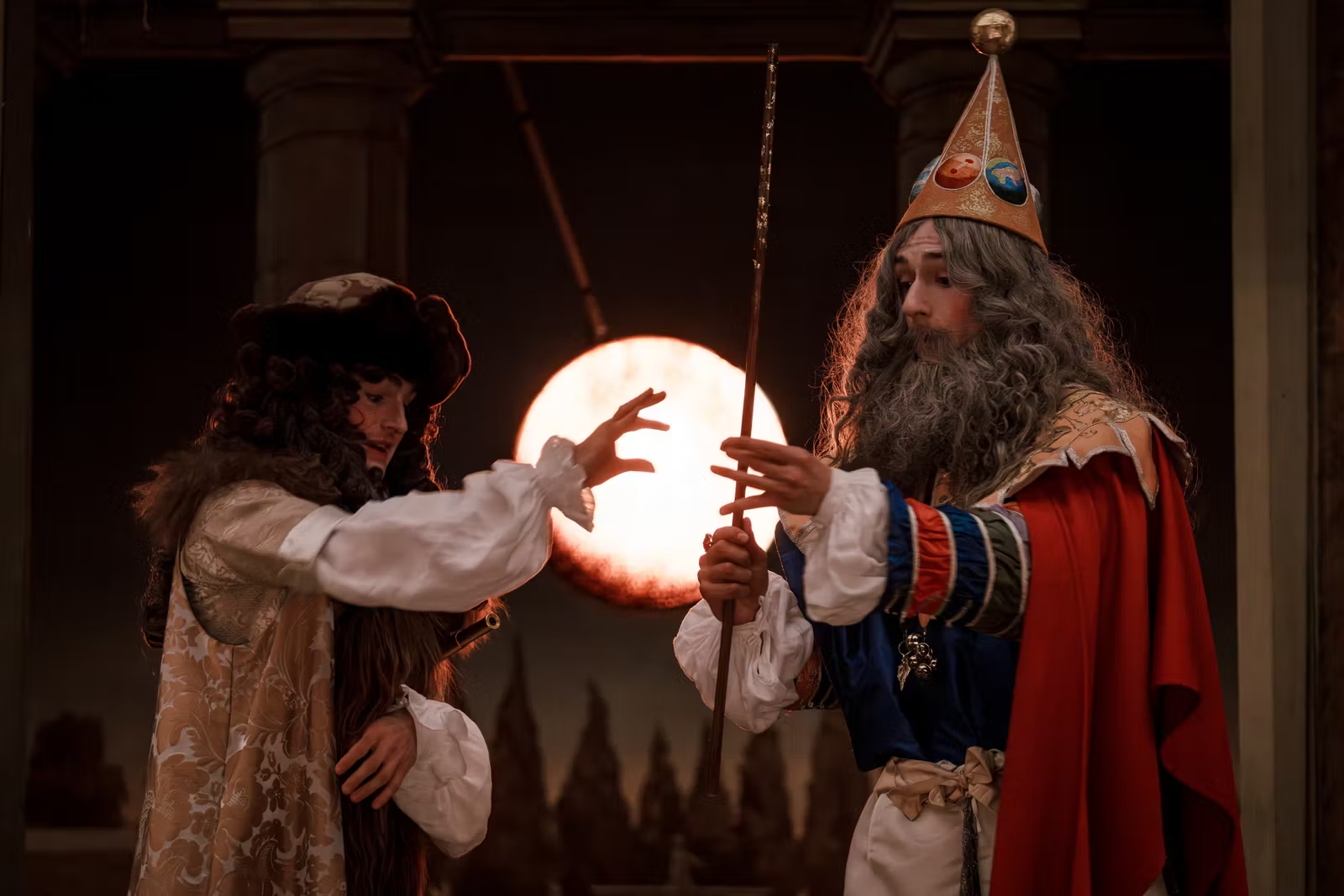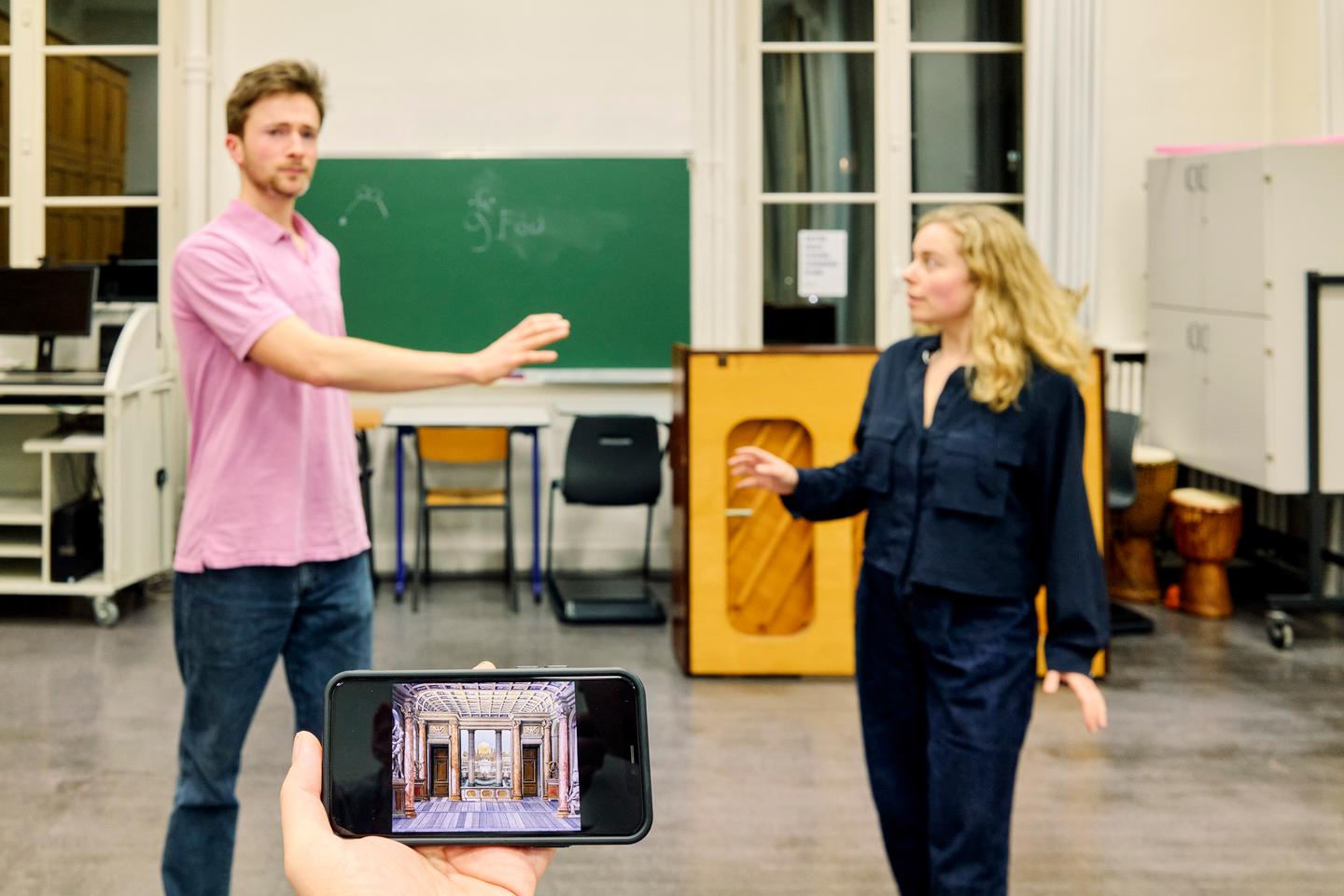
Rehearsal of the play "The Astrologer or the False Omens" in Paris, on February 27. Director Mickaël Bouffard holds his phone displaying AI-generated sets in front of actors Mathieu Menant and Léa Sorrentino. SAMUEL KIRSZENBAUM FOR LE MONDE
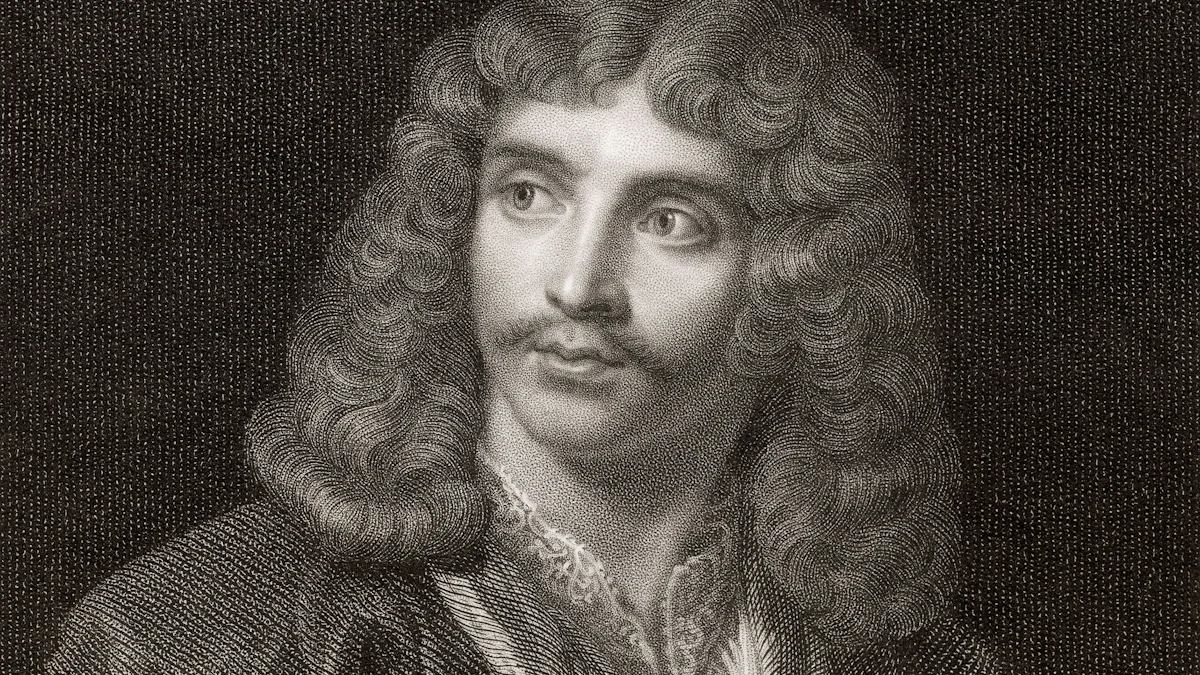
What if Molière had not died in 1673? And what if a previously unknown play by the playwright were discovered today? What might it look like? For nearly three years, a team of bold innovators has been exploring this rather wild alternate history with the help of artificial intelligence. It all started with a chance encounter. During an October 2023 roundtable on AI and creative work, held at Sorbonne University in Paris, Pierre-Marie Chauvin, the school's vice president for arts, sciences, culture and society, crossed paths with three Parisian friends who had formed a collective called Obvious: Hugo Caselles-Dupré, Pierre Fautrel and Gauthier Vernier.
"This trio of artists and researchers, pioneers in visual generative art, already had connections with Sorbonne University, through the Institute of Intelligent Systems and Robotics and the Sorbonne Cluster for Artificial Intelligence," recalled Chauvin. "I had an idea: to connect them this time with the faculty of humanities." The Obvious collective then met Georges Forestier, a leading Molière specialist and founder of the Molière Sorbonne Theater, a workshop-school for "historically informed theater." There, they revived the ancient declamation and acting techniques of the 17th century, as well as period costumes and set designs created as they would have been at the time.