N
o war is waged without clear objectives. Political leaders who hold the supreme authority to deploy lethal force against an enemy in order to impose their will – excluding the rare mentally unbalanced individuals in the long history of international relations – always pursue specific aims. The conflict launched by the US-Israeli coalition against the Islamic Republic of Iran is no exception. Even if the coalition's strategies are, by definition, coordinated, their war aims are fundamentally divergent.
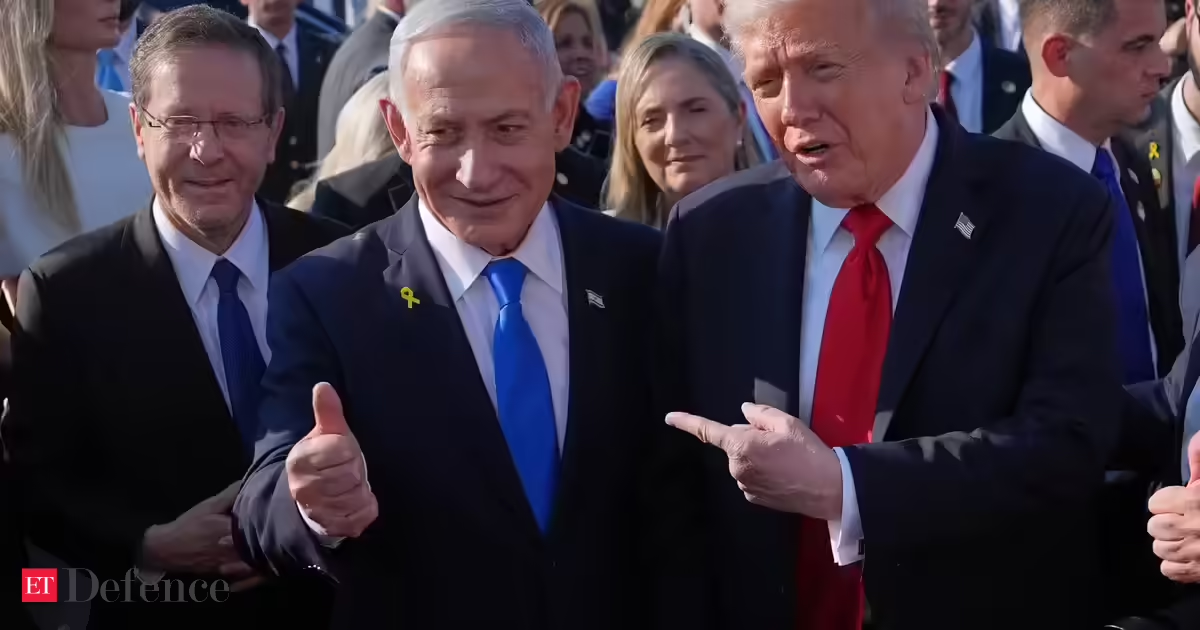
For Israel, the goal is straightforward: to topple a regime viewed by the overwhelming majority of its citizens as an existential threat. Yes, Israeli society may be deeply divided over the Palestinian question, the conscription of ultra-Orthodox Jews or the legal troubles facing Benjamin Netanyahu. Nonetheless, there is a unanimous consensus regarding a regime that, since coming to power in 1979, has openly called for the destruction of the Jewish state; orchestrated recurring antisemitic and Holocaust-denial campaigns; pursued a military nuclearization program and enhanced its ballistic capabilities; and tightened the so-called "ring of fire" of proxies [armed groups backed by Tehran]. These proxies have either been created – such as Hezbollah – or heavily supported, such as the Palestinian Hamas; the former Alawite regime of the Assads in Syria; the Houthi forces in Yemen; or the Shiite militias in Iraq. After the major pogrom carried out by Hamas on October 7, 2023, did Hezbollah not attack Israel?