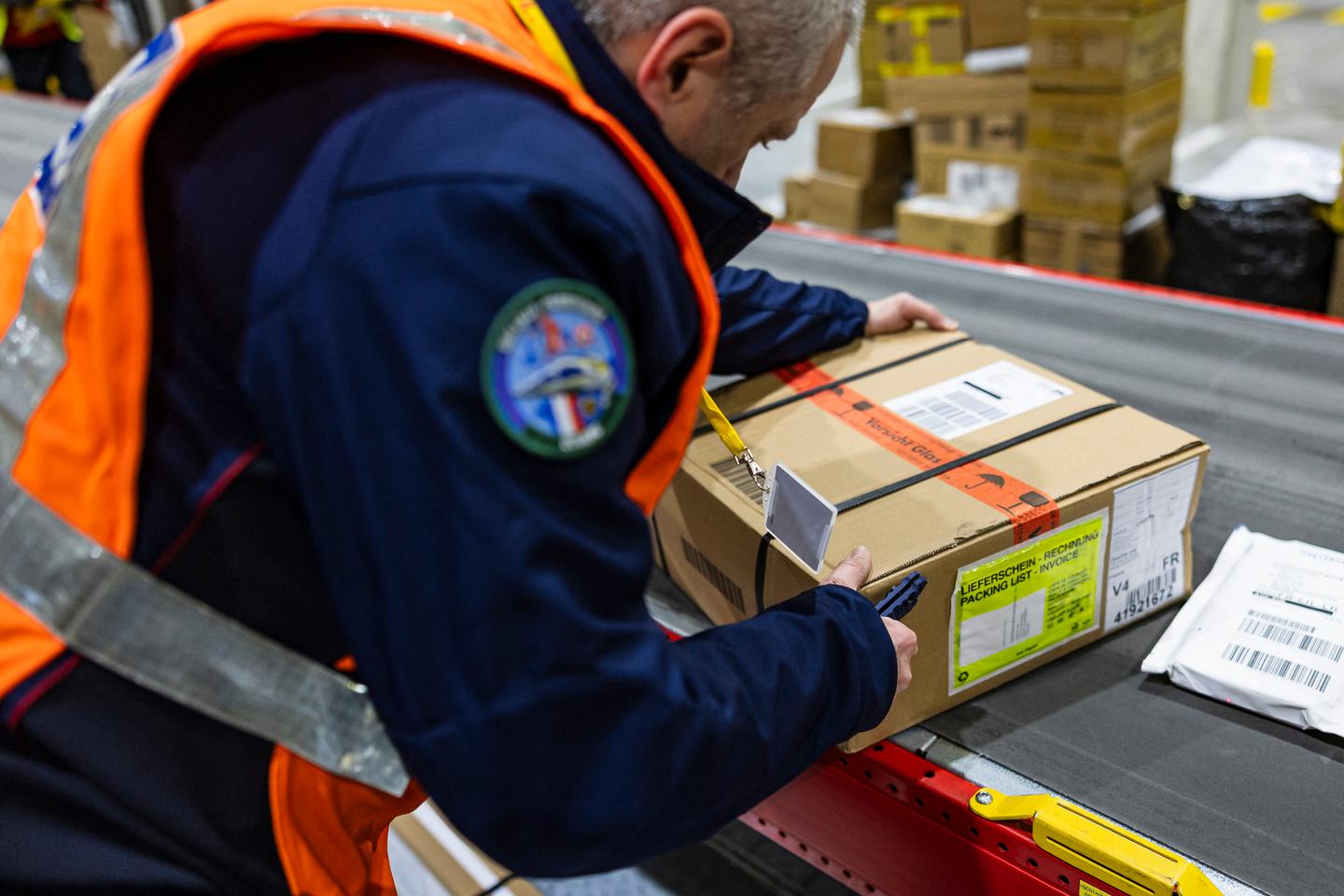
A French customs officer inspects a parcel at a warehouse in Lesquin, France, November 12, 2025. SAMEER AL-DOUMY/AFP
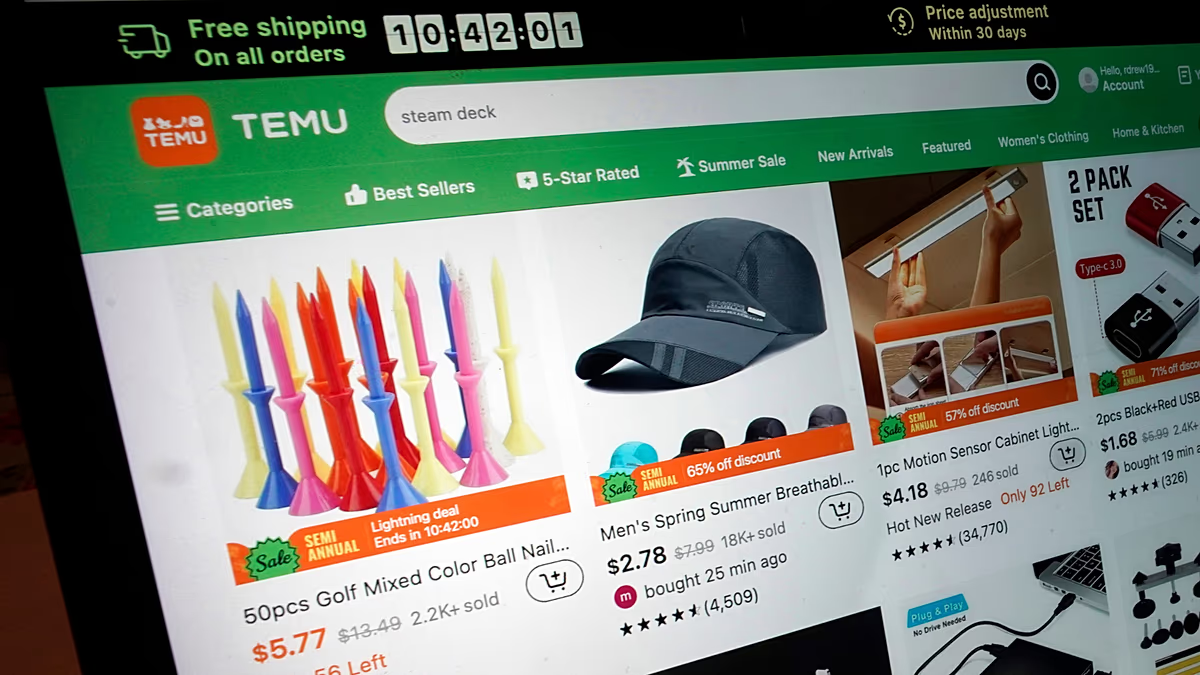
With the surge in e-commerce and the success of Chinese platforms such as Shein, Temu and AliExpress, European countries have had to rethink their customs union. After a final meeting, the European Parliament and the member states reached an agreement on Thursday, March 26, on how to handle the 12 million small parcels that arrive each day in the European Union and which largely escape inspection. The goal, explained Dutch member of the European Parliament Dirk Gotink (European People's Party, EPP, right), is to establish "an internal market that no longer leaves platforms such as Temu, Shein and AliExpress untouched while putting massive amounts of non-compliant goods on the European market and unfairly competing with our businesses."
Customs officers have been completely overwhelmed by the volume of parcels: In 2024, 4.6 billion small packages valued at less than €150 were imported into the EU – 91% of them from China – compared to 1.4 billion in 2022. Unable to keep up, customs officers have allowed all sorts of products to enter, many of which do not meet European standards and may be dangerous. An investigation by the General Directorate for Competition Policy, Consumer Affairs and Fraud Control (DGCCRF) in 2024 found that more than 60% of toys inspected on foreign platforms posed a major risk, compared to only 8% for traditional retailers.