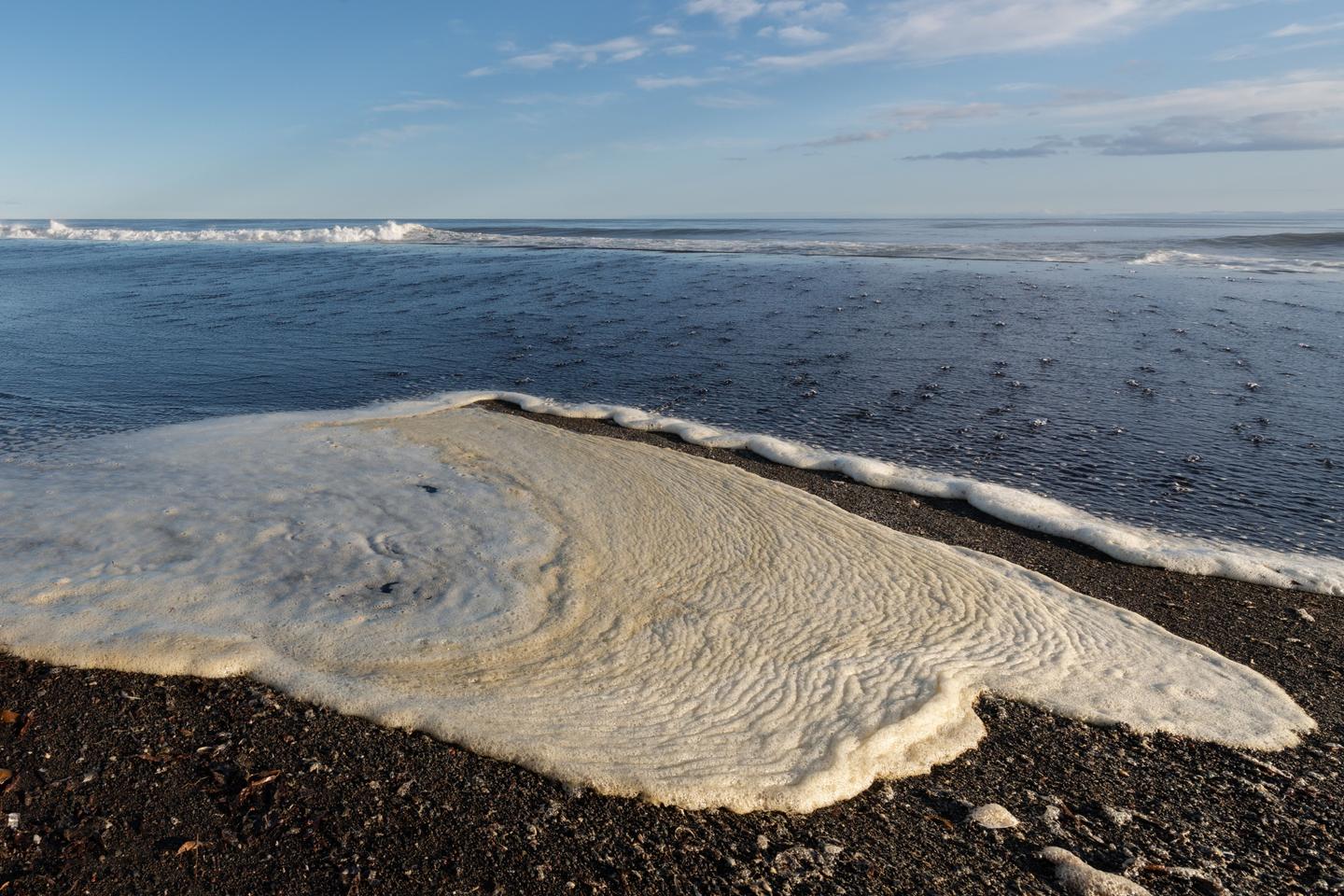
Foam is visible on Khalaktyrsky Beach in the Pacific Ocean, likely due to chemical contamination of the water causing a massive stranding of dead animals on this beach, Kamchatka region of Russia, October 6, 2020. ALEXANDR PIRAGIS/SIPA
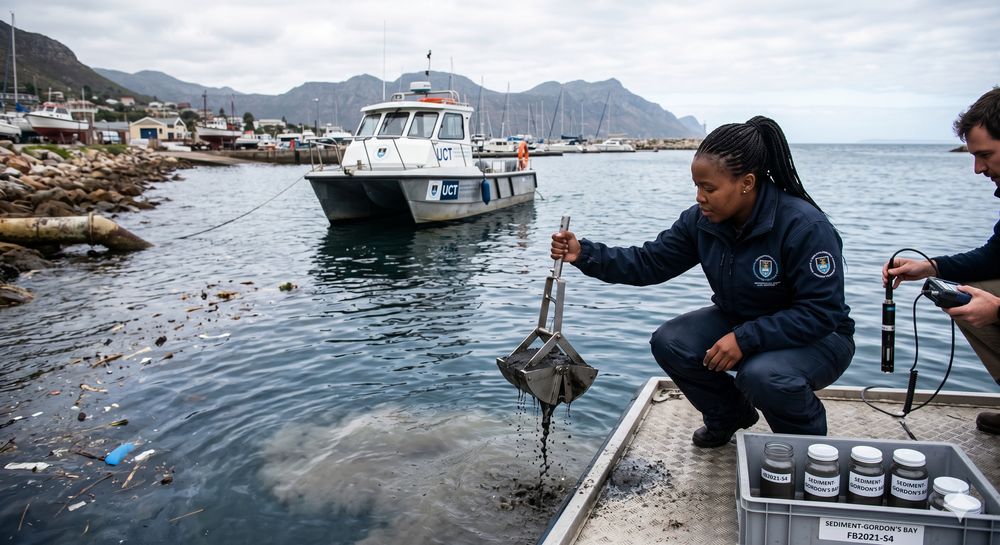
Invisible but widespread pollution: That is the finding of an international team of researchers who sought to describe the extent of marine ecosystem contamination by pollutants resulting from human activity. This work, which relied on molecular-scale analysis of 2,315 seawater samples collected from about 20 sites around the world, shows that chemical compounds from agriculture, pharmaceuticals and industry persist in dissolved form in the ocean, sometimes at very high concentrations, especially in coastal areas.
"The main take-home message for me is that there are very few marine ecosystems where humans did not leave a chemical footprint," said Daniel Petras, a biochemist at the University of California, Riverside, who led the research, which was published on Monday, March 16, in the journal Nature Geoscience.
Rather than seeking specific molecules in the samples, the researchers used an untargeted mass spectrometry method that allowed them to cover a broad range of compounds. That is what makes this study original, according to Richard Sempéré, an oceanographer at the French National Center for Scientific Research (CNRS) and the director of the Ocean Sciences Institute at Aix-Marseille University, who was not involved in the research.