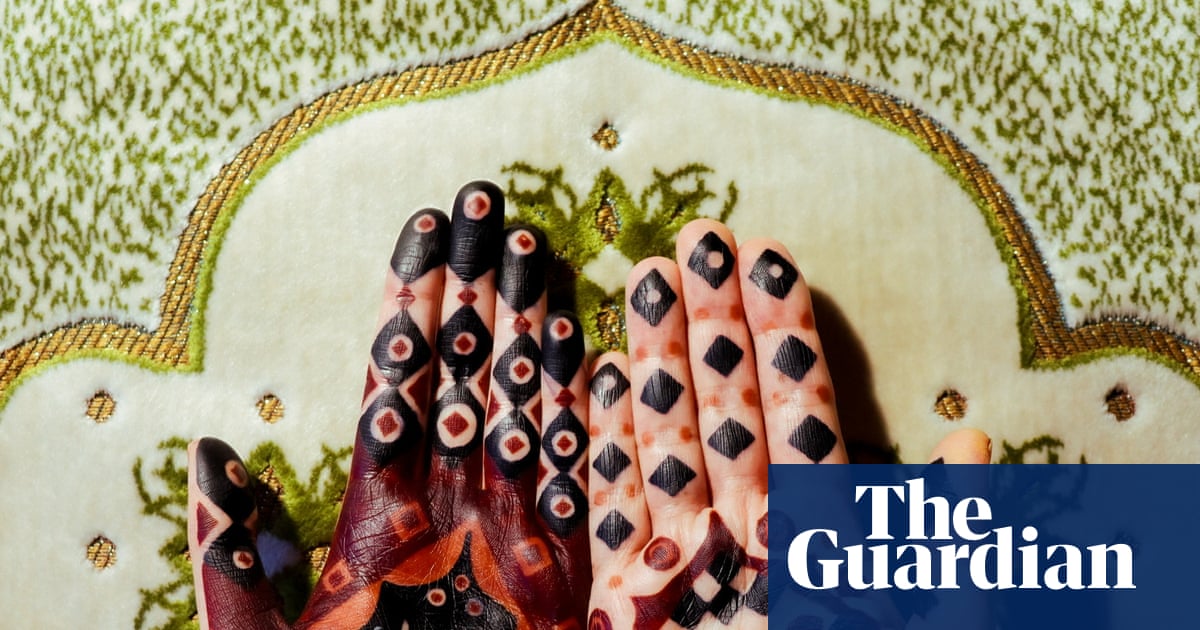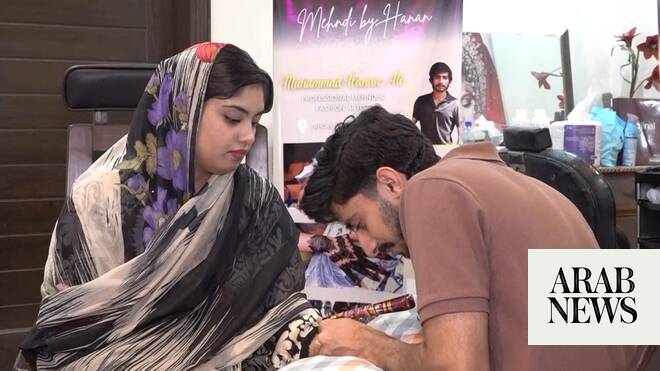
PESHAWAR: In a small basement studio in Peshawar, a steady line of women wait as Muhammad Hanan Ali leans over a client’s hand, guiding a henna cone with practiced precision to trace a delicate floral pattern.
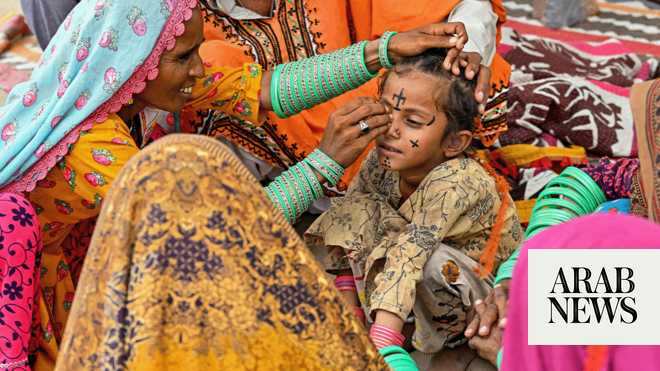
Outside, more clients — many with prior bookings — wait their turn as demand surges in the days leading up to Eid Al-Fitr, the Muslim festival that marks the end of Ramadan, when applying henna is a widely observed custom across South Asia.
At 19, Ali has built a growing business in a field traditionally dominated by women, quietly challenging social norms in Pakistan’s conservative northwest.
Most of his clients book appointments through Instagram or WhatsApp, allowing him to manage a workload that intensifies sharply ahead of Eid.
“I was fond of applying henna since childhood,” he told Arab News, while applying henna to a client at his home salon in the Regi Model Town area. “The fondness came as I would create designs on notebooks. Slowly I switched to glass, and from glass I started working with clients.”