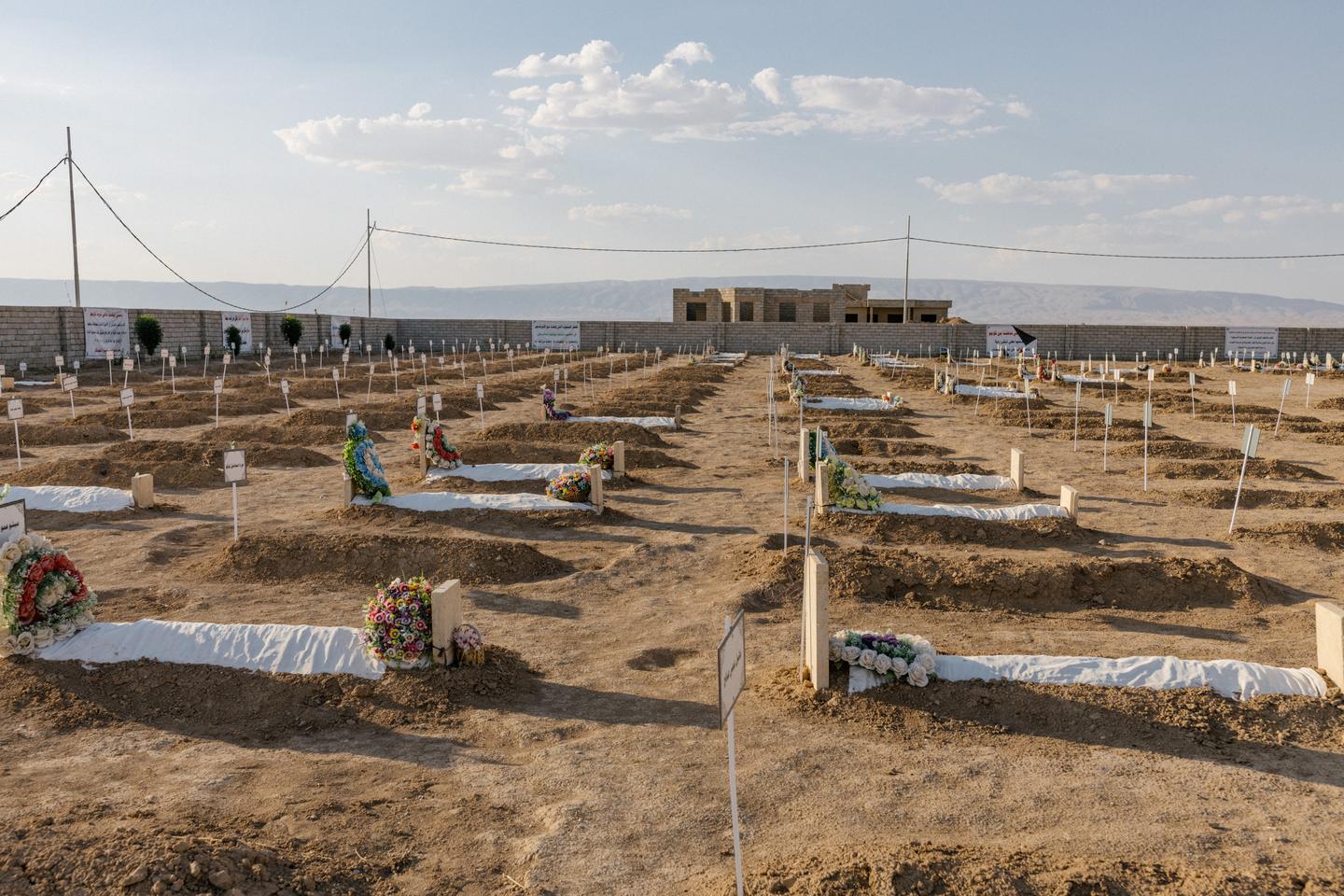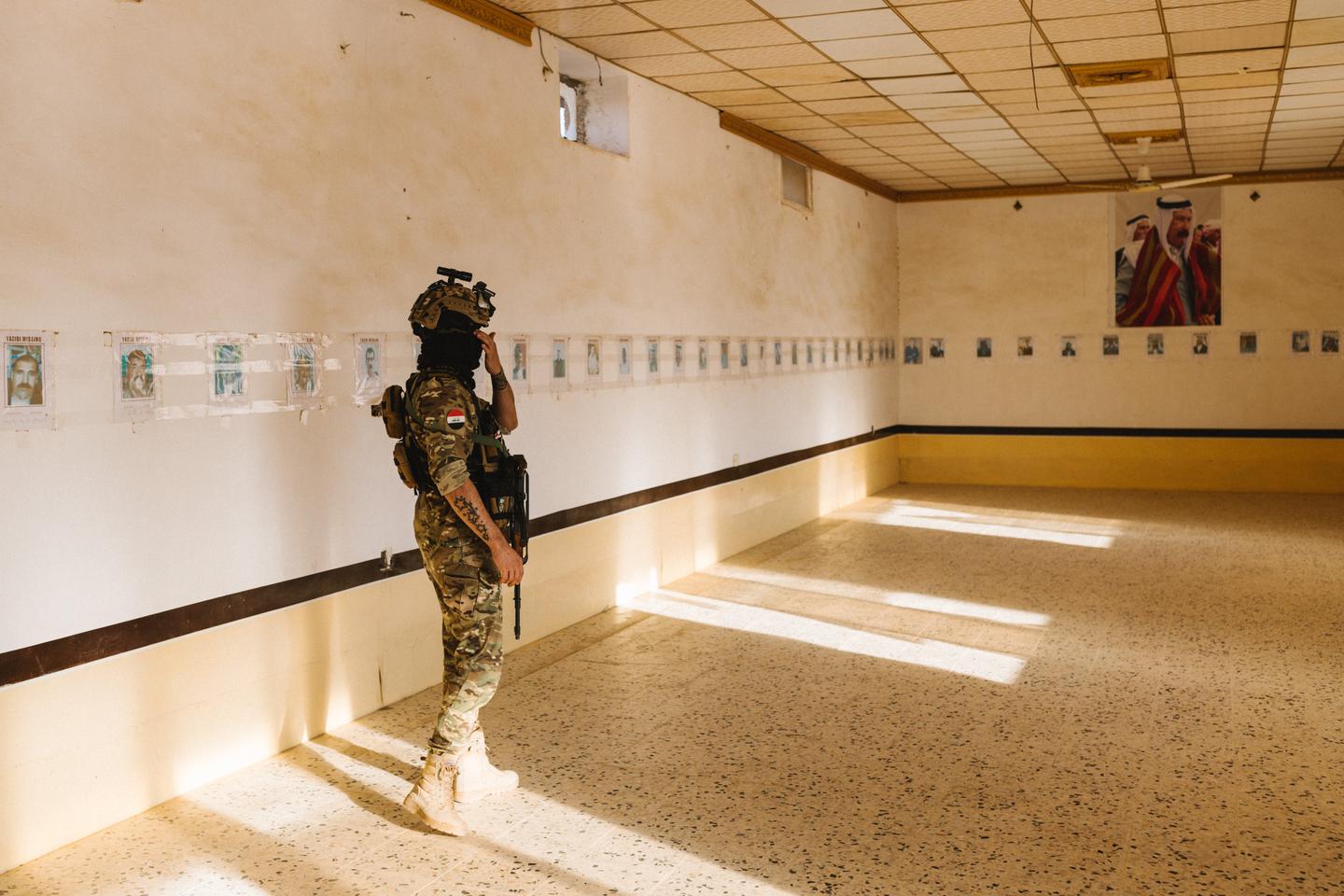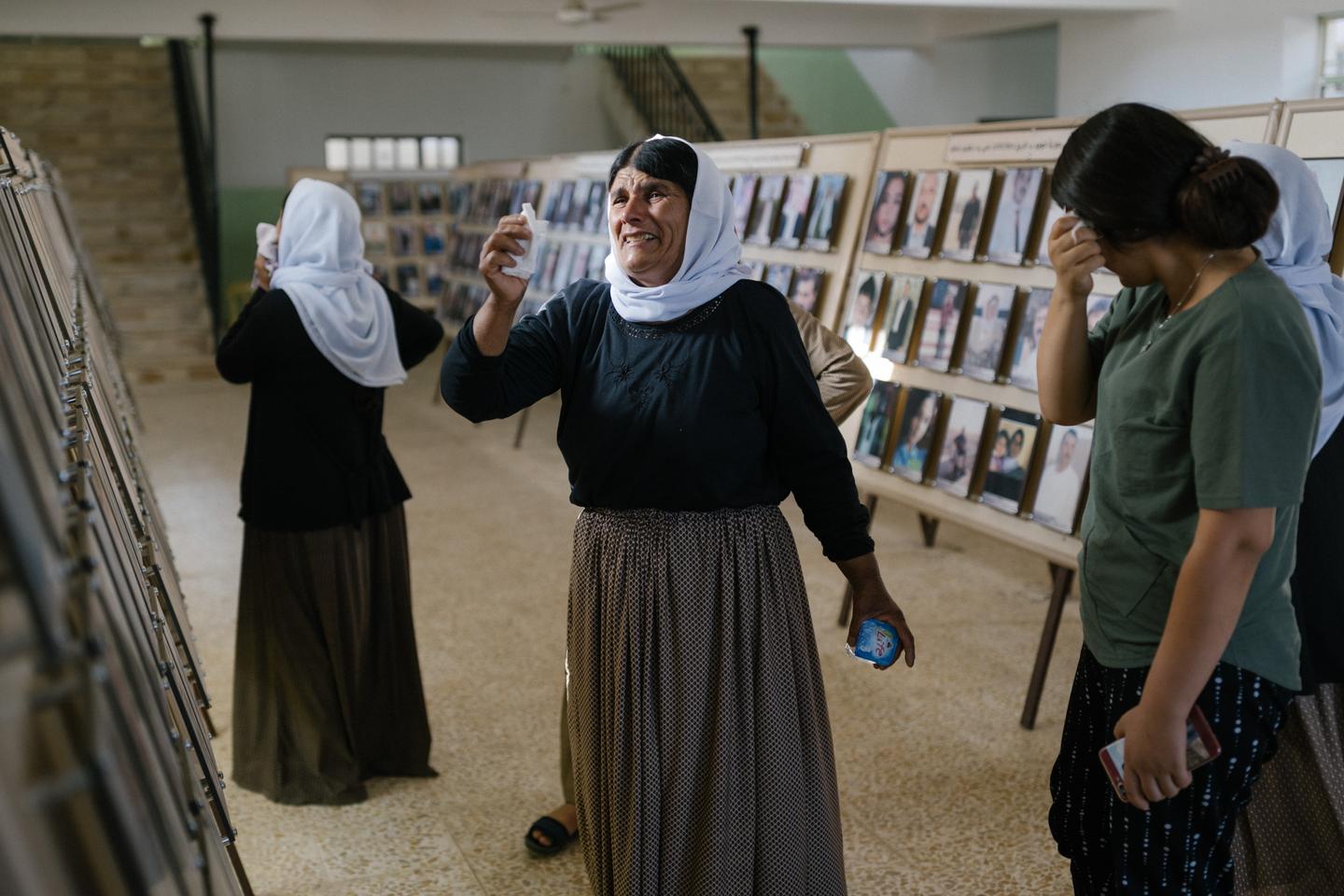
Yazidis stand before photographs of family members killed by Islamic State group, in a school transformed into a memorial, in Kocho, Iraq, August 3, 2021. LAURENCE GEAI FOR LE MONDE
In the succession of terrorism trials held one after another before the Paris criminal court in recent years, it seemed that everything had already been seen, everything heard, about the atrocities committed by the Islamic State group (IS). That was a mistake. Until now, the French courts had only addressed the tip of the terror machine set up by the militant group, namely the attacks carried out on French soil.
The trial of French hostages detained and tortured in Syria, which concluded on March 21, 2025, with a life sentence for Mehdi Nemmouche, offered a first, staggering glimpse into the crimes committed by IS in its so-called Iraqi-Syrian caliphate. The trial of French jihadist Sabri Essid, tried in absentia in Paris since Monday, March 16, for his role in the Yazidi genocide, delved even deeper into the heart of the organization's darkness.
A few hours into the trial, an investigator from France's General Directorate of Internal Security (DGSI) was explaining how IS had implemented a vast plan to wipe out this religious minority, based on the murder or forced conversion of men and post-pubescent boys and the enslavement of women, girls and younger children. At that moment, the presiding judge, Marc Sommerer, chose to interrupt the proceedings to read out a document.