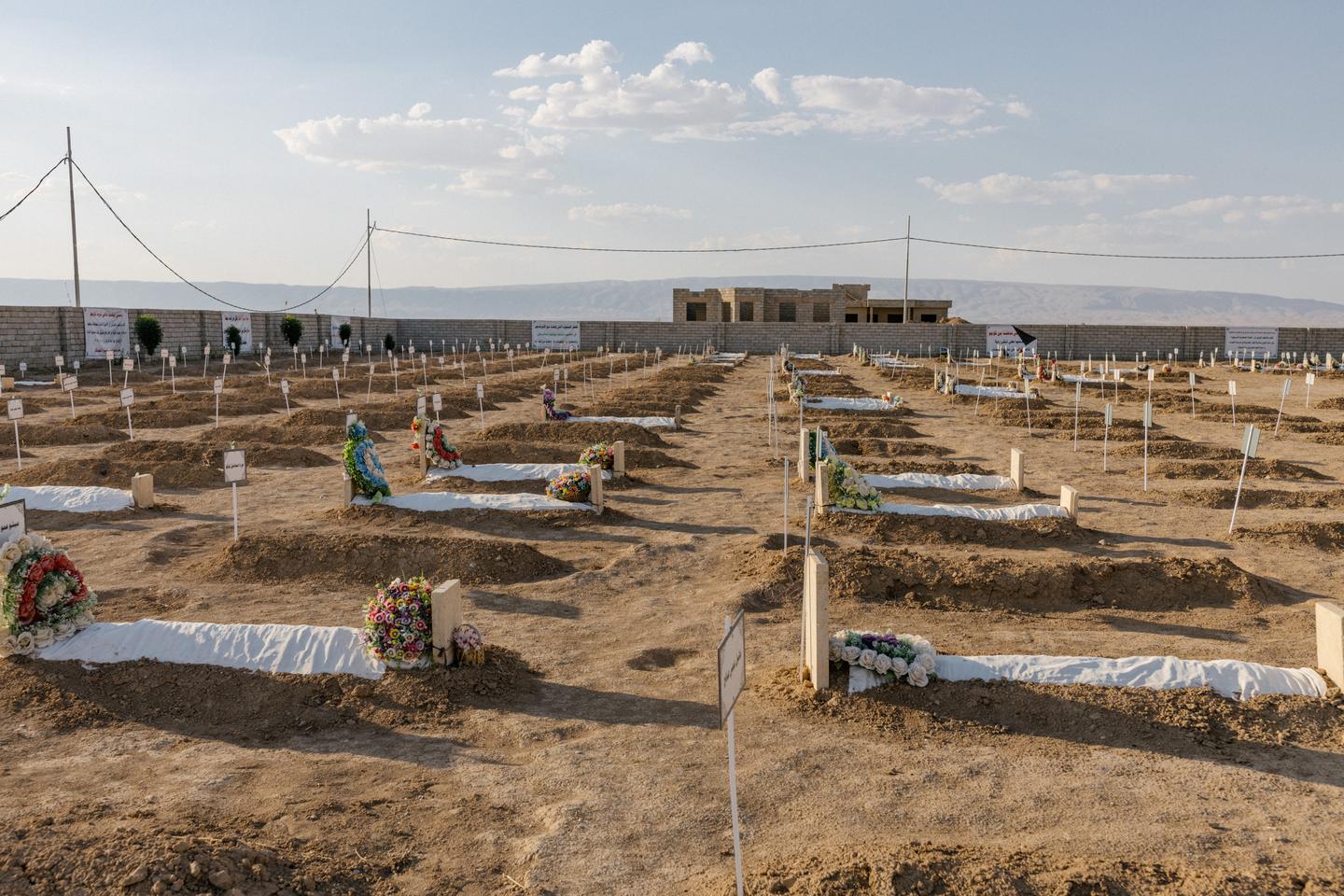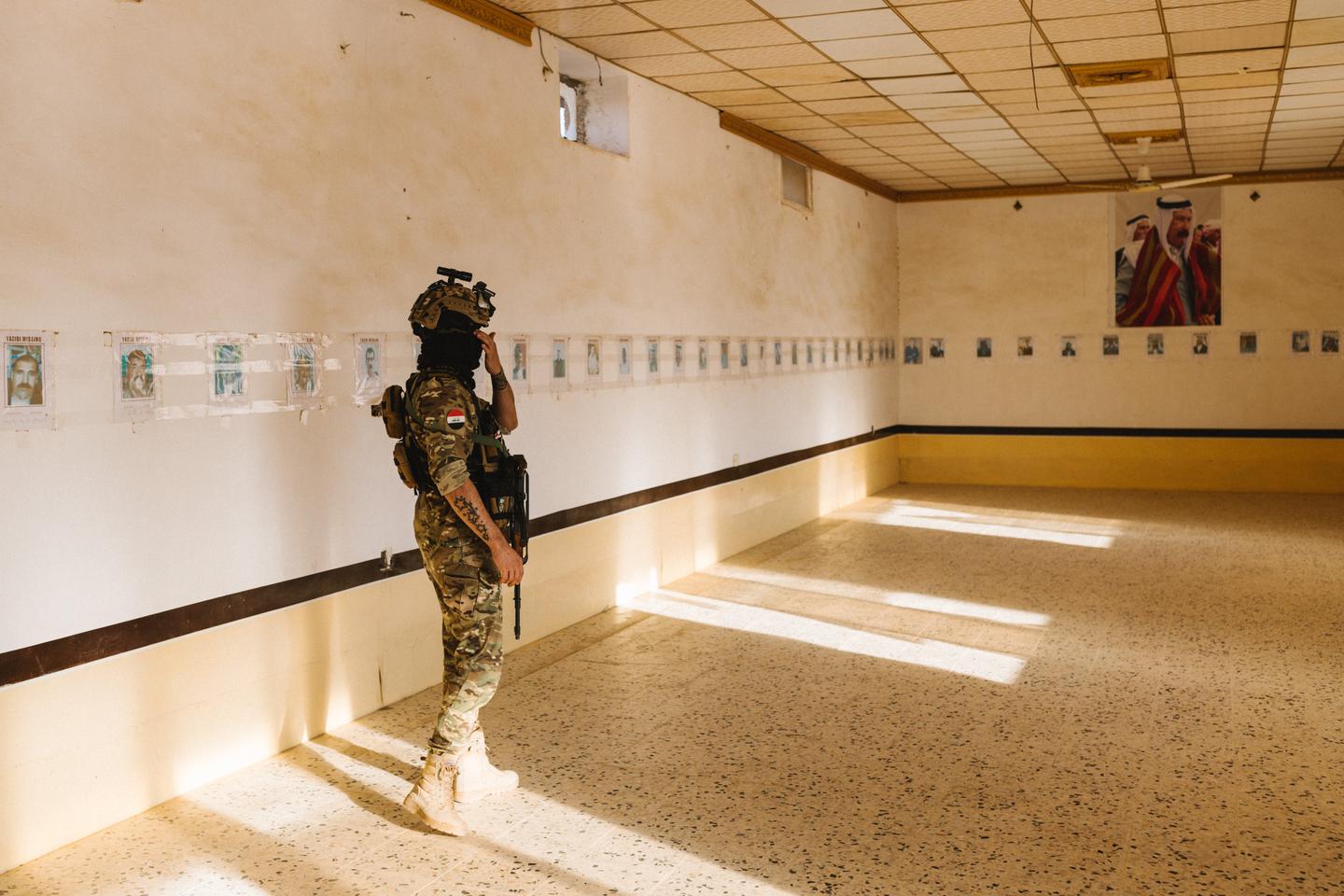
Inside a house in the village of Kocho, Iraq, posters of missing Yazidis cover the walls, August 3, 2021. LAURENCE GEAI FOR LE MONDE
From the Holocaust to the Srebrenica massacre in the former Yugoslavia, from the atrocities of the Khmer Rouge regime in Cambodia to the mass killings targeting the Tutsi in Rwanda, the 20th century witnessed its share of genocides, recognized as such by international justice. The unimaginable persecution inflicted on the Yazidi people in Iraq and Syria in the mid-2010s by the Islamic State group (IS) has, however, never been subject to an international criminal investigation.
The Yazidi genocide, quickly forgotten, was recognized for the first time by the French judiciary on Friday, March 20, when French jihadist Sabri Essid was sentenced in absentia to life imprisonment for genocide and crimes against humanity. The presiding judge at the Paris criminal court, Marc Sommerer, ruled that the plan to exterminate the Yazidis, devised for the purpose of "religious purification," had constituted "one of the most extreme expressions of IS ideology," and that Essid had "taken part in this criminal chain" in full "knowledge of the genocidal plan."
In its closing argument on Friday morning, the National Anti-Terrorism Prosecutor's Office (PNAT) called for a verdict "for the record," so that justice would name this "nameless crime," the "first genocide of the 21st century" to be recognized as such by a judicial body. "You have witnessed the revelation of IS's barbarity toward these little-known people. The Yazidi genocide is one of the most painfully unresolved," said Prosecutor Sophie Havard, head of the crimes against humanity and war crimes unit at PNAT.