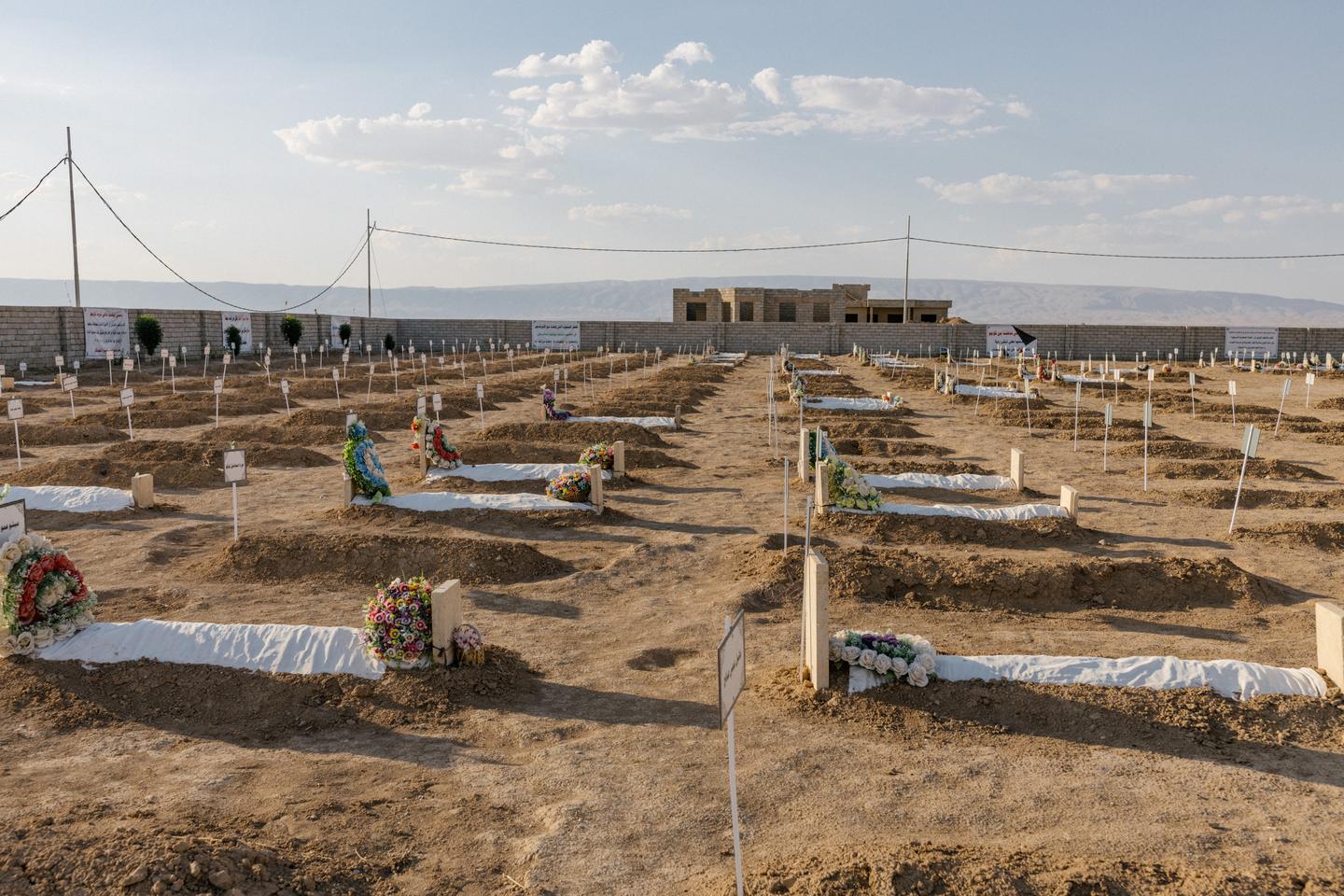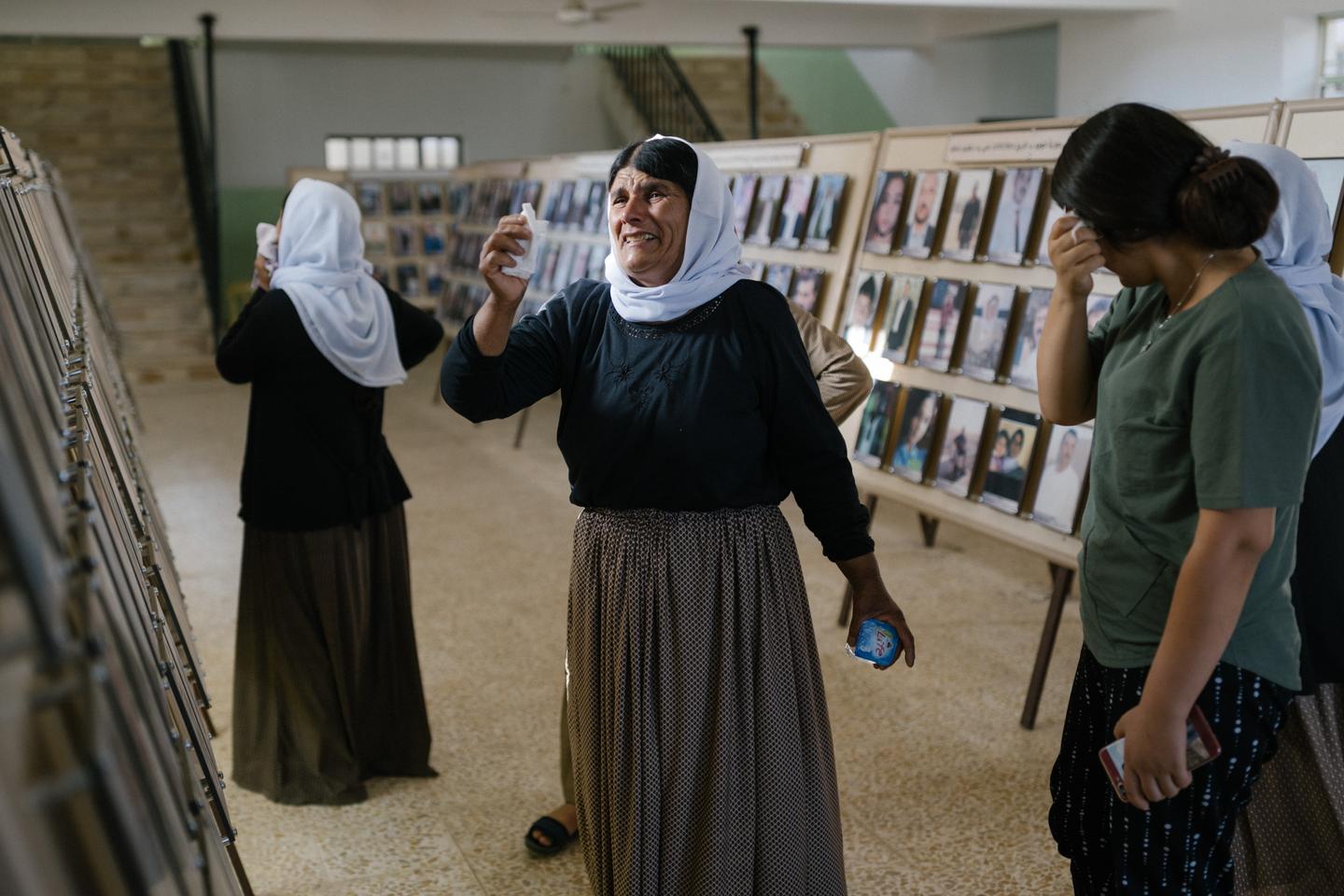
For the first time, a Yazidi woman testified before a French court about the crimes the Islamic State organization (IS) had committed against her people, an Iraqi ethnic and religious minority community. Sometimes, only a few words are needed to write a new chapter in judicial history. During her three-hour testimony on Thursday, March 19, at the trial of defendant Sabri Essid for "genocide" and "crimes against humanity" against the Yazidis, the first trial of its kind in France, Aveen (whose name has been changed) spoke very little.
Subscribers only
French court examines Yazidi genocide for first time in trial of jihadist
Fully aware of the trauma and cultural barriers the 32-year-old mother would face, the Paris criminal court's head judge, Marc Sommerer, had anticipated the difficulty of having her publicly repeat, for all in the large courtroom to hear, the unspeakable abuse she had endured more than a decade ago. At 21, Aveen was reduced to a sex slave, bought and raped by eight jihadists over two years and three months of captivity, from 2014 to 2016.
Her trauma was manifold: It was that of a woman who was objectified, assaulted and subjected to her "owners'" whims; that of a widow who lost her husband; that of a sister who lost her family; that of a mother whose daughter had been bought with her and witnessed her suffering; and, finally, that of an entire community, who were either enslaved, massacred or forcibly converted to Islam. There was also the shame such women endured when they returned to their communities, at times being rejected, and more often forced to abandon the children of rape they brought back with them.