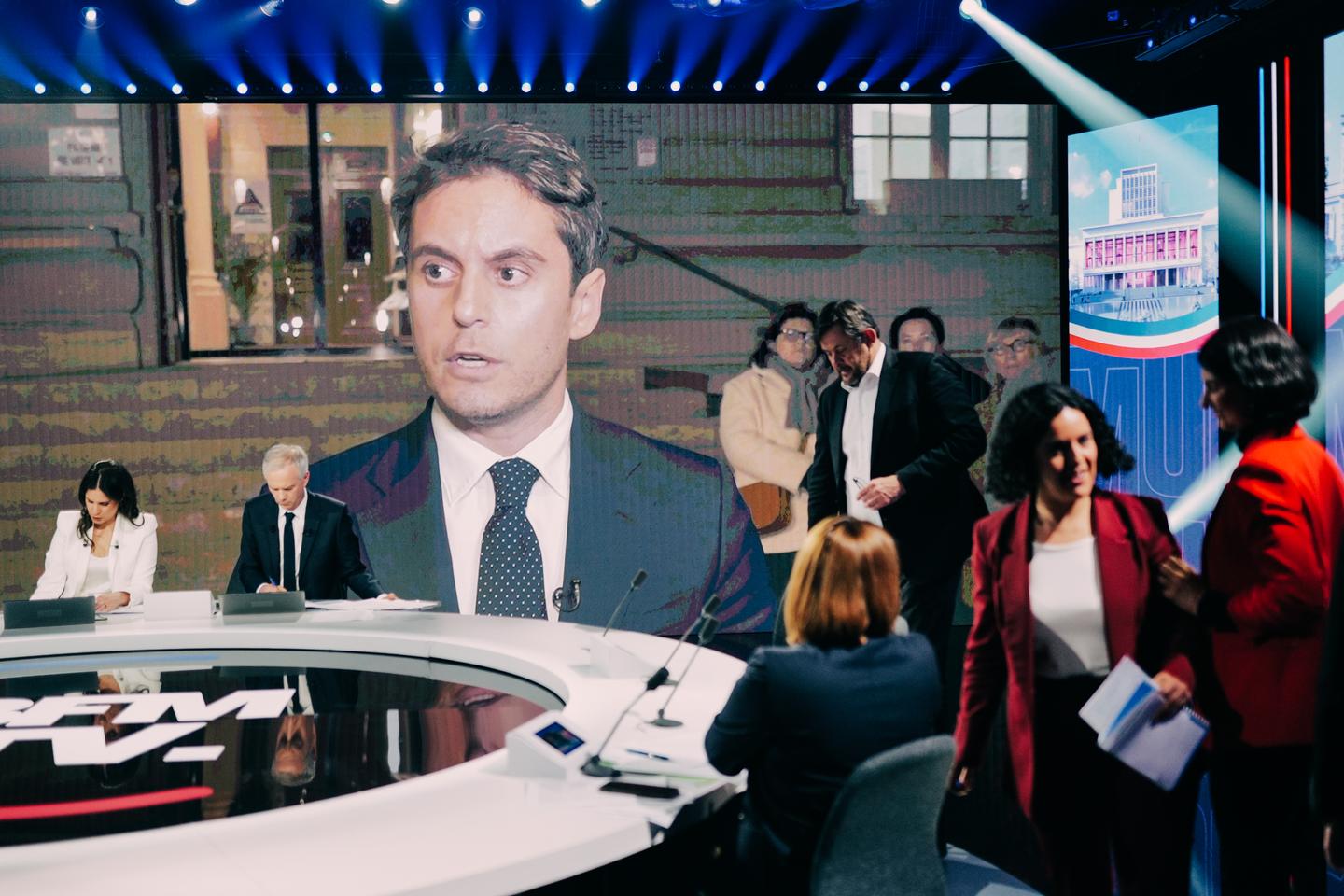
The speech by Renaissance President Gabriel Attal, following the first round of the municipal elections, broadcast on BFM-TV in Paris on March 15, 2026. LUCAS BARIOULET FOR LE MONDE
T
he presidential camp's electoral defeat is becoming clear. In the first round of France's 2026 municipal elections, the centrist bloc (Renaissance, MoDem and Horizons) struggled to find its place between the country's two traditional parties with strong local ties: the right-wing Les Républicains (LR) and the left-wing Socialists.
With record abstention rates not seen since 2014, the former governing coalition also found itself overtaken by its main national rivals, the far-right Rassemblement National (RN) and the radical left La France Insoumise (LFI), both riding momentum in this closely watched contest ahead of the 2027 presidential election.
Anticipating a crushing defeat for his camp, Prime Minister Sébastien Lecornu ordered his ministers who were not running in the municipal elections to stay away from TV studios, "in order to guarantee a strict separation between government communication and political campaigning," according to instructions dated March 10. It was the government's way of distancing itself from an unfavorable vote, given the weakness of Macron's bloc at the municipal level, even after a decade in power.