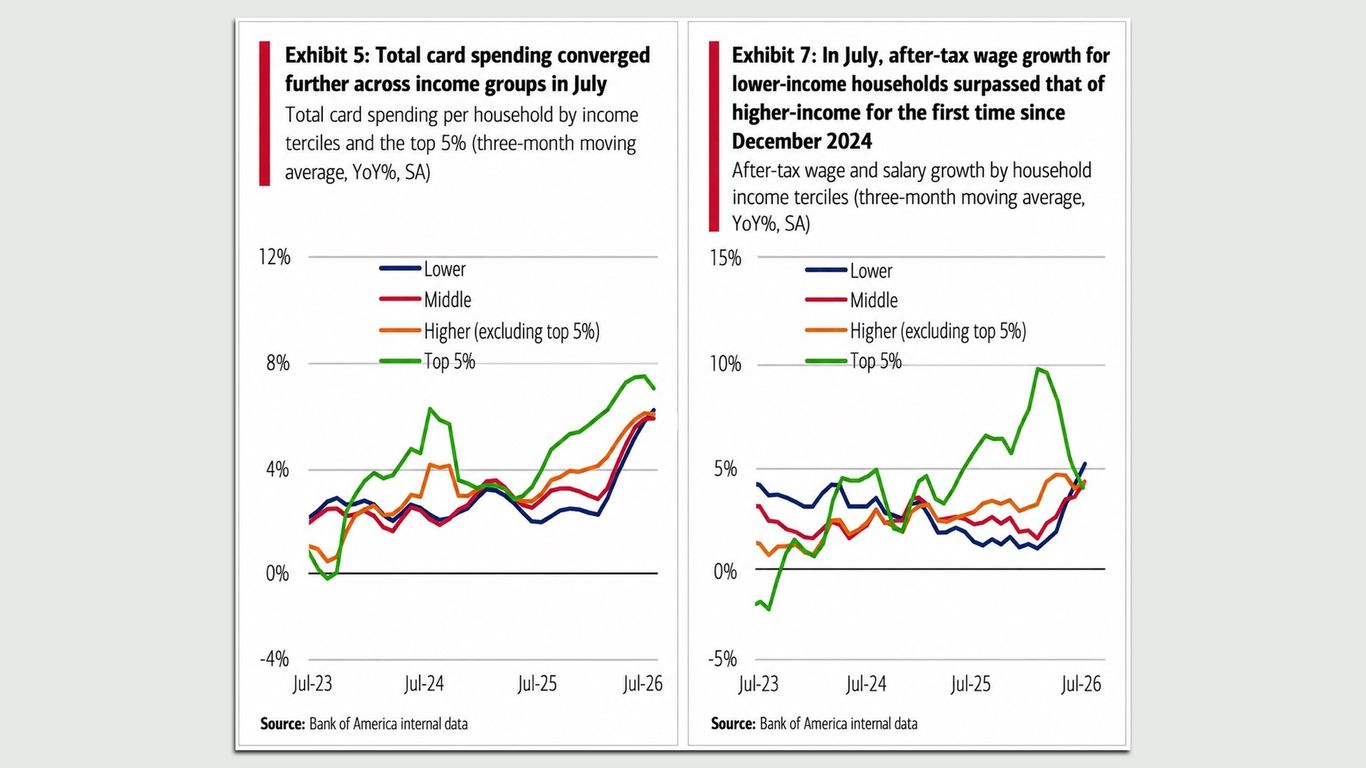
Economists often describe the U.S. economy in recent years as “K-shaped,” where higher-income households have seen stronger gains in wealth and spending while lower-income families face more financial pressure.
While financial precarity is often associated with lower-income households, a February 2026 analysis by consulting firm Kearney suggests many higher earners remain vulnerable as well. Based on federal economic data and consumer surveys, the report looks at factors such as income, debt levels, savings, investments and family support to assess how exposed consumers are to economic shocks.
“You can have good income, but there could be a lot of factors that leave you exposed,” Katie Thomas, lead at the Kearney Consumer Institute and author of the report, tells CNBC Make It.
A household earning $200,000 a year may appear financially comfortable, but if most of that income goes toward a large mortgage, child care, debt payments and other fixed costs, there may be little flexibility if something goes wrong, the study says. In some cases, that household could be more financially exposed than one earning far less but living within its means.
Many high earners say they feel that pressure, with nearly one-third of six-figure earners reporting they are financially “stretched, struggling or drowning,” according to a 2025 Harris Poll survey. That dynamic helps explain the disconnect between high incomes and financial stress, and why a high salary doesn’t always guarantee financial security.