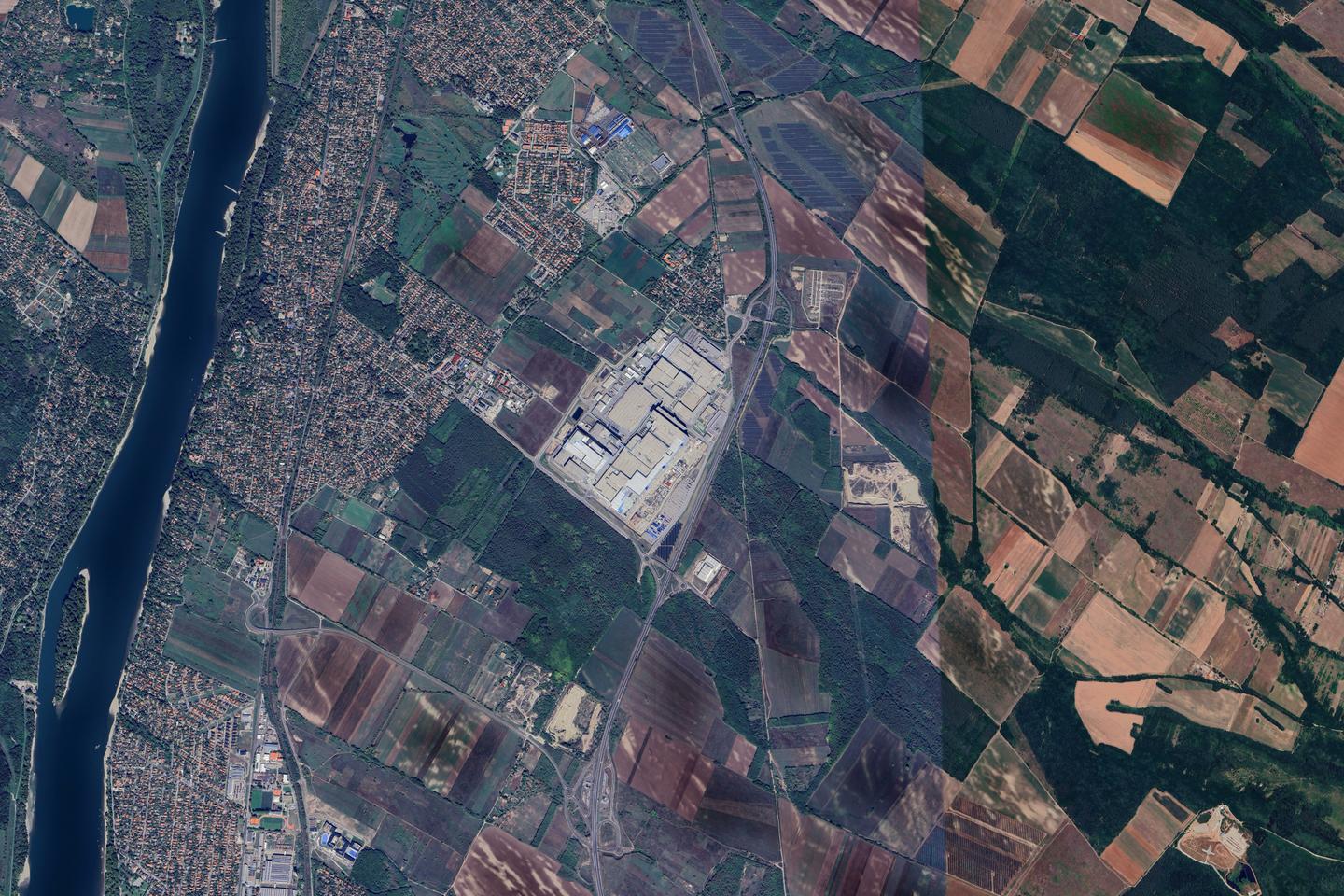
Satellite view of the Samsung battery factory in Göd, Hungary, on February 27, 2026. GOOGLE EARTH
The tall gray walls of the massive Samsung battery factory in Göd, Hungary – a peaceful town of 20,000 people, located 30 kilometers north of Budapest – rise up right next to a residential area, blocking the view of the landscape for local residents. "They built some noise barriers, but it's not always enough to cover the constant humming. They also say the smoke is just water vapor, but far more inspections are needed since they work with around 30 hazardous substances, including nickel, cobalt and manganese," explained Zsuzsa Bodnar, who lives just a few kilometers away from the plant, in late February.
Bodnar, 62, is a journalist and environmental activist. Since 2020, she has been leading a campaign against this battery production site, one of Europe's largest. Bodnar accuses the factory of emitting N-Methyl-2-pyrrolidone, a chemical classified as toxic for reproduction by European authorities. For a long time, the former literature teacher with long hair and her small nonprofit Göd-ERT ("for Göd"), made up of residents worried about the plant's impact on the environment and property values, fought mostly on their own. They have filed multiple legal complaints against the Hungarian state to obtain data on these emissions, and conducted their own tests with the help of Greenpeace.