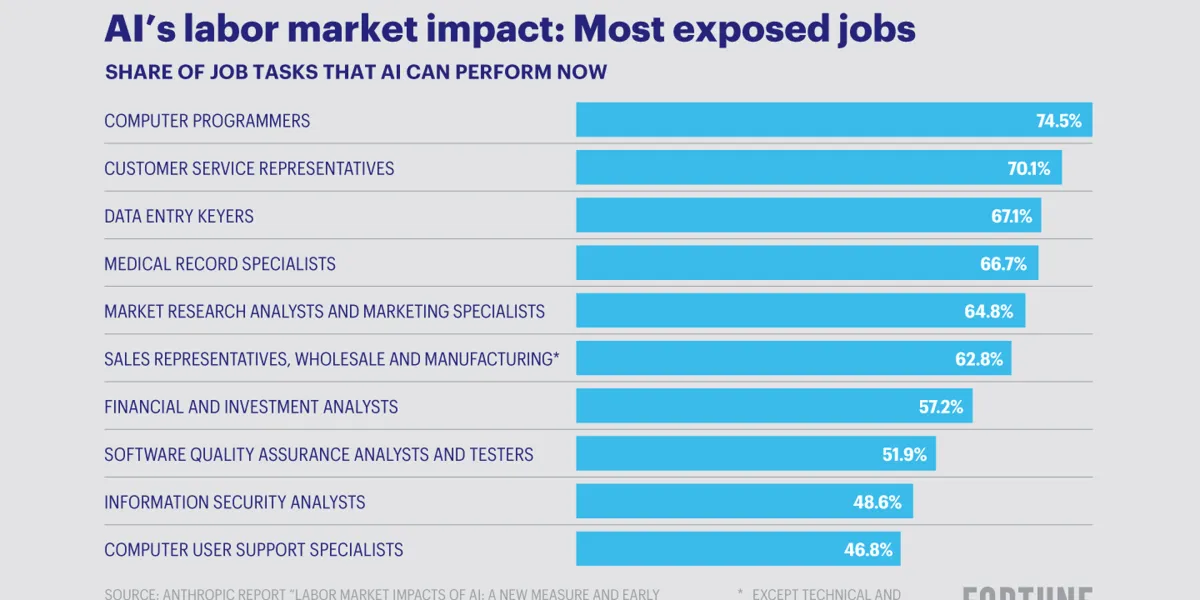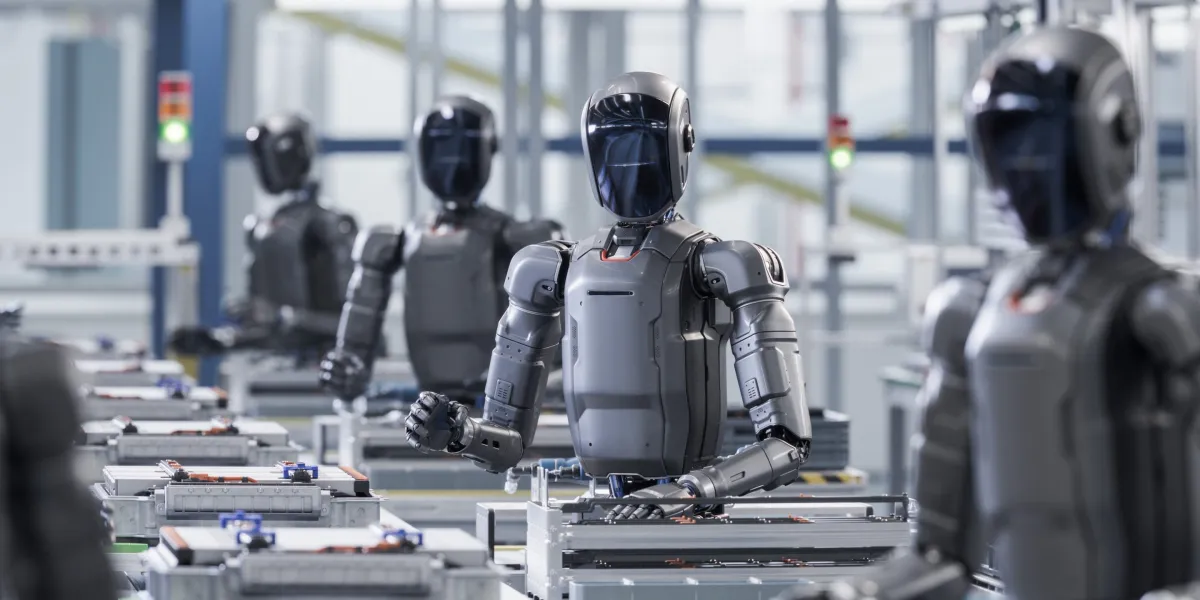
Every previous technology has, in the long-run, created more jobs than it has destroyed. But still, some insist that AI is different because it is being adopted so broadly and so quickly across different industries, and because it is hitting at the core of our competitive advantage over machines—our intelligence. As to the second question, about what kids should study, that’s tough too because while previous technologies have created more jobs than they’ve eliminated, exactly what those new jobs will be has always been difficult to predict in advance. It wasn’t obvious, for instance, when smartphones first appeared, that social media influencers would be a viable career.A new research paper from economists Maxim Massenkoff and Peter McCrory at the AI company Anthropic assesses how exposed various professions are to AI by looking at the percentage of tasks in that field that the technology could potentially automate. They also try to gauge the gap between this total possible exposure, and the extent to which AI is currently being used to automate those tasks, a measure they call “observed exposure.”
Potential AI exposure vs. ‘observed exposure’
The paper got a lot of attention on social media because the researchers included an eye-catching radar plot-style chart that highlights just how jagged AI’s impacts are, especially when it comes to observed exposure. That chart is here: