The rapid development of generative AI has gone hand-in-hand with growing anxiety about what the technology might do to the world’s white-collar labor force. Amid a steady cadence of conflicting signals on that front in the first few months of 2026, one of the biggest drumbeats was a report released in early March by the AI giant Anthropic.
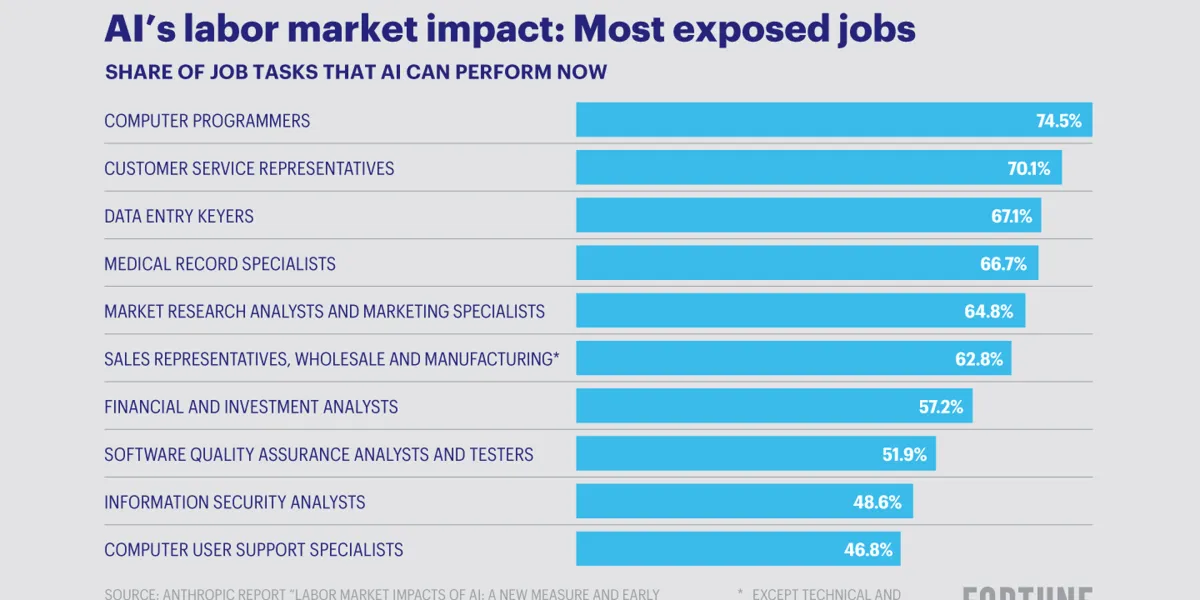
The report, “Labor market impacts of AI: A new measure and early evidence,” was based on real-life enterprise usage of Anthropic’s popular Claude large-language model. It broke down a host of professions by their “observed exposure” and “theoretical exposure” to AI—in essence, what share of the work in a given occupation Al systems can already do, and how much more they could theoretically take on.
For a wide range of previously secure and well-paying white-collar occupations, including computer programming, market research, and financial management, the theoretical exposure is very high—and perhaps inevitably, the report stoked worries about a white-collar recession.
But to mangle a medical metaphor, exposure to AI is by no means fatal. Peter McCrory, head of economics at Anthropic and one of the principal authors of the labor market paper, makes the case that exposure data could help corporate leaders, policy makers, and individual professionals adapt their workflows and careers to AI—and perhaps help head off severe job-market disruptions before they become major social problems.