You're not imagining it: The sun is on the move.
The long nights and short days of winter are rapidly giving way to much more daylight, part of a fascinating and unbalanced yearly cycle.
While sunrise and sunset times are constantly on the move, sunlight rapidly increases in March (and rapidly decreases in September).
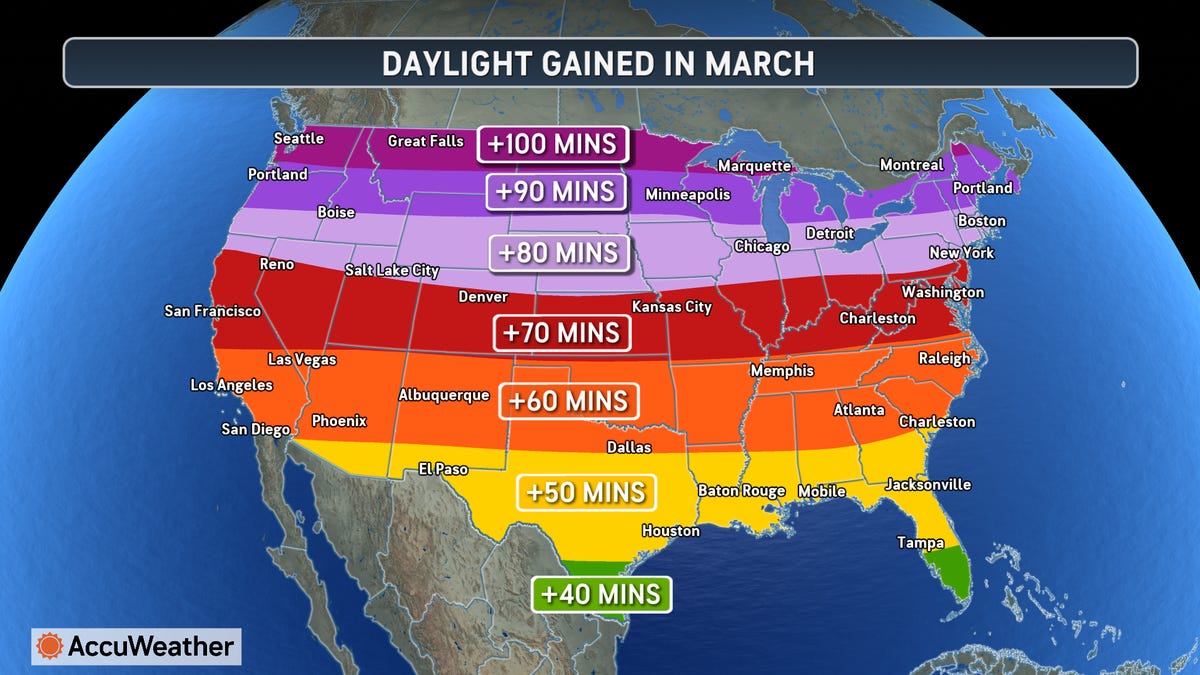
During the month of March, some parts of the United States will add over an hour-and-a-half of sun by the end of the month. Even Florida will gain 40 to 50 minutes of daylight during March. The change in daylight is least noticeable around the solstices in June and December, when sunlight varies by just seconds during the month.
The increase in daylight, or the amount of time the sun spends above the horizon, will be most obvious in the northernmost parts of the U.S., which will face the sun more directly as the Northern Hemisphere tilts toward the sun on Earth's axis at a 23.5-degree angle, according to Brandon Buckingham, a meteorologist at AccuWeather.