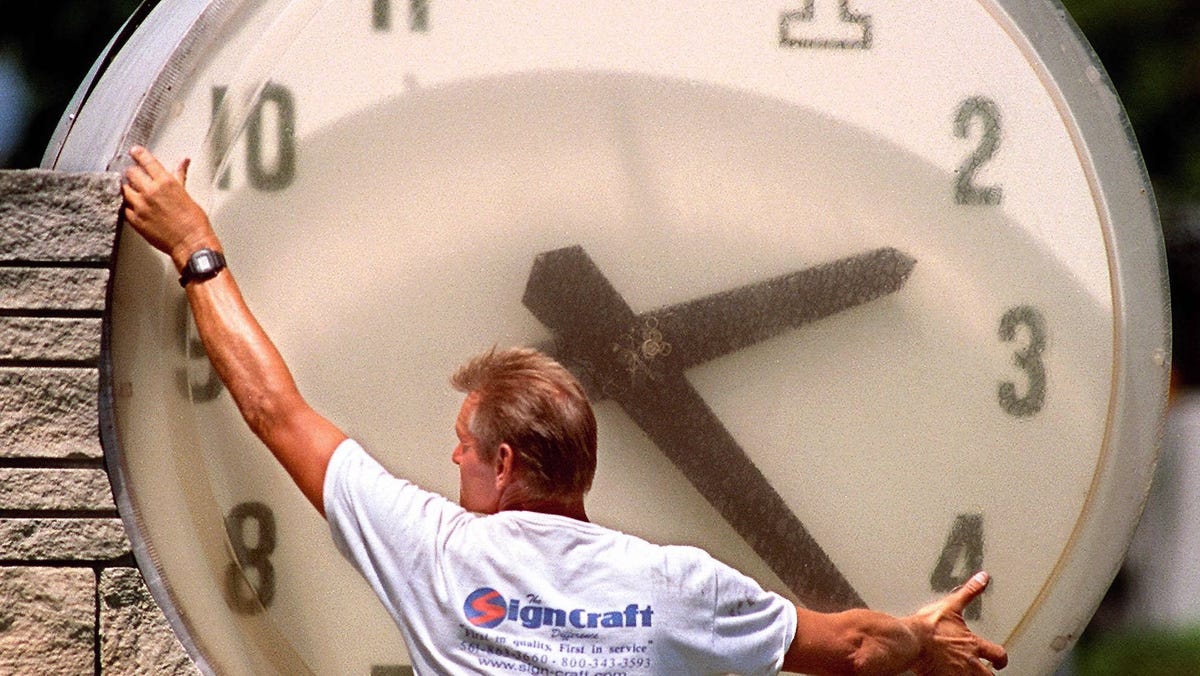
Daylight saving time is upon us once again and according to some studies, the time change can have negative health impacts. Still, the act of changing our clocks twice a year persists.
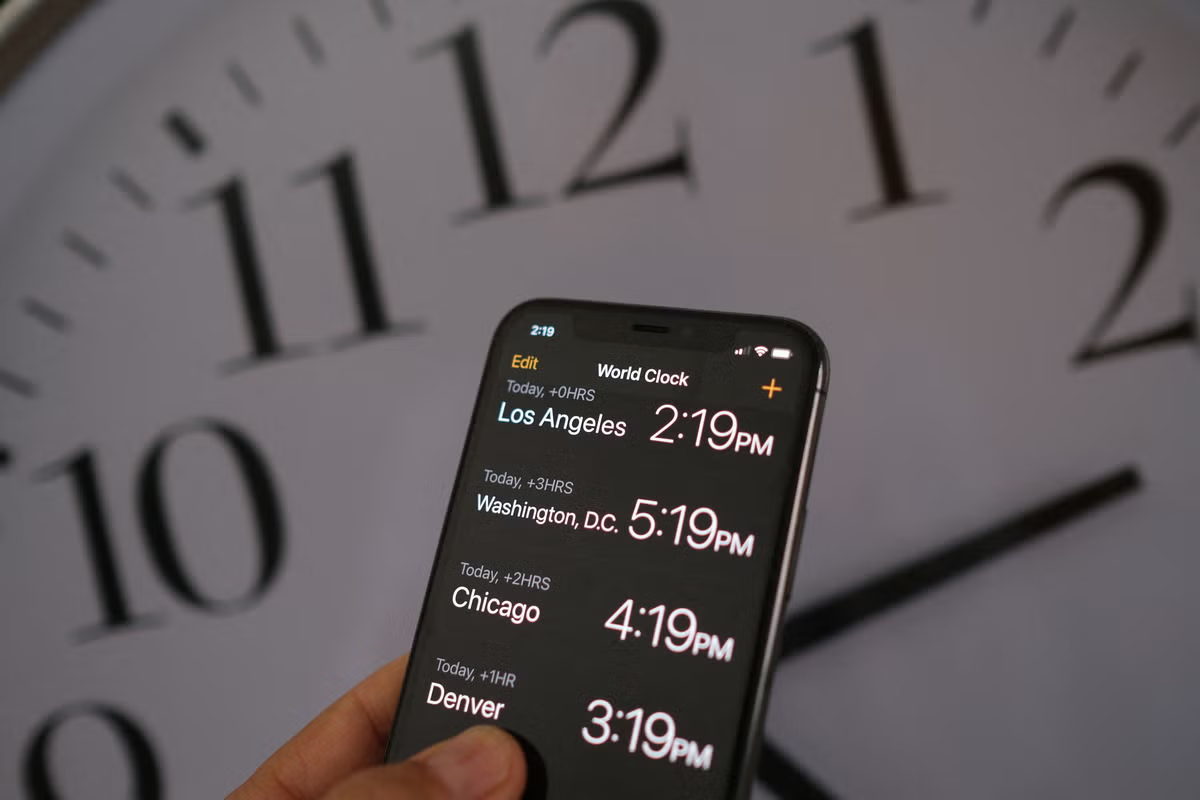
On Sunday, March 8, clocks will "spring forward" one hour at 2 a.m., meaning most Americans will "lose" an hour of sleep.
The idea of daylight saving time dates back to more than a hundred years ago and was essentially devised to increase evening sunlight and conserve energy. The adjustment was formally adopted in World War I.
The practice was observed off and on in the following years. In 1966, the Uniform Time Act made daylight saving time a legal requirement, according to the Department of Transportation. The country began following the current March to November system in 2007.
Despite some attempts from Congress to end or adjust daylight saving time, the practice is still observed across the country except in Hawaii, most of Arizona, the Virgin Islands, Puerto Rico, Northern Mariana Islands, Guam and American Samoa.