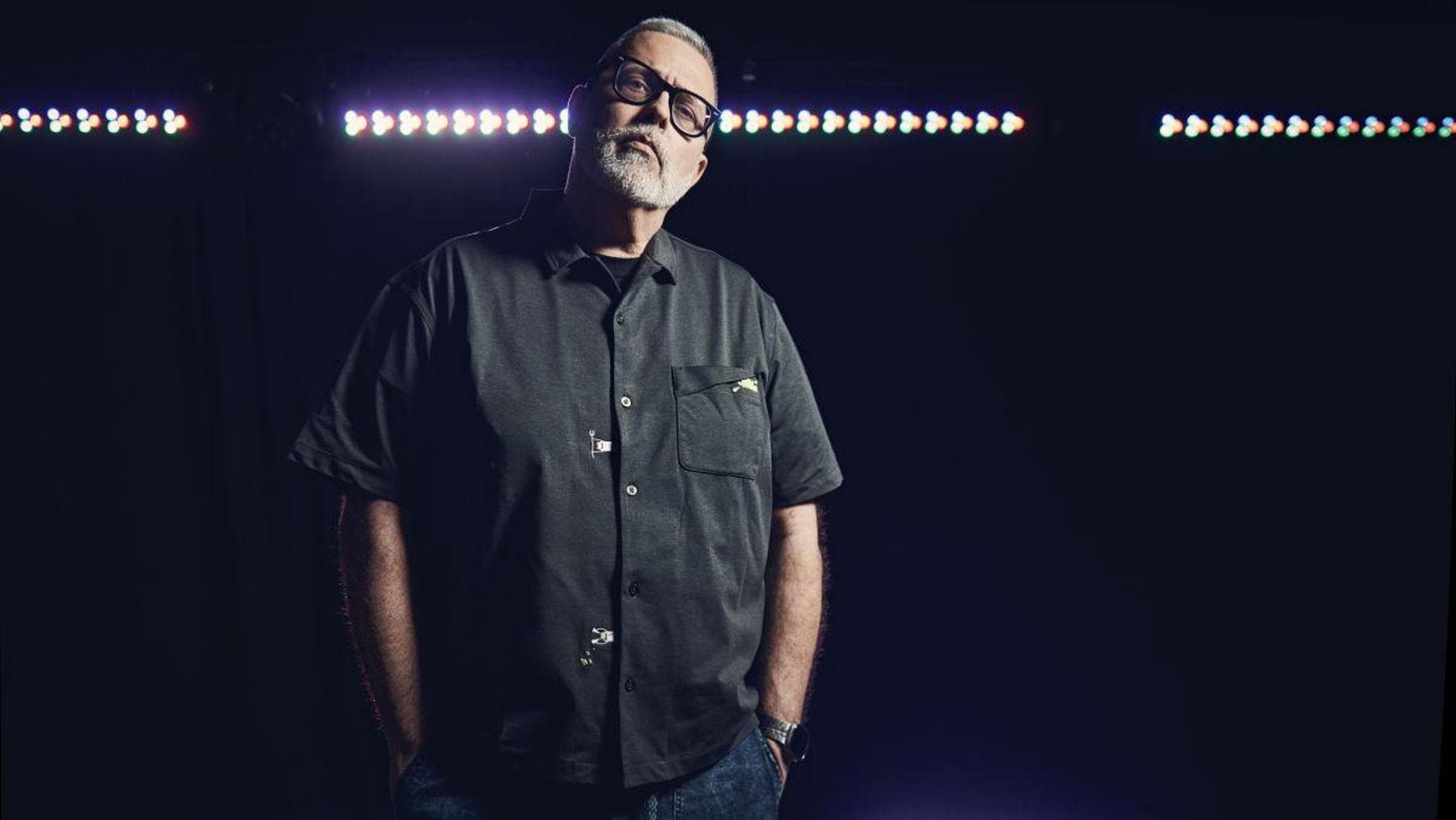
Fronting punk and ‘grungegaze’ bands while making dozens of rap albums, Bontana is a great British one-off. He explains why he’s working towards a world of peace
I
n the weeks after his mother died, Tony Bontana sequestered himself in the apartment that doubled as his studio, located in an office block in Selly Oak, Birmingham. There, he worked on his album L’Humanité, often through the night, tussling with his grief over a symphony of manipulated gospel and quiet-storm loops.
“I remember recording Sittin’ on a Star (Freestyle), unable to get through a verse without crying,” he says today, over a cup of tea in a London cafe. “It was literally all I could do. Writing and performing give me that instant outlet, and it really helped. It’s vital to my survival, to be able to work through these emotions, to talk about them.”
Bontana is an underground MC who deals in emotions and vulnerability; a visionary beatmaker with an unmistakable style who’s cooked up tracks for US luminaries such as Lil B and Billy Woods; and overall, a restless creative who switches between genres as his mood takes him. By 2024, when he released L’Humanité, his Bandcamp page already hosted dozens of tracks and albums, with Bontana putting out each one almost as soon as he’d finished recording it, “regardless of whether it was good or bad, because it’s a journey. Like, ‘This is this, and the next thing will be the next thing; we’ll keep on going.’ It’s precious to me, but I’m not precious over it.” L’Humanité, however, was different: “I’d conceived it as an actual body of work.”