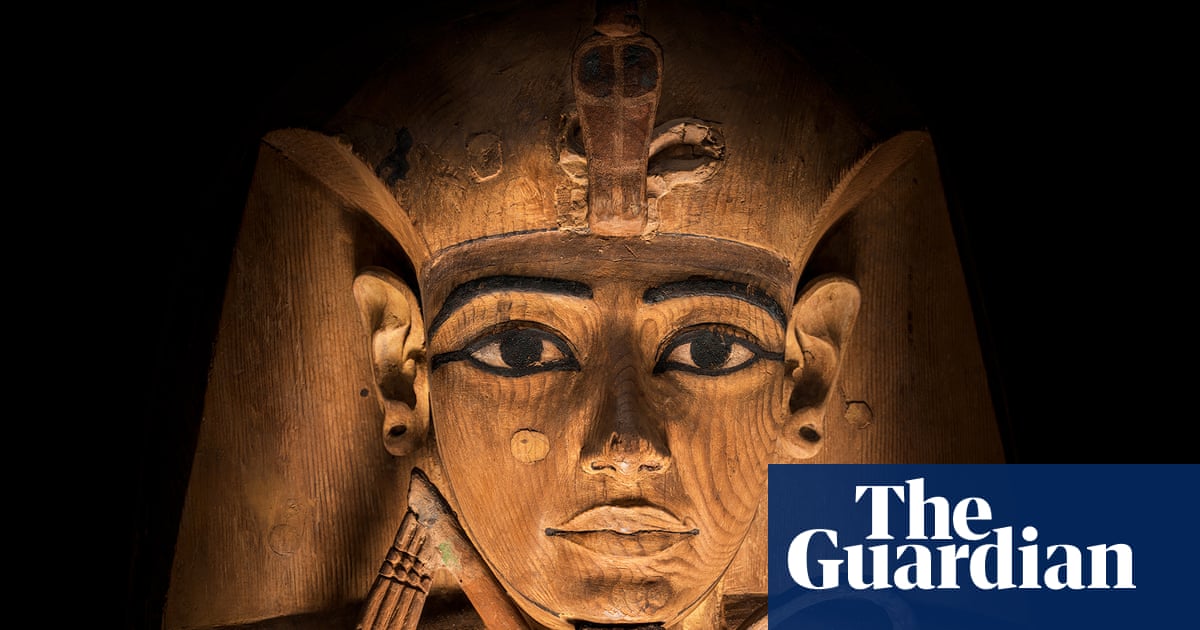
A collection of 3,000-year-old artefacts at Battersea power station gives Egypt’s most ambitious, self-aggrandising pharaoh a chance to emerge from Tutankhamun’s shadow
T
he mummy of Egypt’s most ambitious pharaoh, Ramses II (often spelt Ramesses), is a masterpiece of the embalmer’s art. The amazingly preserved 3,000-year-old face with its proud, beaky nose looks much as it must have when he died at the age of 90 or 91, after ruling for 66 years, fathering more than 100 children, smiting his enemies and making ancient Egypt great again. And that’s even before you notice how his hand seems to reach forward to grasp spookily at power from beyond the grave.
I’ve never forgotten Ramses since looking on his face, and that hand, in Cairo. But the world at large seems more interested in Tutankhamun, whose unspoiled tomb was found by Howard Carter in 1922.
Ramses the Great would surely be disgusted that the boy king, who achieved little in his short life and was virtually erased from their history by the ancient Egyptians, has turned out to be the most famous pharaoh of all just because of the intact survival of his tomb. Unlike Tut, Ramses worked hard for the eternal glory he believed he deserved. He fought wars, made peace deals, built himself gigantic monuments. Yet he has become a byword for forgetting, due to Shelley’s Ozymandias, one of the most celebrated poems in the English language.