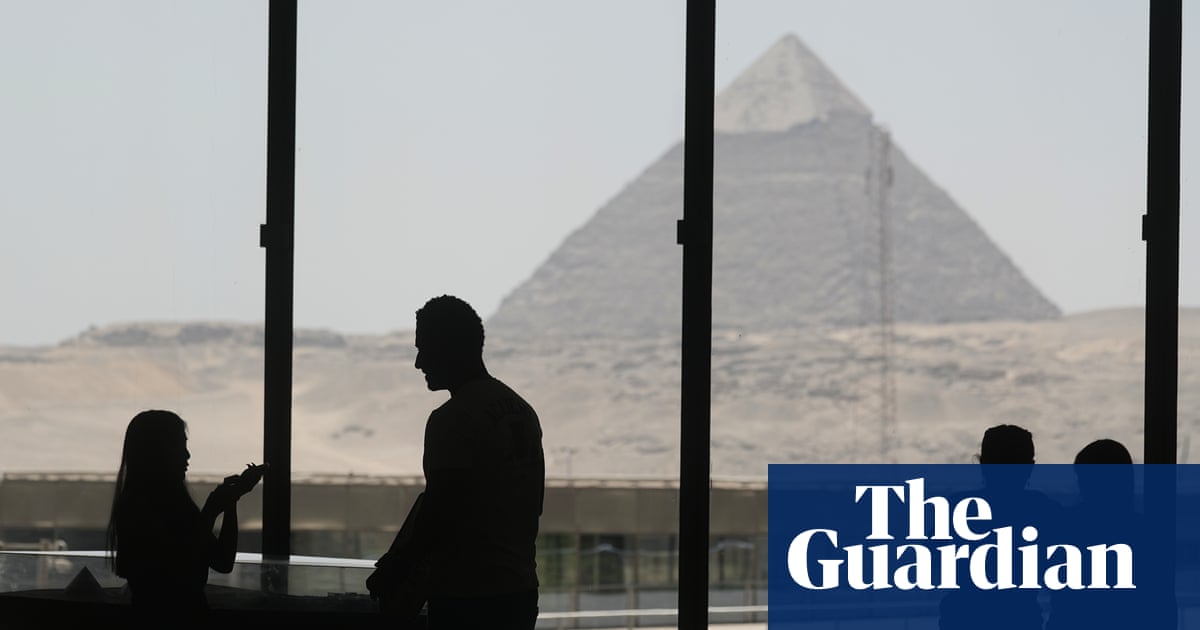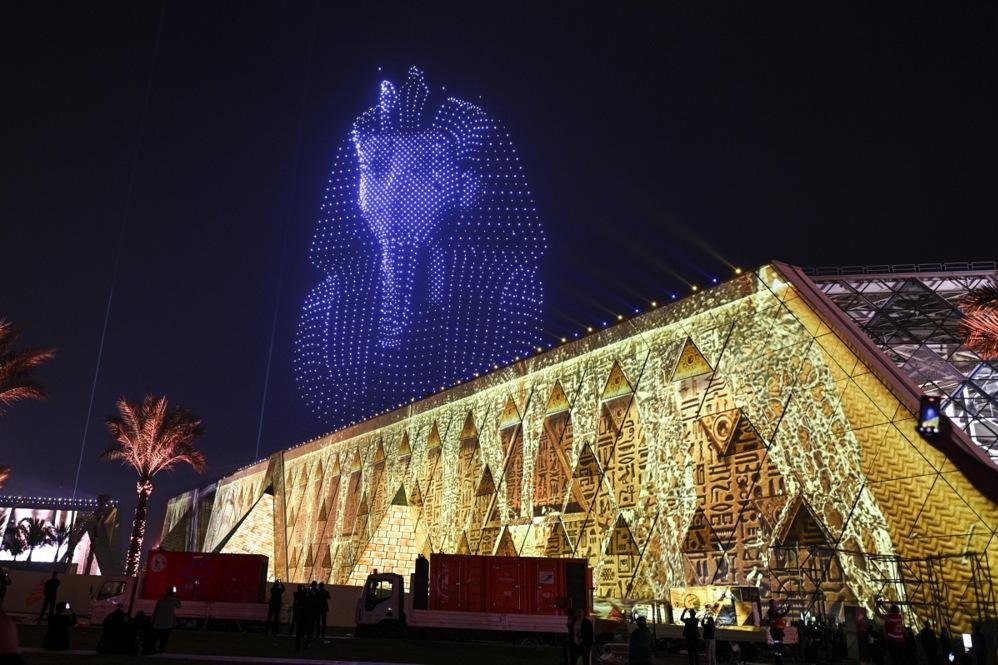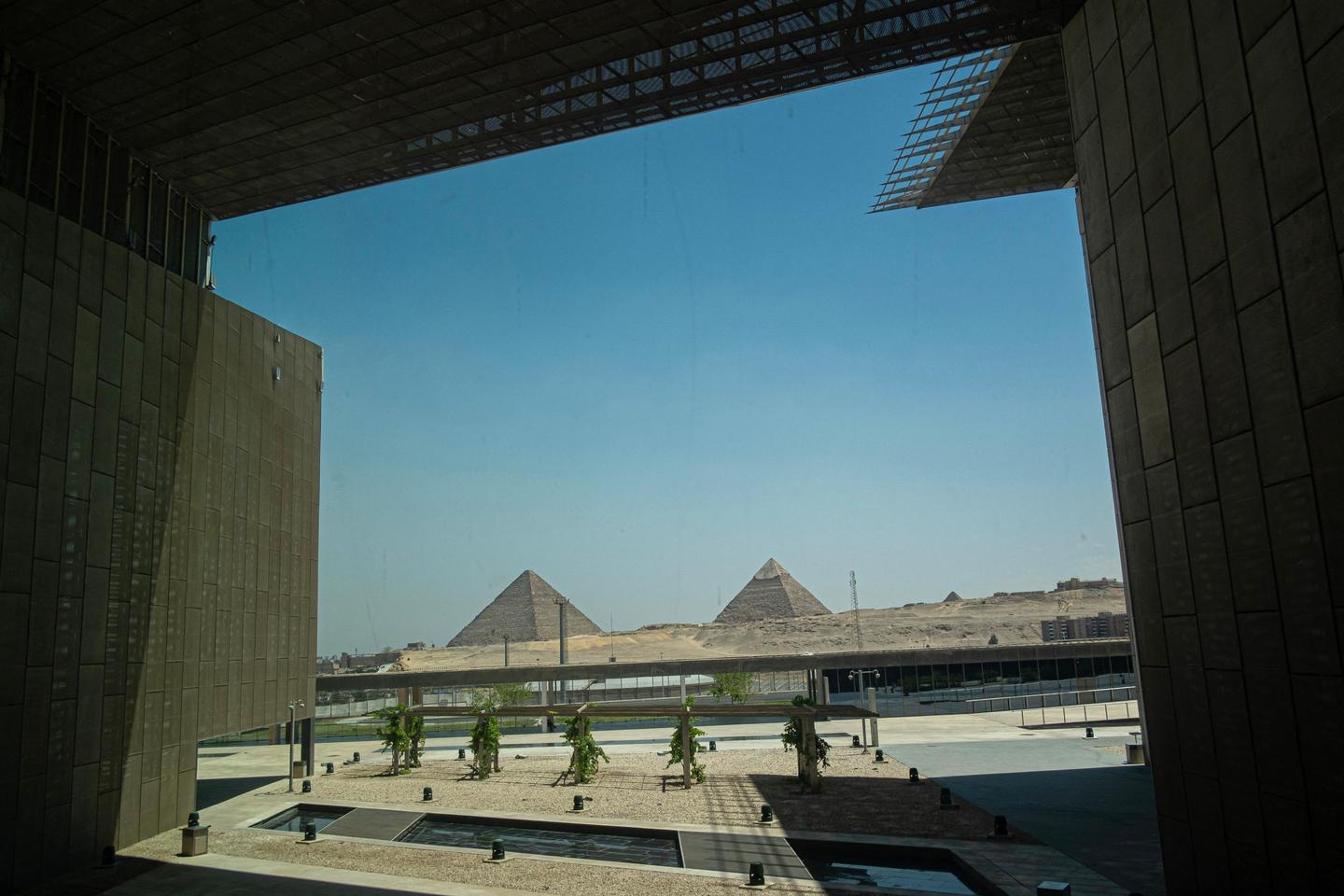
View of the Giza pyramid complex from the Grand Egyptian Museum, on the outskirts of Cairo, May 5, 2025. KHALED DESOUKI/AFP
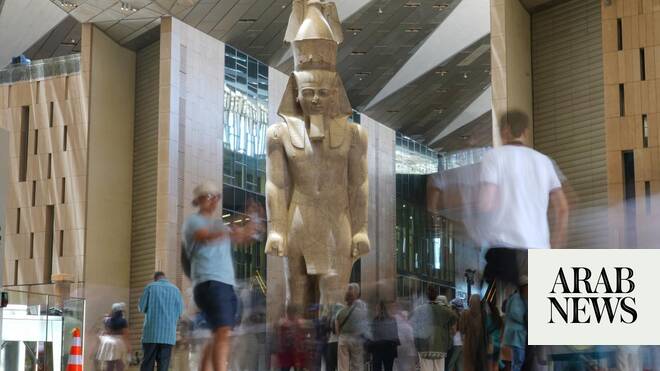
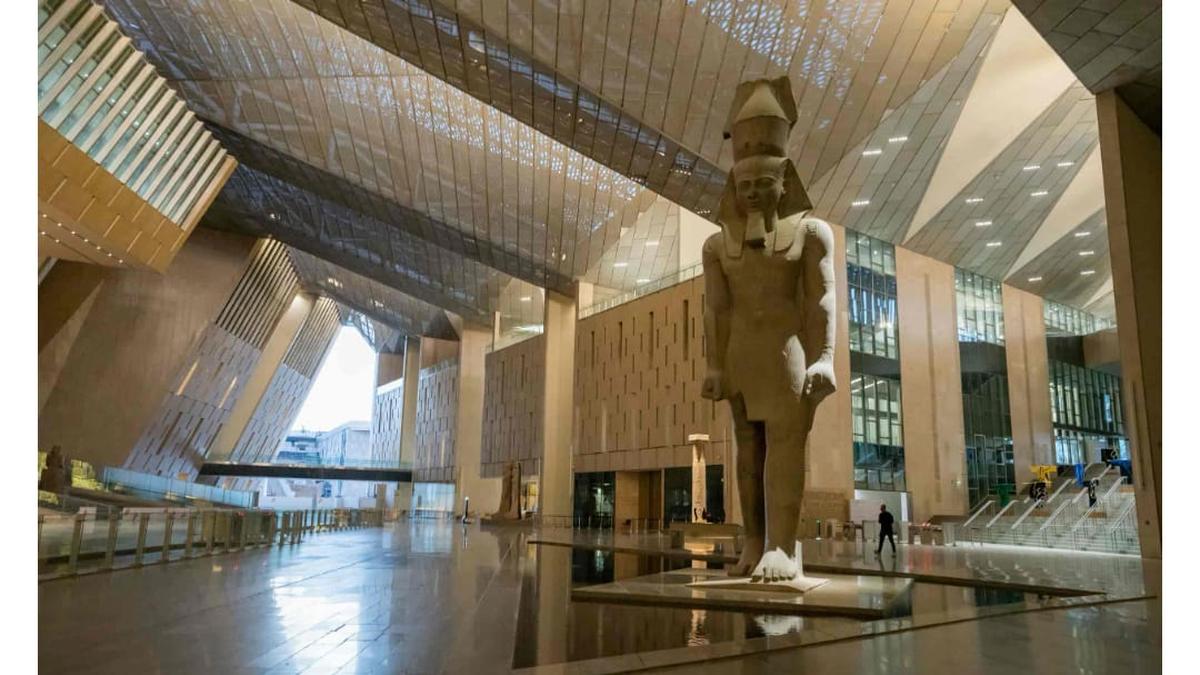
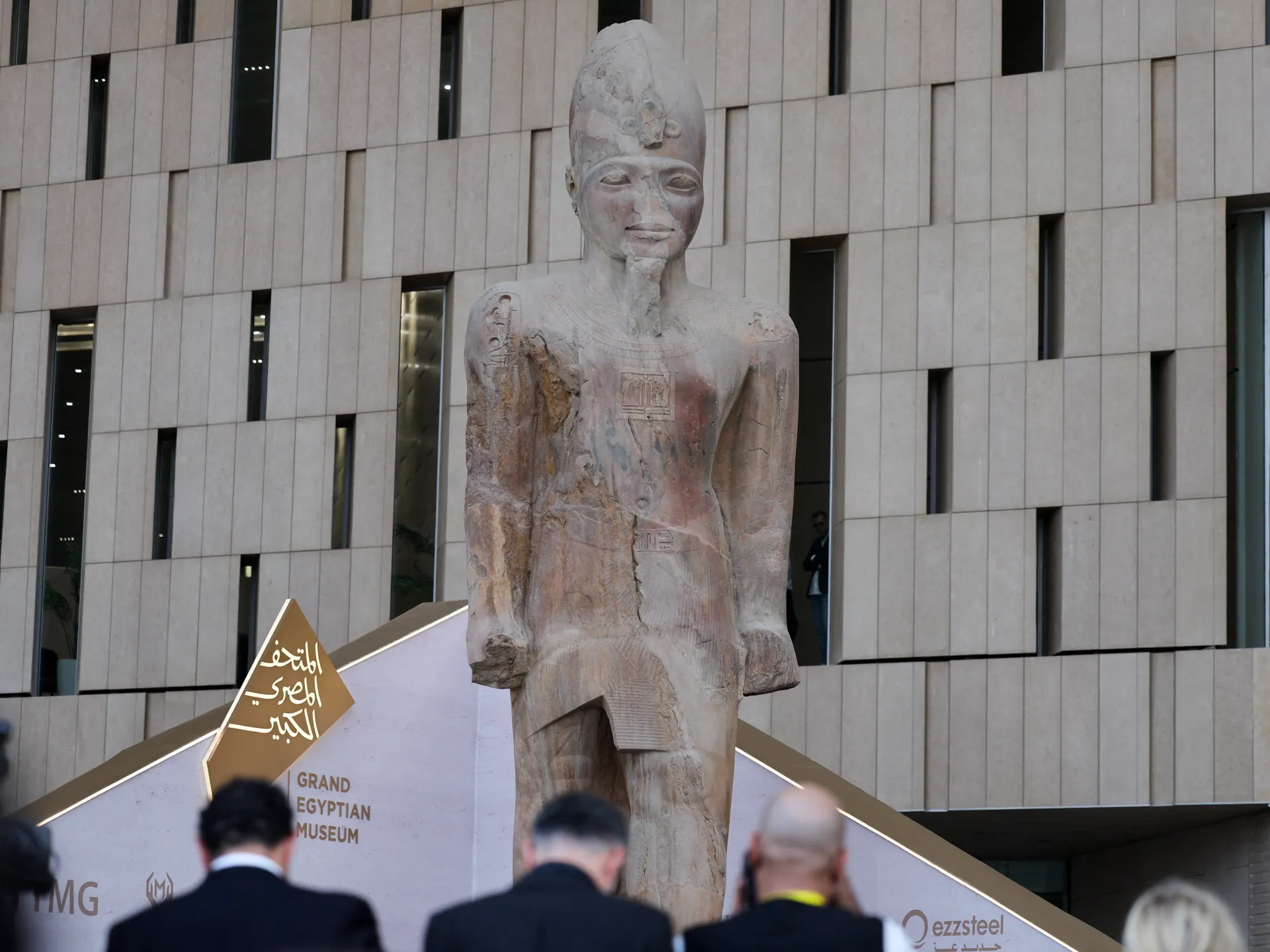
The statue of Ramses II has finally found a home. Towering at 11 meters and weighing 83 metric tons, it stands at the center of the entrance to the Grand Egyptian Museum, better known by its acronym, GEM. Bathed in soft light streaming from the glass roof 38 meters above, the statue greets astonished visitors who wonder whether it is a replica or the original, gazing up in awe – sometimes so much so that they fall into the pool, which is thankfully both shallow and free of crocodiles – at the feet of the granite colossus. A security guard has even been assigned specifically to prevent unfortunate accidents.
The monument itself tells a story about both the country and the museum. The statue was discovered in 1820 south of Cairo, at the site of Memphis, the capital of ancient Egypt. In 1955, Gamal Abdel Nasser (1918-1970), founder of the Arab Republic of Egypt, installed it in the heart of Cairo, as a sort of gift to his people.
In 2002, as the idea for GEM took shape, it was suggested that the statue be moved once again to the site of the future museum, on the Giza plateau. One evening in 2006, during Hosni Mubarak's regime, the statue was removed from the center of town and taken away, transported across Cairo on the trailer of a truck, bound in an iron crate – taken from the people to be presented solely to tourists. Tens of thousands of Egyptians flooded the streets to bid it farewell – a prelude to the revolution that would topple the president in 2011.