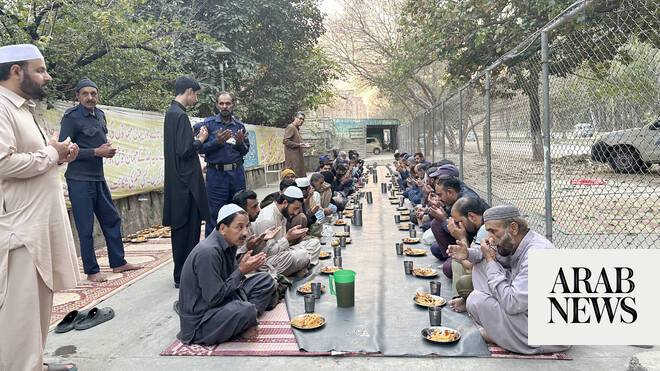
ISLAMABAD: As the sun dipped toward the horizon in Islamabad earlier this week, Syed Muhammad Umar Shah’s modest apartment building quietly transformed.
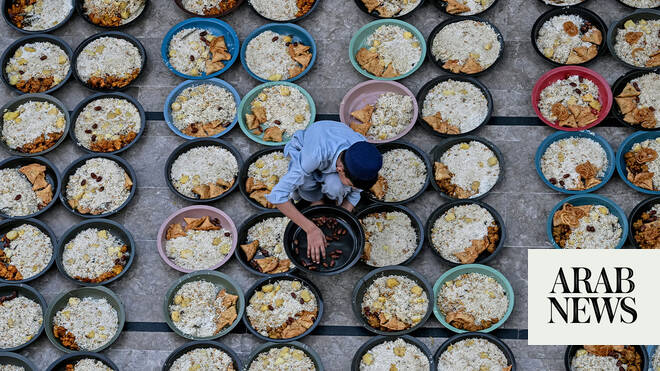
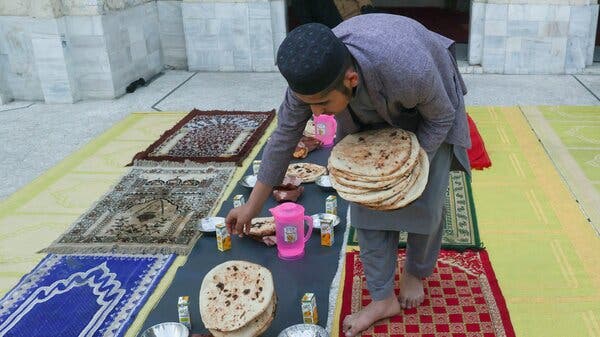
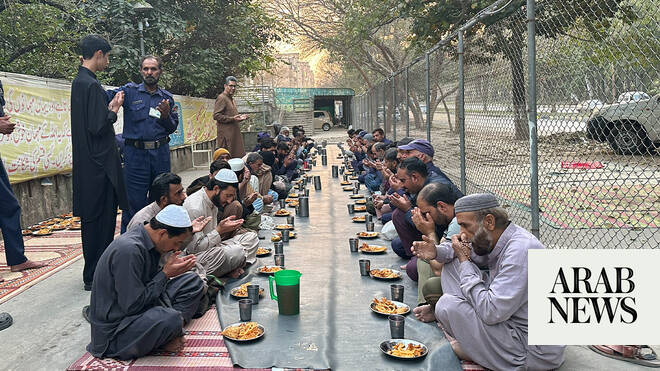
Pots simmered, oil crackled and trays of dates and fritters were lined up with care. Inside, Shah, his wife and their children moved with practiced rhythm — not preparing a private family meal but dinner for more than 100 strangers gathered downstairs to break their Ramadan fast.
Shah, a 45-year-old salaried employee, has been running this daily iftar for nearly a decade. He calls those who arrive each evening “Guests of Allah.”
In Ramadan, the Islamic holy month marked by fasting from dawn to sunset, hunger is meant to foster empathy. Across Pakistan, communal meal spreads known as dastarkhwans are laid out nightly to feed laborers, passersby and the poor. Many are organized through mosques, charities or neighborhood committees.
The Shah family’s initiative operates differently. It runs from their own kitchen, funded largely through personal savings and a small circle of relatives and friends. There are no banners, no institutional sponsorship and no public donation boxes.