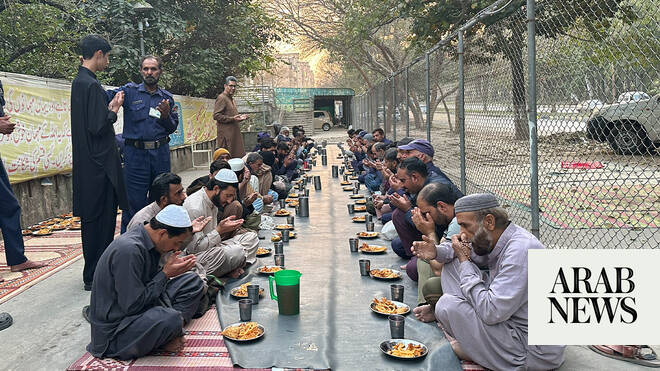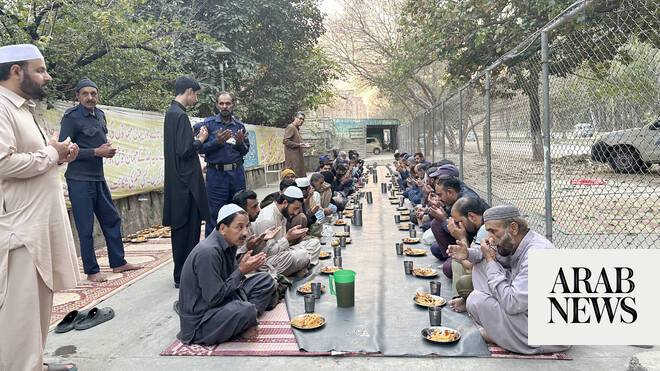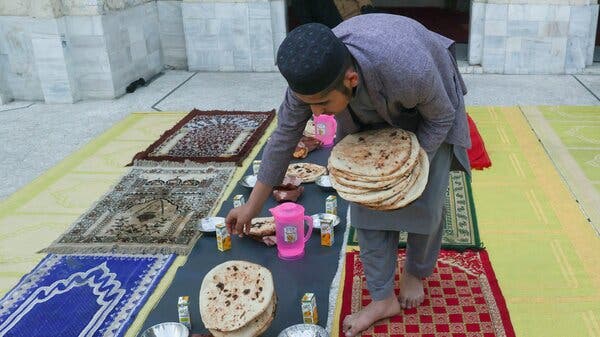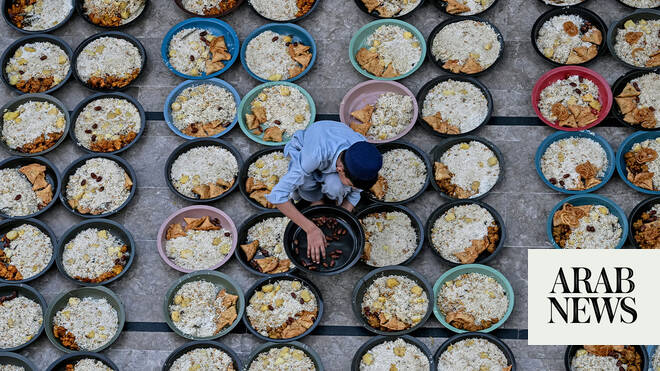
KARACHI: As the call to Maghrib prayer echoes through Karachi’s Sindhi Muslim Housing Society, long rows of people seated along a busy roadside begin to break their fast. Plates of fruit, samosas and glasses of the rose-flavored drink Rooh Afza move down the line as men, women and children share the evening meal after a long day of fasting in the city’s humid heat.
The gathering is a familiar Ramadan scene outside Cafe Mehmood, a modest restaurant in Pakistan’s largest city that has quietly sustained one of Karachi’s longest-running traditions of feeding the hungry.
Operating since the 1980s, the eatery is well known not only for its food but for a daily dastarkhwan, a communal meal spread laid out for anyone who arrives hungry. Donations collected from visitors and well-wishers help fund the initiative, allowing the restaurant to provide meals throughout the year to people who cannot afford to pay.
The tradition reflects a wider culture of charitable food distribution in Pakistan, particularly during Ramadan, when mosques, community groups and businesses organize iftar meals for fasting Muslims. In Karachi, a sprawling city of more than 20 million people, such initiatives often fill gaps in a fragile social safety net.