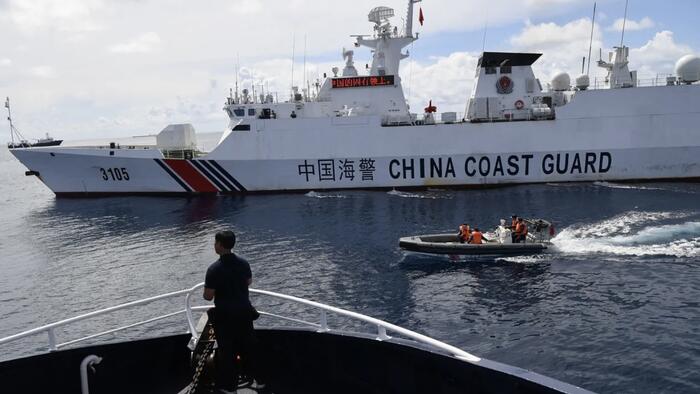
Feb. 19 (UPI) -- For decades, China's maritime identity has been defined by scale: It produces and consumes the most seafood, pilots the most expansive fishing fleet and maintains a dominant presence across the South China Sea.
Amid collapsing fish stocks, accelerating coral bleaching and mounting geopolitical friction, Beijing is recalibrating its approach. The shift remains gradual and incomplete, yet it reflects a growing recognition within China's policy apparatus that long-term maritime influence cannot be built on extraction and enforcement alone -- it must also be anchored in conservation.
The question is no longer whether China will take part in global ocean governance, but whether it aims to shape it -- and potentially lead it. That ambition is underscored by its ratification last year of the historic High Seas Treaty, the U.N.-backed pact to protect marine life in international waters beyond national control.
"In regard to China's Treaty ratification, I don't think it's a simple choice between showing leadership and seeking a strategic edge. The reality is that China now realizes its own long term interests, like food security and deep-sea research and its dependence on stable and rules-based oceans," said Yong Chen, professor of marine science at the School of Marine and Atmospheric Sciences at Stony Brook University in New York.