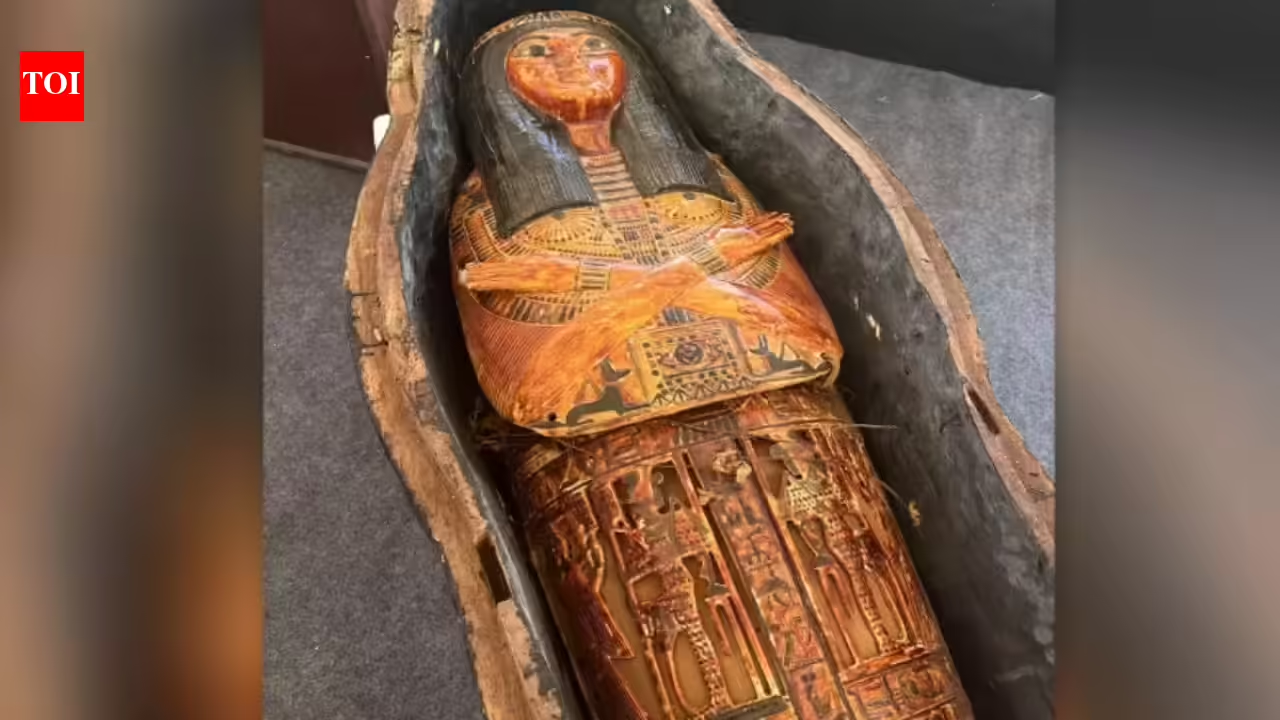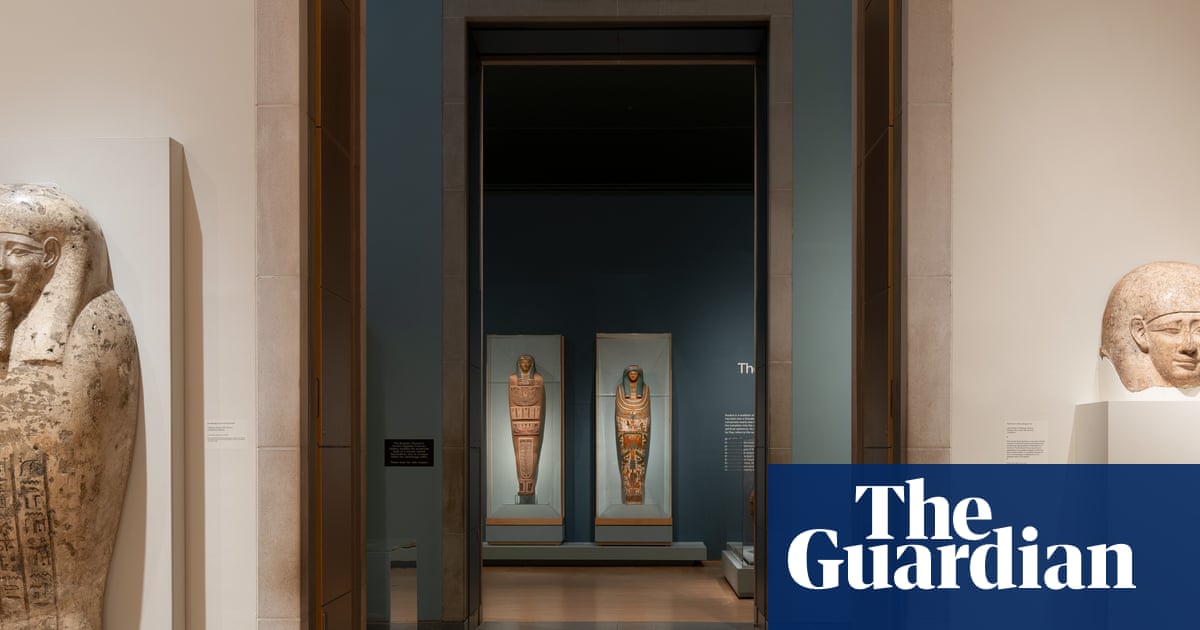
A rare gilded and complete Book of the Dead, used by ancient Egyptians to help them to the afterlife, is now on display in Brooklyn
I
n the ancient world, travel to eternal bliss was not easy. For the Greeks, you’d have to hitch a ride with Charon across the River Styx and hope you were one of the few fortunate souls to make it to Elysium. If you were lived among the ancient Aztecs, your journey to Mictlan involved numerous struggles, including climbing a mountain made of obsidian and crossing a desert where there was no gravity and you were blown around by enormous winds.
For the ancient Egyptians, the journey to the afterlife included a danger-filled journey where your wits were tested at every turn – those fortunate enough to make it through would then sit before the god Osirus and 42 other deities while their heart was weighed against a single feather. If things went sideways, your soul would be devoured by a fearsome goddess named Ammit, composed of a lion, hippopotamus and crocodile (the three creatures most likely to eat ancient Egyptians).
No wonder that the Egyptians evolved a collection of about 160 incantations meant to help the dead make it to paradise. Known today as the Book of the Dead – a coinage of the 19th-century German professor named Dr Karl Richard Lepsius, which admittedly is catchier than the literal translation of the Egyptian, “the Book of Going Forth by Day” – a 2,000-year-old copy of the text is now on display at the Brooklyn Museum in a remarkable full, gilded version.