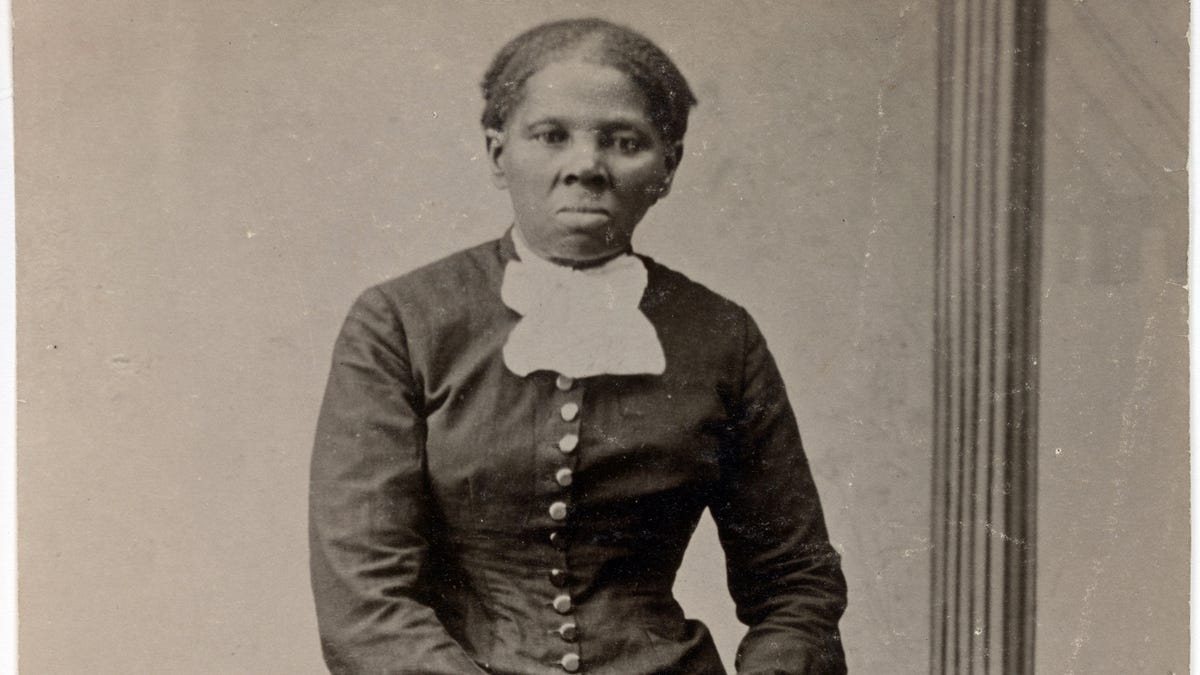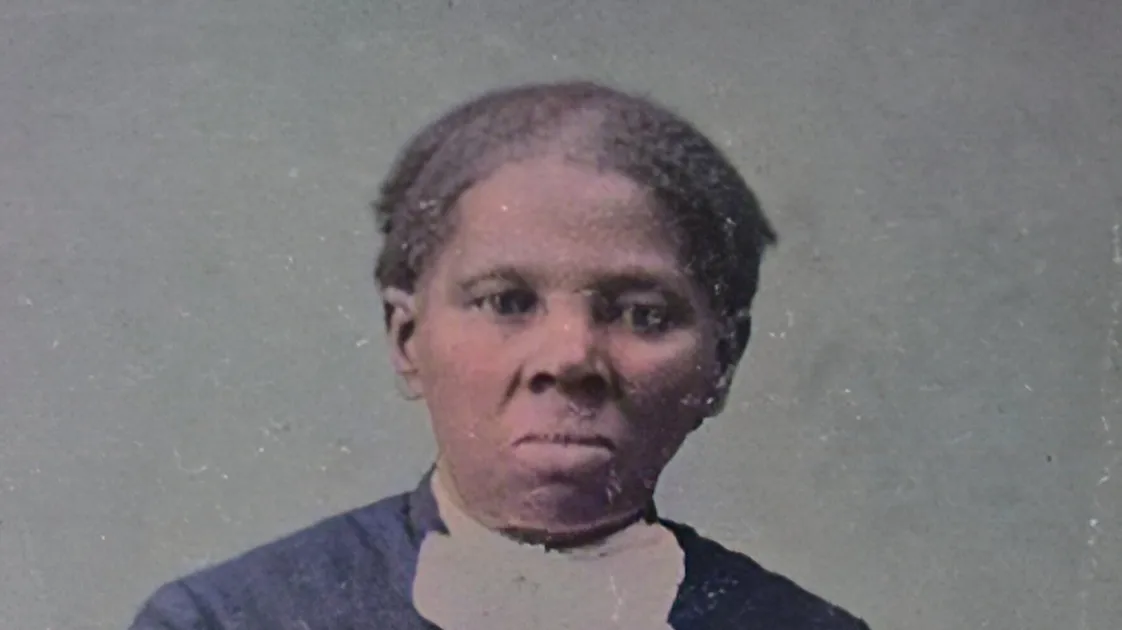
I have not been able to shake what I saw in the now viral clip of a scene from “Harriet Tubman: Love Slave,” a play helmed by Terrell M. Green that focuses on the first 27 years of Tubman’s life.The play is described as “a bold, rap-poetic musical remix of history, reimagining the young Harriet before she became ‘The Moses of Her People,’” diving into “the untold love story between Harriet and her first husband, John Tubman — the man who ghosted her when she chose freedom over fear.” “Harriet Tubman: Love Slave” wrapped a run at the Long Beach Playhouse Theater in January and is playing in Los Angeles during the last week of February. It is, according to Green, “part concert, part spiritual awakening, and all power,” designed to “assert bold autonomy” and serve as “a f**k you to slavery, to respectability politics and the erasure of Black intimacy and agency.”Tubman made her first escape in 1849. She returned two years later at great personal risk to find that her husband had already remarried. In the clip, that moment is portrayed by Tubman bending over, twerking and rapping, “Baby, I’m back/Baby, where you at/Come and get this ass (ass, ass, ass).”Following that, Green is on stage with the rest of the cast, explaining how he wanted to tell Tubman’s story for contemporary times.“Raunchy rap songs,” he says with a laugh, before proceeding to add that he’s not a “huge fan of rap, but I wanted to over-inundate the word ‘nigga’ in this play, like in the genre of rap.” To be fair, the play cannot fully be judged by those who haven’t had the opportunity to see it. Green said in an interview with CNN’s Victor Blackwell that the clip might be “taken out of context.” Still, plenty can be gauged by what is presented in that clip and the explanation behind it.It would not be right to strip Tubman of her humanity — including her sexuality — simply due to her historical reverence. Still, everything about this play makes me want to channel my inner Cicely Tyson in “Madea’s Family Reunion” to tell people to put greater respect on the ancestors’ names. I don’t begrudge Green his right to deliver his art as he sees fit, but “Harriet Tubman: Love Slave” recalled my feelings after seeing Jeremy O. Harris’ “Slave Play,” which tackled race, sex and interracial relationships. Both playwrights appear to use “shock” as a marketing tool to get people in seats; they are loud without saying anything particularly new or interesting, just pouncing on Black women.And perhaps that’s what is so frustrating about “Love Slave” and other recent moments that center the abolitionist: Many people seem so intent on trivializing her.Last year, Annette Hubbell, a white actor in San Diego, sued the San Diego County Library after it canceled a scheduled performance of her one-woman show, “Women Warriors,” which includes portrayals of historical figures like Harriet Tubman and Mary McLeod Bethune. Then, there was the viral TikTok conspiracy claiming Tubman wasn’t a real person, prompting Black folks online to launch a campaign to combat the disinformation. Other bad moments include Russell Simmons posting a parody video of Tubman having sex with her slave master to blackmail him (he later apologized), and the 2019 film “Harriet” that prompted #NotMyHarriet boycott calls over Cynthia Erivo’s casting and complaints about a white savior narrative.Then there’s the Obama-era initiative to put Tubman on the $20 bill. Omarosa Manigault Newman claimed President Donald Trump said of Tubman, the woman who personally brought more than 300 slaves to freedom, “You want to put that face on the $20 bill?”Supporters rally with House Democrats to demand that American abolitionist heroine Harriet Tubman's image be put on the $20 bill outside the U.S. Treasury Department in 2019 in Washington, D.C.Chip Somodevilla via Getty ImagesNone of these other poor acts is Green’s fault, but “Harriet Tubman: Love Slave” nonetheless follows a bad pattern of folks taking her name and image and demeaning it. While other Black historical figures are inappropriately mocked, Black women historical figures seem especially vulnerable to this treatment.Tubman was a woman with epilepsy who made 13 missions into slave territory. She carried a gun and threatened to use it on people who wanted to turn back. She was a spy, a nurse and a military leader. She had a complicated marriage, spiritual visions and made impossible choices.When you reduce her to twerking on stage for shock value, you’re not pushing back on respectability politics — you’re just making her appear far less interesting than she was.There’s a difference between humanizing someone and humiliating them. Tubman deserves to be remembered as fully human — flawed, sexual, complex — but shock-value art often mistakes degradation for depth. It confuses provocation with insight.This Black History Month and beyond, we owe our ancestors more than spectacle. We owe them the hard work of wrestling with their full humanity without diminishing their dignity. We owe them art that’s brave enough to sit with complexity rather than reaching for easy shock. Tubman risked everything — her freedom, her life, her safety — over and over again for people she didn’t even know. The least we can do is honor that sacrifice by treating her legacy with the seriousness it deserves, not as raw material for provocation. Leave Harriet Tubman alone. Or if you can’t do that, at least make the art worthy of her name.
The Legacy Of Harriet Tubman Is Being Disgraced Once Again
"Harriet Tubman: Love Slave" follows a bad pattern of folks taking her name and image and demeaning it.
908 words~4 min read