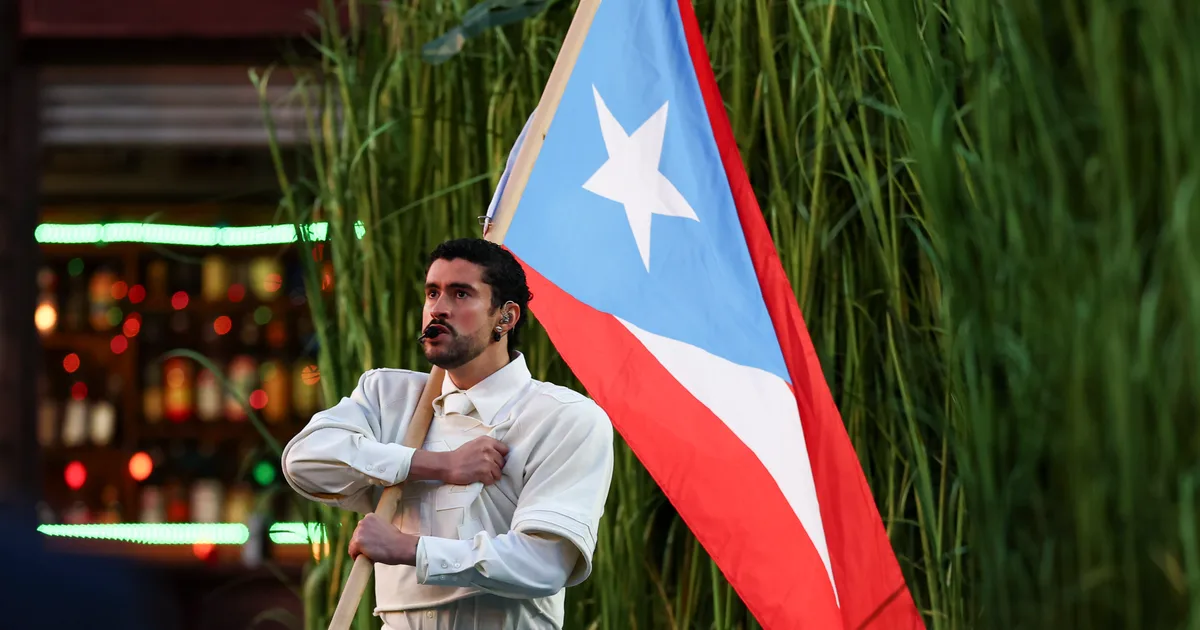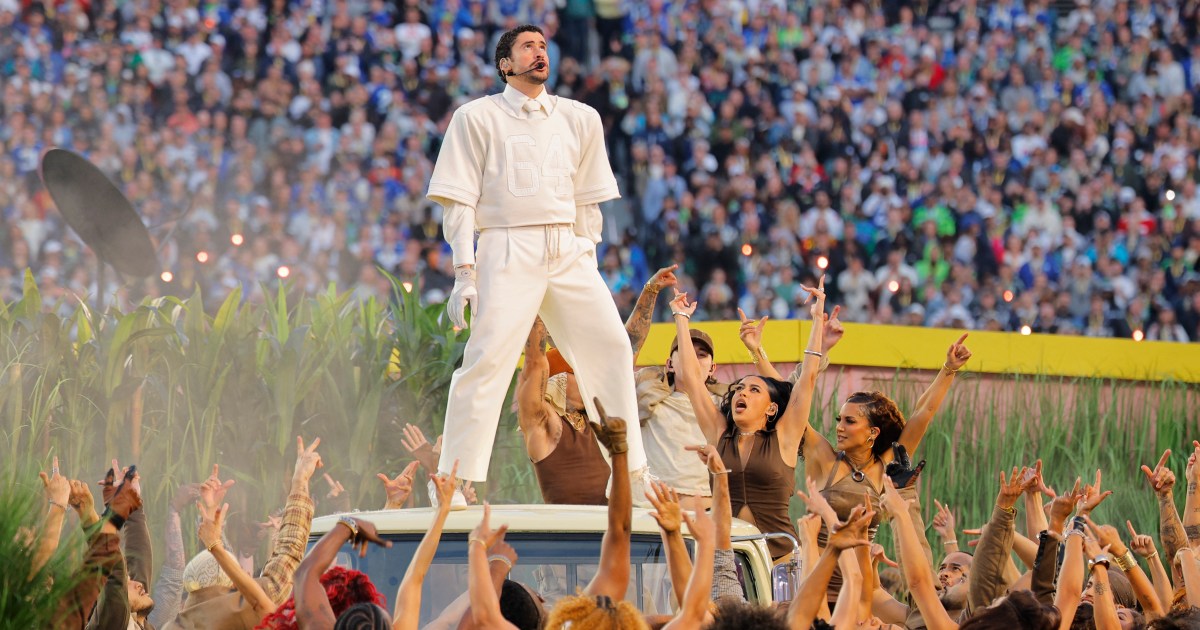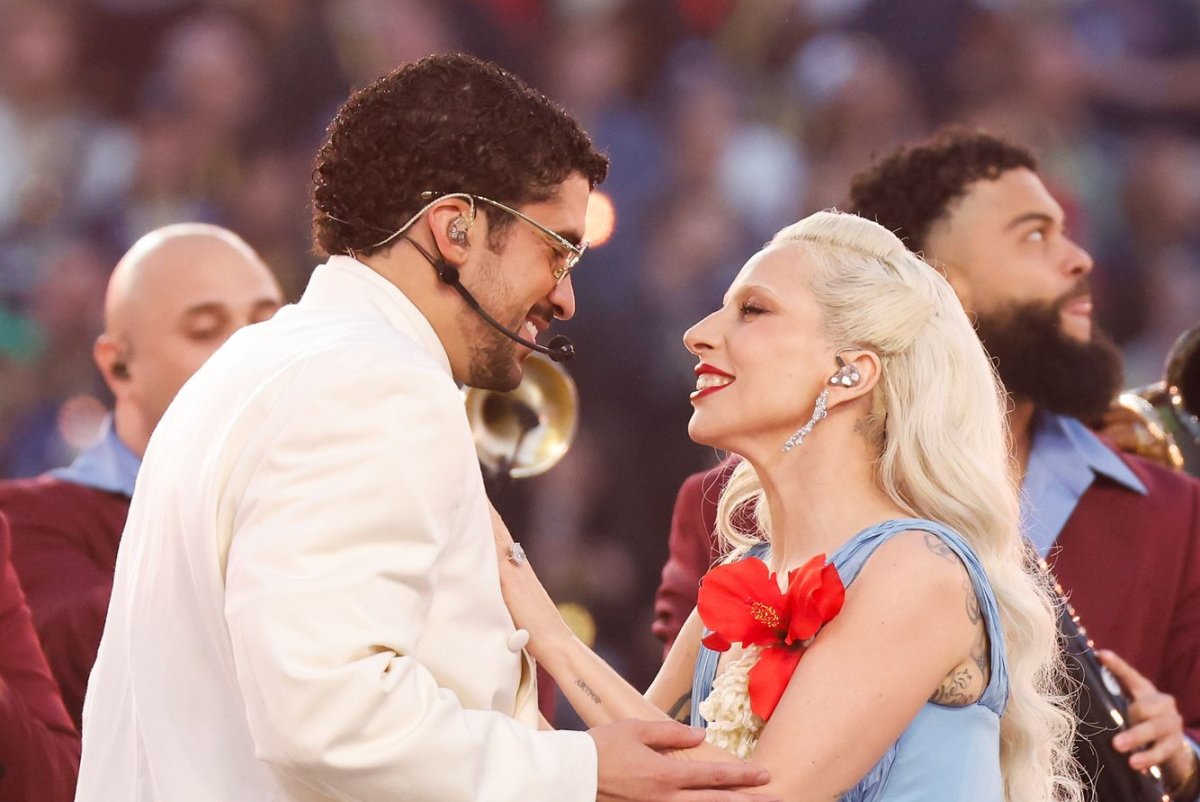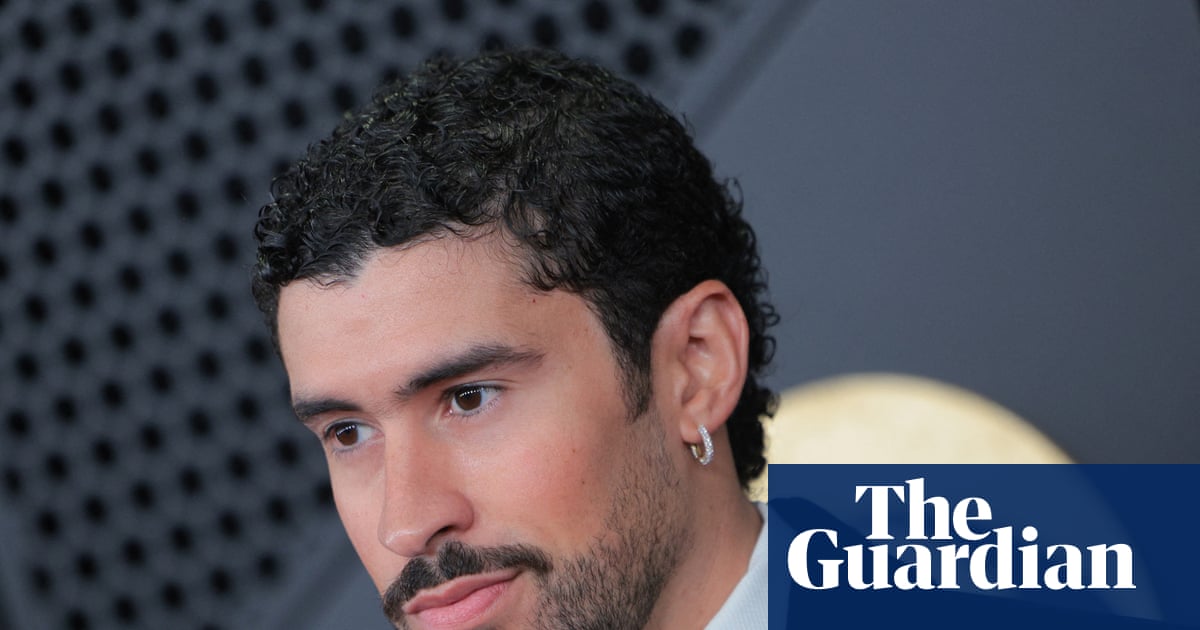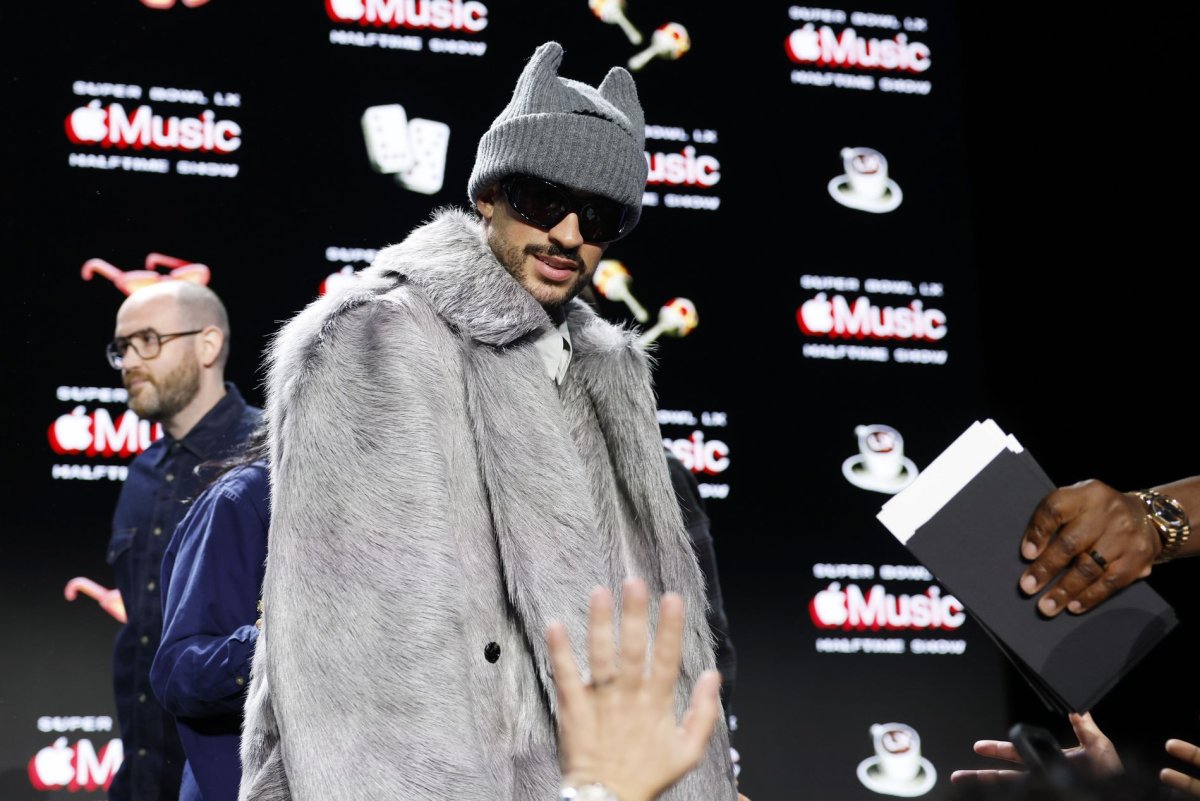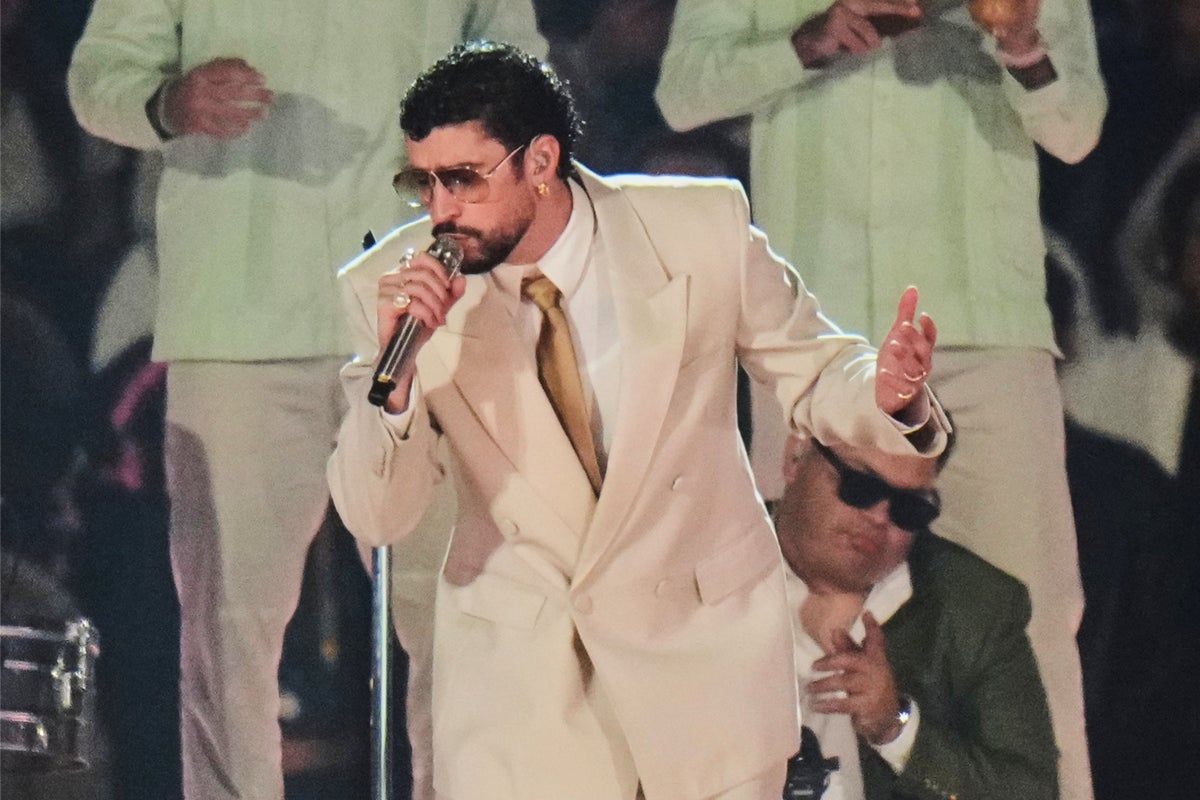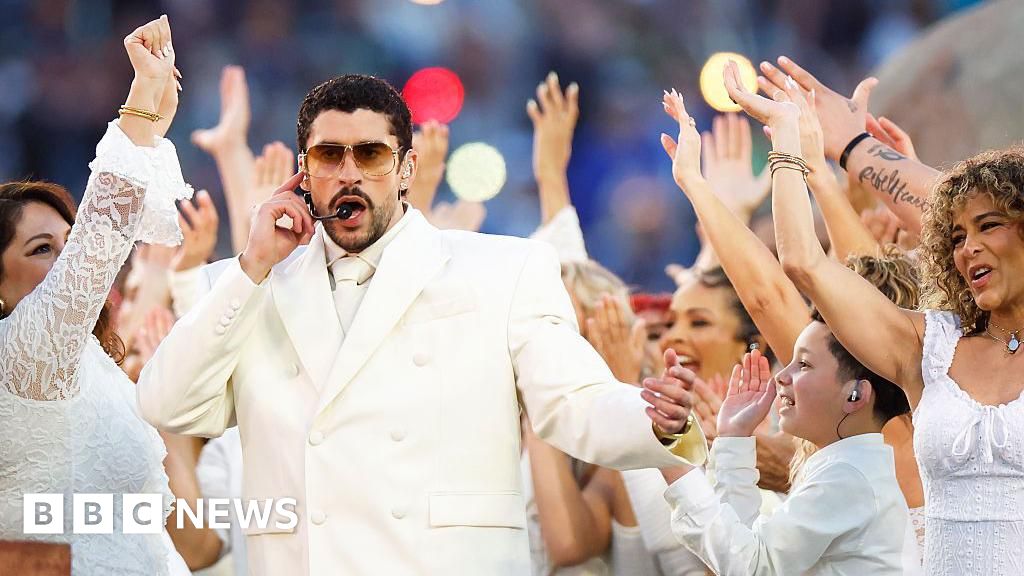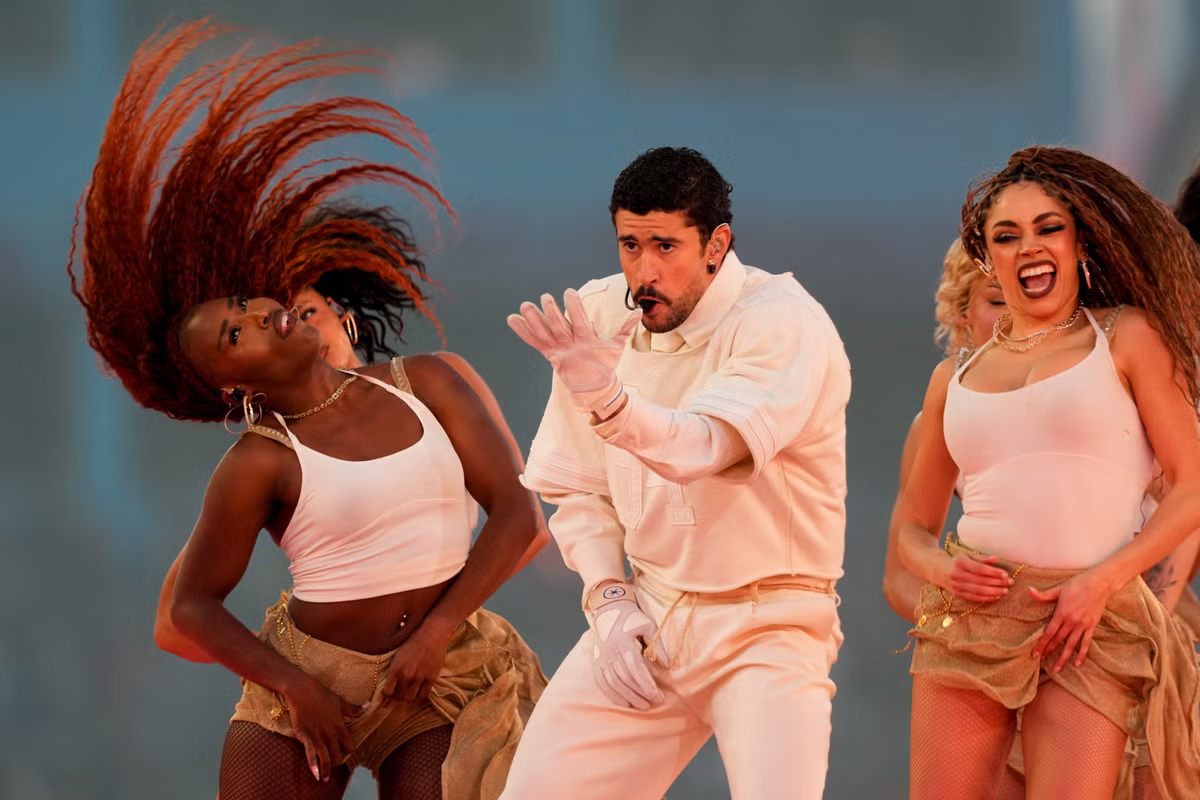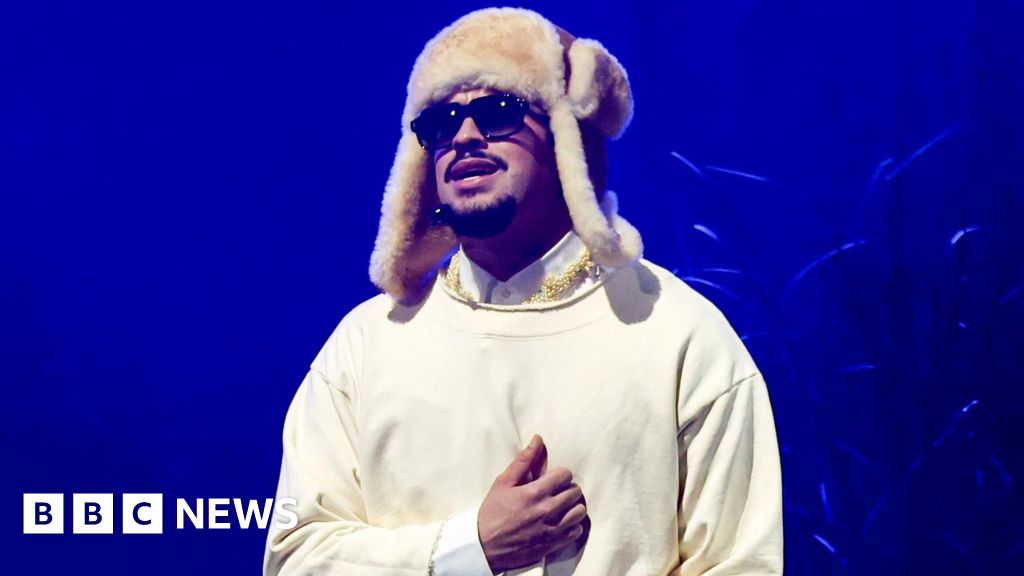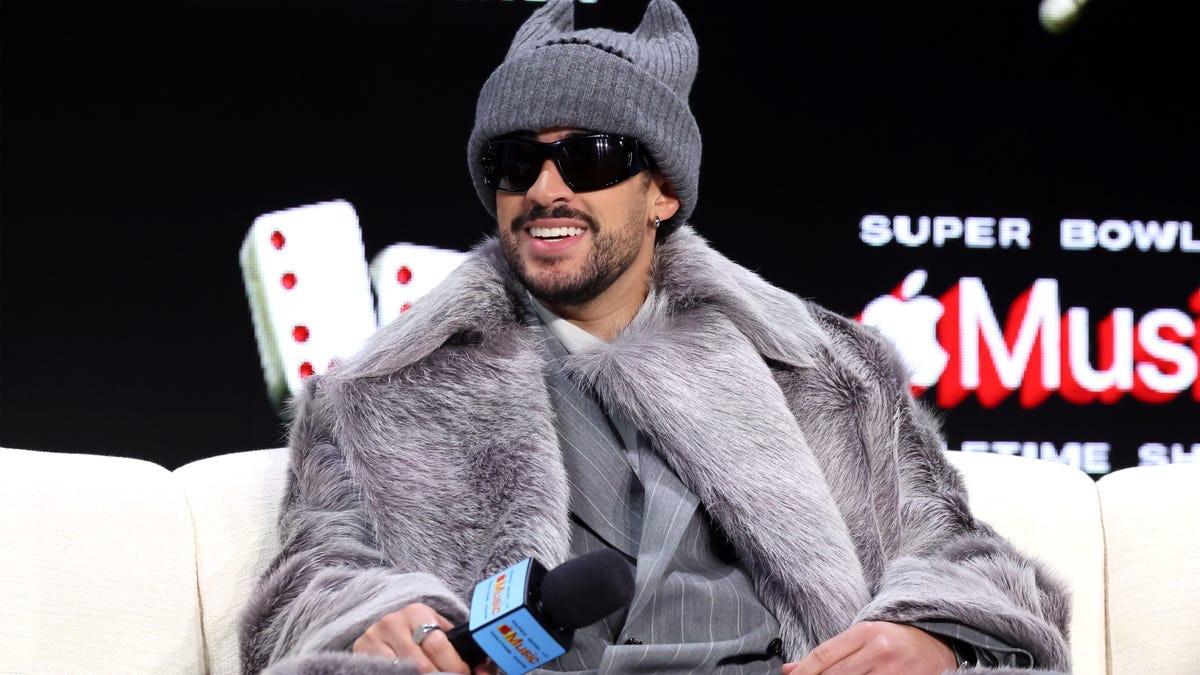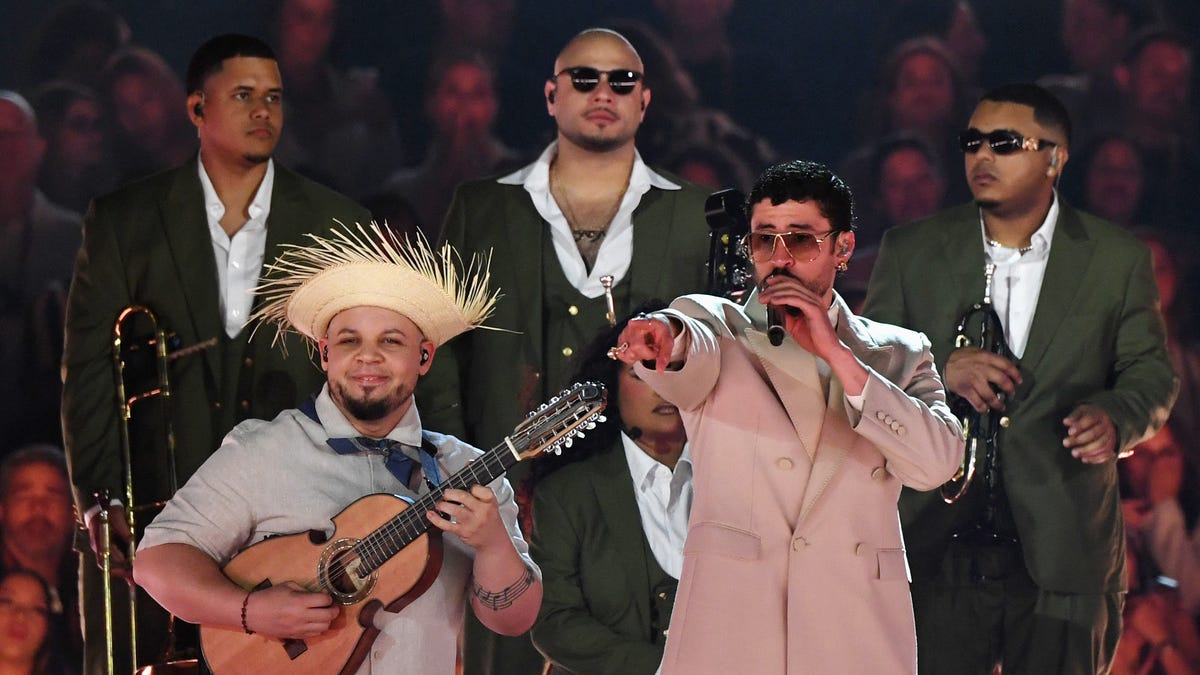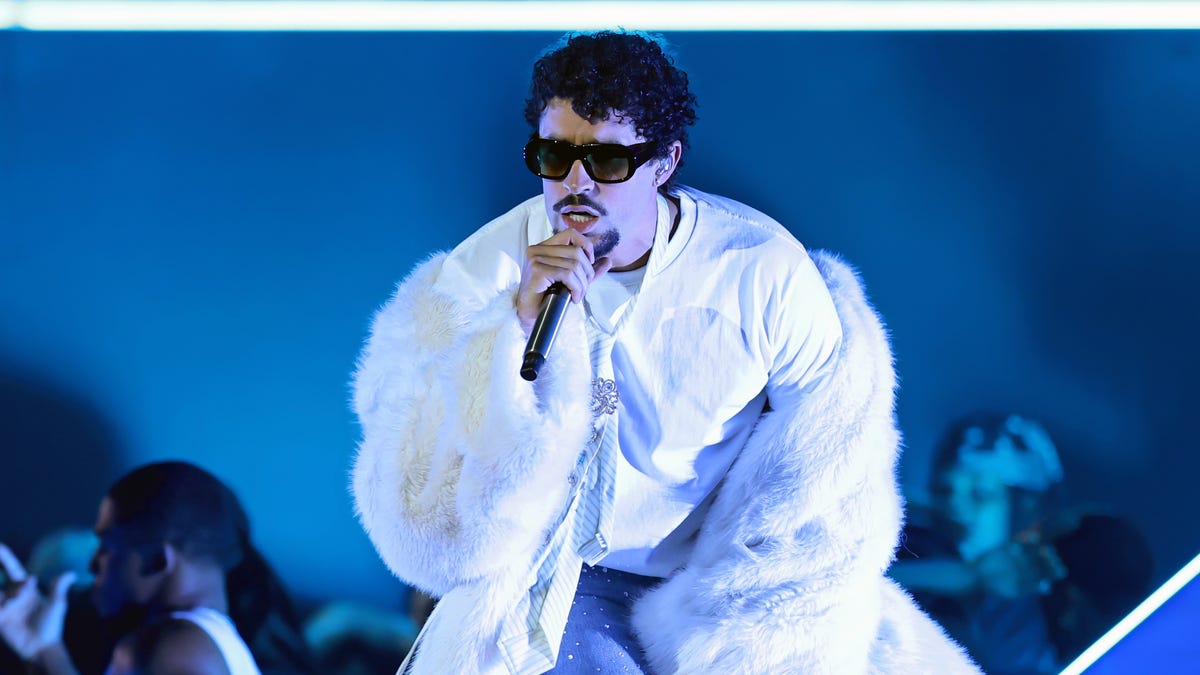
Bad Bunny is carrying the torch of the superstar musicians who came before him. But he's also bringing his own fuego.
By now, it's no secret that the reggaeton juggernaut, born Benito Antonio Martínez Ocasio, is poised to make history at the Apple Music Super Bowl LX Halftime Show on Feb. 8. While not the first Latin singer to grace the world's biggest stage (Jennifer Lopez and Shakira, Gloria Estefan, Christina Aguilera, Enrique Iglesias), Bad Bunny is the first predominantly Spanish-language artist to headline the halftime show.
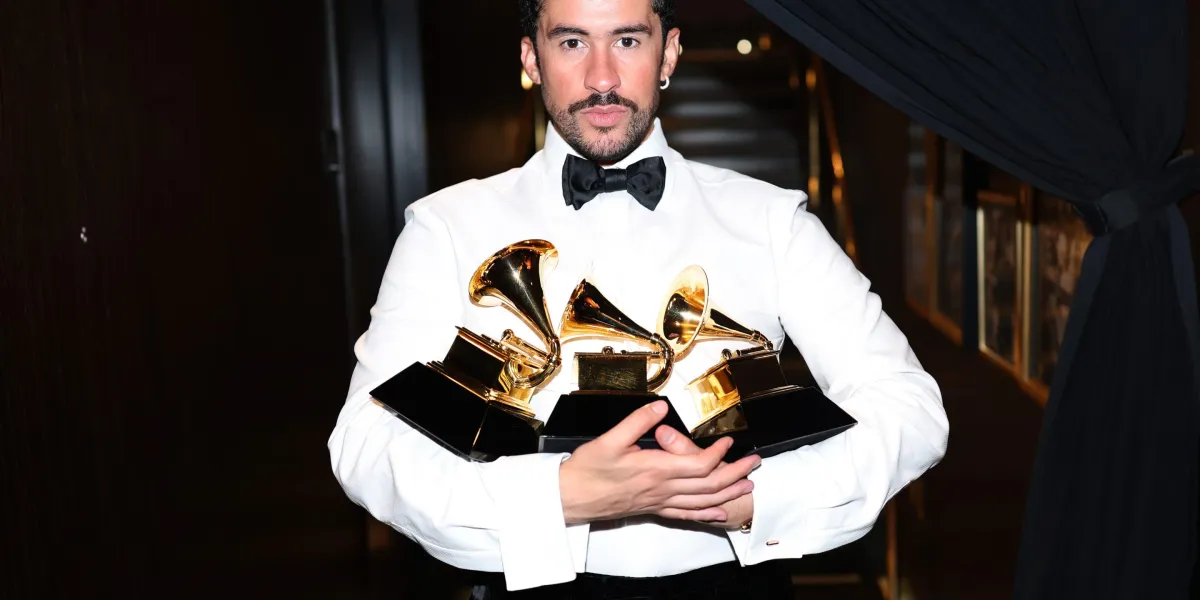
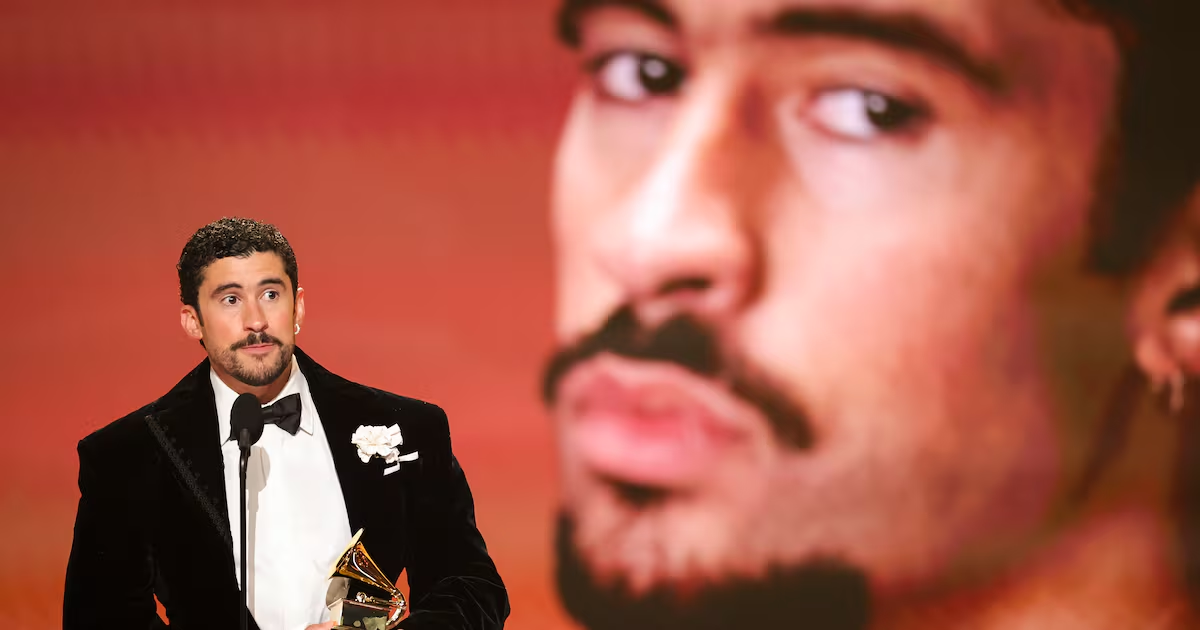
The feat adds to a record-setting career for the Puerto Rican singer, who's won album of the year at the Grammy Awards (the first Spanish-language album to do so), topped the Billboard 200 chart four times and performed as a solo headliner at the Coachella Valley Music and Arts Festival.
"He has followed in the footsteps of many other people who have paved the way for him to get to this place," Vanessa Diaz, author of "P FKN R: How Bad Bunny Became the Global Voice of Puerto Rican Resistance," tells USA TODAY. "The list of firsts for him is endless. ... And I think what he is doing is setting a precedent to make it so that he's not the last."
From the "Latin Explosion" of the late '90s and early 2000s to the reggaeton boom of the mid-aughts, Latin music has long captivated American audiences. But since his 2016 debut, Bad Bunny has emerged as the leader of a new cohort of barrier-breaking artists, among them Karol G, J Balvin, Anitta and Peso Pluma, who are globalizing the genre and redefining crossover appeal with their fierce cultural pride.